


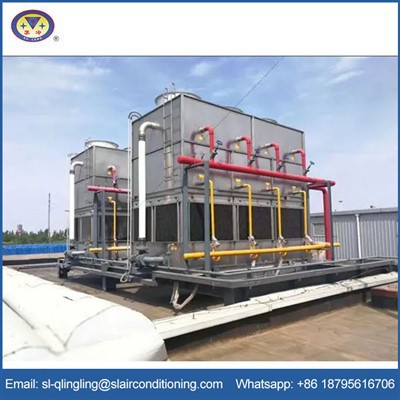
Water Cooled Refrigeration Condenser
Why Choose Us?
Quality Control
Our production process is visualized, every production process can be show the video for check. After production, we accept all kinds of high stringent control quality inspection.
Competitive Pricing
The companyprovides customers with competitive pricing on its products without compromising their quality.
Professional Team
All the staff of Su Leng enterprises said to new and old friends: "Your satisfaction is our pursuit", we will provide you with intentions and professional services.
Sustainability
We are committed to environmental sustainability and strive to minimize our environmental impact by using eco-friendly production methods.
Definition of Water Cooled Refrigeration Condenser
A water cooled refrigeration condenser is a chiller component that removes heat generated by an industrial or commercial process. Condensers can be considered a form of heat exchanger, as they both serve similar functions. Therefore, water cooled refrigeration condensers are essentially heat exchangers that remove heat from refrigerant vapor and transfer it to the water running through it. A heat rejection loop is involved in the process, in which condenser heat is dissipated to the surrounding environment via water. The condenser's inner workings are responsible for the effectiveness of this process. Water cooled refrigeration condenser design allows the condenser to function as a specialized heat exchanger, condensing hot, high-pressure gas from the compressor into a liquid.


Benefits of Water Cooled Refrigeration Condenser
Water cooled refrigeration condenser is a technical heat exchanger used to remove heat from the refrigerant vapor and transfer it to the water running inside the tube. Water-cooling systems have seen considerable use over the years, although they are also increasing in small businesses & some residential applications. Water cooled refrigeration condenser operates through networks of water coils that are used to transfer heat from the condenser coils. These systems usually work in conjunction with cooling towers to dissipate heat.
Benefits:
● Where there is a restriction for an air-cooled condenser, a water cooled refrigeration condenser is an ideal replacement.
● The thermal energy used in other heating processes is recovery.
● Water cooled refrigeration condenser can be placed indoors.
● A water-cooled system usually lasts for years, assuming maintenance is not neglected.
● Its heat transfer rate is high.
● It consumes very little overall energy, which can lead to savings on energy cost & consumption.
● It does not require any external power.
● Since water cooled refrigeration condensers are more efficient than air cooling, the time required for cooling is less.
● The length of the condenser pipe is reduced, thereby reducing the work of the compressor and thus increasing its efficiency.
● With the inclusion of water cooled refrigeration condensers, the net load of the system increases.
Types of Water Cooled Refrigeration Condenser
There are three basic types of commercials water cooled refrigeration condensers:
Shell and coil water-cooled condenser
A shell condenser is a steel tank with a copper tube inserted into the shell. As water flows through tubings, it condenses the hot gases into a fluid, and the lower part of the shell receives the fluid.
Advantages of this type of separate condenser include the compact design and the elimination of fans. Since the coils are completely surrounded by steels shell, mechanical cleaning of such coils is nearly impossible.
Tube within tube (double-tube) water-cooled condenser
The second types of these condensers are double-tube. One tube is placed inside the other in such a way that the water flowing through the inner tube cools the refrigerant in the outer tube. This condenser can be constructed either in a cylindrical spiral or in a rectangular style.
Shell and tube water-cooled condenser
Shell and tubes are the most common types of a condenser in large chemical processing plants. In this type of condenser, the number of straight water tubes is surrounded by a large cylindrical shell. The shell can be with or without fins.
Applications of Water Cooled Refrigeration Condenser
Evaporative condenser is applied in all kinds of refrigeration systems, including cold storage, central air conditioning, industrial refrigeration unit, ammonia refrigeration system, etc. Because of their efficiency, evaporative condensers are well-suited to an array of industrial applications. They are particularly common in processing industries. Food and dairy products such as tomato purees, milk, herbal extracts, gelatin, coconut water, and whey and milk proteins are all processed with the help of evaporative condensers. The same is true for chemicals such as dyes, ammonium nitrate, glycerin, sodium nitrate, paints, and pigments.
Evaporative condensers are also ideal for very low temperature applications in the food and pharmaceutical industries. These include the production of plasma, fermented products, coffee extracts, fruit juices, bulk drugs, glycerin, sweet water, yeast extract, and protein hydrolysate. Whey, gelatin, malt extracts, glucose, fructose, dextrose, sorbitol, and maltodextrin are all produced with evaporative condensers, as well.
Another field in which evaporative condensers are widely used is waste management. Waste management providers rely on them to treat effluents, or wastewater, from various plants, including distilleries, grain mills, abattoirs, textile plants, chemical reactors, and storage tanks. Designed to serve a variety of practical uses, evaporative condensers are a versatile solution to many common industrial challenges.
The Difference Between Air Condensers and Water Cooled Refrigeration Condensers in Industrial Production
The condenser types are
● Water cooled refrigeration condenser : These condensers use a tube and shell heat exchanger where plant waster circulates on one side and refrigerant on the other.
● Air-cooled condenser: These condensers use a fined tubed heat exchanger and motor driven fans or centrifugal blowers to move air through the condenser.
Select
Select an air-cooled condenser ... When
● Adequate water supply not available from tower or well sources.
● Water supply is not of good quality.
● Heat recovery is practical and important.
● Plant ambient temperature will not consistently 95°f.
● Ambient air is not polluted with large dust and dirt particles.
Select a water cooled refrigeration condenser ... When
● Adequate water supplies are available from tower, city or well sources.
● Water supply is of good quality.
● Heat recovery is not practical or unimportant.
● Plant ambient temperatures consistently exceed 95°f.
● Ambient air is polluted with large dust and dirt particles.
Advantage & disadvantages
Air-cooled condenser
● Somewhat more costly to purchase and operate.
● Gives less cooling on hot summer days.
● Consumes more electricity.
● Offers summer ventilation and winter supplement heating.
Water cooled refrigeration condenser
● Offer lower capital investment.
● Operates more efficiently on hot summer days.
● Easier to operate.
● Does not offer summer ventilation.
The Considerations for Buying Water Cooled Refrigeration Condenser
- First and foremost, you must look at the water cooled refrigeration condenser's capacity. It's essential to choose a condenser that meets your system's specific cooling demands.
- Consider the water cooled refrigeration condenser's energy efficiency. An energy-efficient model will not only reduce your carbon footprint but also save you money on utility bills in the long run. Look for models with energy-saving features such as variable speed fans or high-efficiency coils.
- Weigh the material and build quality of the water cooled refrigeration condenser. Opt for durable materials like stainless steel that can resist corrosion and withstand harsh weather conditions. Moreover, the design should allow for easy maintenance and cleaning to ensure optimal performance and longevity.
- Evaluate the water cooled refrigeration condenser's noise level. While this may seem trivial, a quiet unit makes for a more pleasant working environment, especially if the system is located near workspaces or residential areas.
- Don't underestimate the importance of choosing a trusted manufacturer. Reliable manufacturers will provide comprehensive warranty coverage, and their products are more likely to offer superior performance and durability.
ll-known in the industry.
Maintenance of Water Cooled Refrigeration Condenser
Maintenance in water cooled refrigeration condenser involves many different aspects, because you have a series of components to check and clean. Every technician will have its working methods in the field. But some tips and recommendations are always welcome. So, here are some helpful guidelines for any technician working with water cooled refrigeration condenser.
Preventive maintenance
Whenever possible, inform your customers about the fact that well-maintained units tend to consume less energy and operate more efficiently, and that preventive maintenance reduces the risk of component and water cooled refrigeration condenser failure. A good timeframe for preventive maintenance is twice a year, but it is also important to check with the manufacturer of the equipment for maintenance interval recommendations.
Lack of preventive maintenance and cleaning can cause the compressor to overheat, and it gets to a point where it demands so much electric current that the overload protector (ovl) enters into action, turning off the compressor, before it reaches the target temperature, in order to protect the motor from burning.
When doing a preventive maintenance:
● Carefully check the fastening of all the components of the water cooled refrigeration condenser. It can prevent components loosening or even loosening of motherboard devices and greatly reduce the noise of the entire system.
● To remove impurities from the condenser, use water, a cleaning cloth or compressed air. Chemicals should never be used, especially those that contain chlorine.
● Check the fan motor for dirt and use a cleaning cloth or compressed air to remove dust or any other type of material.
How to determine when there may be air in the water cooled refrigeration condenser
High head pressure in an otherwise normally functioning system can indicate air or non condensables in a system. To check for a clogged drier, take the pressure drop across the drier, (should be no more than 2 PSIG) if the drier has pressure ports. Also use a 5 second acid test kit to determine if there is excess air/moisture/acid in a system. If any of those is found, the refrigerant charge will have to be removed and recharged after a new drier and a good vacuum.
Determining how clean the water cooled refrigeration condenser really is
When you have a water cooled refrigeration condenser that is dirty, the heat exchange with the ambient can be compromised up to the point that the refrigerant gas does not turn into liquid (superheat). Normally, you will realize the water cooled refrigeration condenser is not clean by the symptoms presented by the compressor or the application, such as loss of performance and lack of subcooling.
Calculating and interpreting subcooling
Subcooling measures the temperature difference between the condensing temperature at saturated conditions (the temperature of the gas corresponding to the condensing pressure) and the temperature of the liquid line/refrigerant coming out of the condenser.
Changing only the compressor or the whole unit
For most fractional horsepower compressors there can be a tendency to just replace the compressor, rarely the water cooled refrigeration condenser, mostly due to cost.But you have to consider that changing the compressor gets you a new compressor only, leaving the whole high side of the system (condenser coil, fan motor, valves etc) vulnerable to repeat failures and service calls. So, the best efficiency will be obtained replacing the whole water cooled refrigeration condenser.
How to determine if it is a compressor failure or just a relay or capacitor issue
Refrigeration compressors typically are highly reliable. It's very common for a component or lack of maintenance to stress the compressor, possibly causing it to overheat and either trip the overload or fail.
It is a good idea to test the winding resistance and use a megohmmeter on the compressor, if you have one available, to be sure the compressor is not damaged. A generic start component kit or a compressor analyzer can be used to be sure the components are at fault.
Our Factory
Yixing jiangnan refrigeratory air-conditioning equipment co.,ltd is specialized in producing and other cold storage and refrigeration equipment enterprises. Since the establishment of the factory in 1995, the hardworking and simple Jiangnan people have worked together, worked hard, innovated pragmatical, opened up the market and developed steadily. Over the past 20 years, the company has expanded the scale of enterprises three times and has complete processing and production equipment.
The company produced "Su Leng" brand SL series evaporative condenser, KL series air cooler, DDF series air cooler, DLM series manual, electric cold storage door, was rated as "Quality products in Jiangsu Province";the "Su Leng brand" cold storage door case products produced by the company were assessed by the "China Market Brand Strategic Management Association" as "China's top ten cold storage door sales brand"
Since the establishment of the factory in 1995, the hardworking and simple Jiangnan people have worked together, worked hard, innovated pragmatical, opened up the market and developed steadily. All the staff of Su Leng enterprises said to new and old friends: "Your satisfaction is our pursuit", we will provide you with intentions and professional services.

Ultimate FAQ Guide to Evaporative Condenser
Hot Tags: water cooled refrigeration condenser, China water cooled refrigeration condenser manufacturers, suppliers, factory, used evaporative condenser, evaporative condenser for hydraulic energy, evaporative condenser for motels, evaporative condenser accessories, evaporative condenser for artificial intelligence, evaporative condenser function
You Might Also Like



Send Inquiry