Are air cooler fans noisy? This is a question that often pops up when people are considering purchasing an air cooler fan. As a supplier of high - quality air cooler fans, I've encountered this query numerous times from potential customers. In this blog, I'll delve into the factors that contribute to the noise levels of air cooler fans, discuss how to measure and evaluate this noise, and present our solutions to minimize it.
Understanding the Noise Sources of Air Cooler Fans
Air cooler fans generate noise from multiple sources. First and foremost is the mechanical noise. The motor of the fan is the heart of the air cooler fan, and it can produce noise during operation. When the motor rotates, the friction between its internal components, such as bearings and shafts, generates vibrations. These vibrations are then transmitted to the fan housing and surrounding air, resulting in audible noise. For instance, if the bearings are of poor quality or not properly lubricated, the mechanical noise can be significantly louder.
Another major source of noise is the aerodynamic noise. As the fan blades rotate, they push and displace air. This movement creates pressure fluctuations in the air, which in turn generate sound waves. The shape, size, and speed of the fan blades all play crucial roles in determining the level of aerodynamic noise. Fans with poorly designed blades may cause turbulent airflows, leading to louder and more annoying noise. For example, blades with sharp edges or uneven surfaces can disrupt the smooth flow of air, increasing noise levels.
Measuring and Evaluating Fan Noise
The noise level of an air cooler fan is typically measured in decibels (dB). A lower decibel value indicates a quieter fan. However, it's important to note that the human perception of noise is not solely based on the decibel level. The frequency of the noise also matters. High - frequency noises are often more irritating to the human ear than low - frequency noises, even if they have the same decibel level.
When evaluating the noise of an air cooler fan, it's essential to consider the environment in which it will be used. For example, in a residential bedroom, a fan with a noise level of around 30 - 40 dB is generally considered quiet enough not to disturb sleep. In an industrial setting, where there are already other background noises, a fan with a slightly higher noise level, say 50 - 60 dB, may still be acceptable.
Our Air Cooler Fan Solutions for Noise Reduction
As a supplier, we are committed to providing air cooler fans with low noise levels. We have invested heavily in research and development to optimize the design of our fans.
Motor Optimization
We use high - quality motors with precision - engineered bearings. These bearings are designed to reduce friction and vibration, minimizing mechanical noise. Additionally, we implement advanced motor control technologies to ensure smooth and stable operation. For example, our motors are equipped with variable - speed controls, allowing users to adjust the fan speed according to their needs. At lower speeds, the motor operates more quietly, reducing overall noise levels.
Blade Design
Our engineers have spent countless hours perfecting the blade design of our air cooler fans. We use aerodynamically optimized blade shapes that promote smooth airflows and reduce turbulence. The blades are also made from high - quality materials that are lightweight yet strong, further reducing noise. For instance, our Air Cooler Fan features blades with a unique curved design that significantly reduces aerodynamic noise.
Sound - Absorbing Materials
In some of our high - end models, we incorporate sound - absorbing materials into the fan housing. These materials help to dampen the vibrations and absorb the sound waves generated by the motor and blades. This extra layer of noise reduction makes our fans even quieter, especially in quiet environments.
Comparing Our Air Cooler Fans with Competitors
When compared to many of our competitors in the market, our air cooler fans stand out in terms of noise reduction. Some competitors may cut corners on motor quality or blade design to reduce costs, resulting in noisier fans. Our focus on quality and innovation ensures that our fans offer a superior noise - free experience.
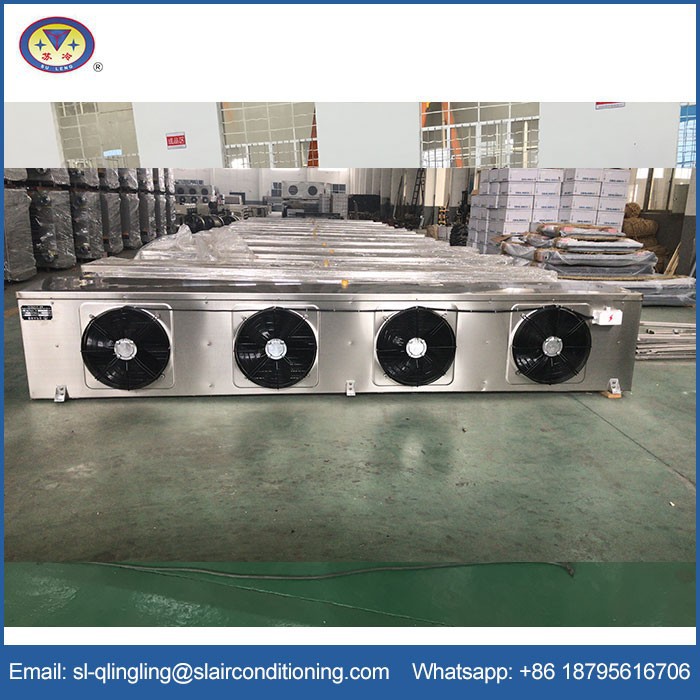
For example, our Four Fans Air Cooler is designed to provide powerful cooling while maintaining a low noise level. The multiple fans work together to distribute air evenly, and the advanced design minimizes the noise generated during operation. In contrast, some competing models with similar features may produce a lot of noise, making them less suitable for use in quiet spaces.
Applications of Our Quiet Air Cooler Fans
Our air cooler fans have a wide range of applications due to their low noise levels.
Residential Use
In homes, our fans are ideal for bedrooms, living rooms, and nurseries. The quiet operation ensures that they won't disturb sleep or daily activities. Parents can use our fans in nurseries to keep the baby's room cool without worrying about the noise waking the baby.
Office Use
In office environments, a quiet air cooler fan is essential to maintain a productive and comfortable workspace. Our fans can be placed under desks or on shelves to provide local cooling without creating distractions. The low noise levels allow employees to focus on their work without being bothered by the fan's sound.
Industrial Use
Even in industrial settings, where noise is more tolerated, our Industrial Portable Air Cooler offers an advantage. The relatively low noise level means that it won't add significantly to the existing background noise, making it a more pleasant working environment for employees.
Conclusion
In conclusion, while air cooler fans can potentially be noisy, our company has taken significant steps to address this issue. Through motor optimization, blade design improvements, and the use of sound - absorbing materials, we have developed air cooler fans that offer powerful cooling with minimal noise. Whether for residential, office, or industrial use, our fans are designed to meet the needs of our customers.
If you're interested in purchasing our air cooler fans or have any questions about noise levels or other features, please feel free to contact us for further discussion and negotiation. We look forward to working with you to provide the best cooling solutions for your specific requirements.
References
- "Fan Noise: Sources, Measurement, and Reduction", Fan Engineering Handbook
- "Aerodynamics of Fan Blades and Noise Generation", Journal of Fluid Mechanics
- "Motor Design and Noise Reduction in Electrical Appliances", Electrical Engineering Journal