

In the modern industrial landscape, the demand for efficient cooling solutions is ever - present. As an industrial air cooler supplier, I've witnessed firsthand the shift in market preferences towards more sustainable and environmentally friendly options. The question that often arises is, "Are industrial air coolers environmentally friendly?" This blog post aims to delve into this topic and provide a comprehensive answer.
How Industrial Air Coolers Work
Before we assess their environmental impact, it's essential to understand how industrial air coolers operate. Industrial air coolers, particularly evaporative coolers, function on a simple yet effective principle. They draw in warm, dry air from the surroundings and pass it through a wet cooling pad. As the air evaporates the water on the pad, it cools down, and the cooler, now - cooled air is then circulated into the industrial space.
This process is fundamentally different from traditional air - conditioning systems, which rely on refrigerants to cool the air. Refrigeration - based systems compress and expand refrigerants in a closed loop to transfer heat from inside the building to the outside.
Energy Efficiency
One of the most significant environmental benefits of industrial air coolers is their energy efficiency. Evaporative coolers consume far less electricity compared to traditional air - conditioning units. Traditional AC systems use compressors, which are power - hungry components. In contrast, industrial air coolers primarily use fans to draw in and circulate air and pumps to keep the cooling pads wet.
For example, a large - scale industrial air - conditioning unit can consume thousands of watts of power per hour. In comparison, an industrial evaporative cooler of a similar capacity may use only a fraction of that power. This reduced energy consumption not only lowers the operational costs for businesses but also decreases the overall demand on the power grid. With a significant portion of the world's electricity still being generated from fossil fuels, reducing energy consumption helps to cut down on greenhouse gas emissions.

Use of Refrigerants
Traditional air - conditioning systems often use refrigerants such as hydrofluorocarbons (HFCs). These refrigerants are known to have a high global warming potential (GWP). When these refrigerants leak into the atmosphere, they can contribute to the greenhouse effect and climate change.
Industrial air coolers, especially evaporative types, do not rely on refrigerants. Instead, they use water as the cooling medium. Water is a natural, non - toxic, and readily available resource. By eliminating the need for harmful refrigerants, industrial air coolers significantly reduce their environmental impact.
Water Consumption
While industrial air coolers have many environmental advantages, water consumption is a factor that needs to be considered. Evaporative coolers work by evaporating water to cool the air, which means they do use a certain amount of water. However, the water usage can be managed effectively.
In regions with abundant water resources, the water consumption of industrial air coolers may not be a significant concern. Additionally, many modern industrial air coolers are designed with water - saving features. For example, some models have adjustable water flow rates, allowing users to optimize water usage based on the ambient conditions.
Air Quality Improvement
Industrial air coolers can also contribute to better air quality. As they draw in outside air and pass it through the cooling pads, they can filter out dust, pollen, and other airborne particles. This is especially beneficial in industrial settings where air quality can be poor due to the presence of pollutants.
In contrast, traditional air - conditioning systems often recirculate the same air within a closed space. This can lead to a build - up of indoor pollutants, which can have negative health effects on workers. Industrial air coolers, by constantly bringing in fresh air, help to dilute and remove these pollutants, creating a healthier working environment.
Product Offerings: Environmentally - Friendly Options
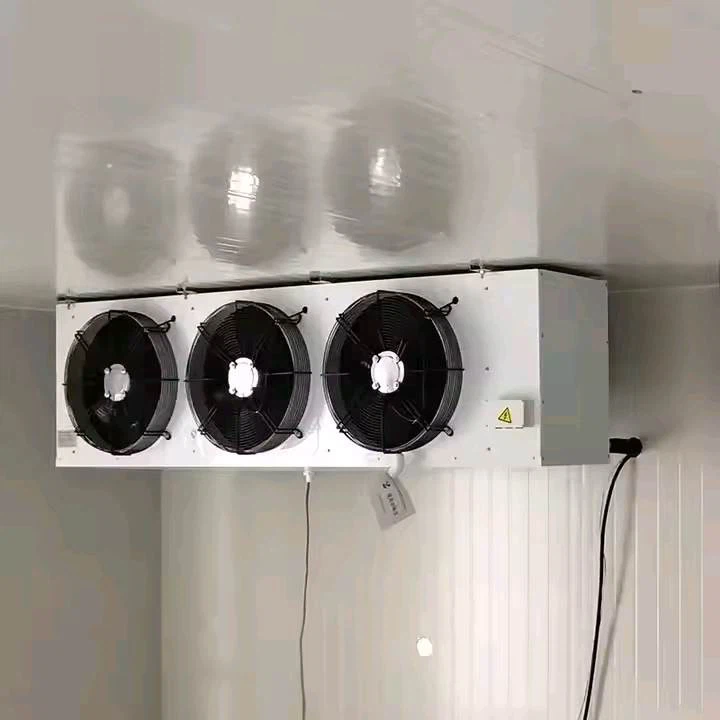
As an industrial air cooler supplier, we offer a range of products that are not only effective but also environmentally friendly. Our Ceiling Evaporative Cooler is a great example. It is designed to be installed on the ceiling, saving floor space in industrial facilities. This cooler uses the evaporative cooling principle, consuming less energy and no harmful refrigerants.
Our Ceiling Mounted Air Cooler is another option that combines efficient cooling with environmental friendliness. It provides a uniform distribution of cool air, ensuring that the entire industrial space is cooled effectively.
For those looking for a combination of ceiling - mounting and evaporative cooling technology, our Ceiling Mounted Evaporative Cooler is an ideal choice. It offers the benefits of both evaporative cooling and ceiling - mounted convenience.
Conclusion
In conclusion, industrial air coolers, especially evaporative types, are generally environmentally friendly. They offer significant advantages in terms of energy efficiency, reduced use of harmful refrigerants, air quality improvement, and can be designed to manage water consumption effectively.
If you are an industrial business looking for a cooling solution that is both effective and environmentally conscious, industrial air coolers are a great option. We invite you to explore our range of products and get in touch with us to discuss your specific cooling needs. Whether you are looking for a Ceiling Evaporative Cooler, Ceiling Mounted Air Cooler, or Ceiling Mounted Evaporative Cooler, our team of experts is ready to assist you in finding the perfect solution for your facility.
References
- ASHRAE Handbook of HVAC Systems and Equipment.
- International Institute of Refrigeration (IIR) reports on refrigerants and cooling technologies.
- Studies on energy efficiency of industrial cooling systems by the Department of Energy.


