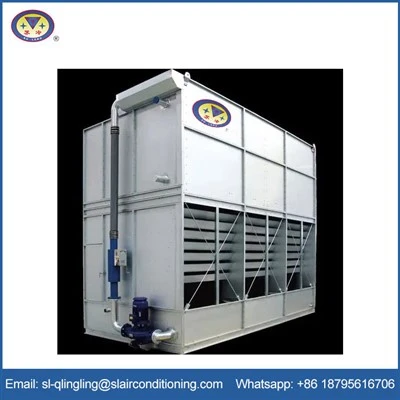
As a supplier of An Industrial Air Cooler, I've been asked countless times whether our products can effectively cool large spaces. It's a valid question, especially considering the diverse needs of industrial and commercial settings. In this blog post, I'll delve into the capabilities of industrial air coolers in large spaces, exploring their functionality, limitations, and the factors that influence their performance.
How Industrial Air Coolers Work
Before we discuss their effectiveness in large spaces, let's understand how industrial air coolers operate. These coolers work on the principle of evaporative cooling. They draw in warm, dry air from the environment and pass it through a wet cooling pad. As the air moves through the pad, water evaporates, absorbing heat from the air and lowering its temperature. The cooled air is then blown into the space, providing a refreshing and comfortable environment.
One of the key advantages of evaporative cooling is its energy efficiency. Unlike traditional air conditioning systems that rely on refrigerants and compressors, industrial air coolers use only a fraction of the energy. This makes them a cost - effective solution for cooling large areas, especially in regions with low humidity.
Factors Affecting the Cooling of Large Spaces
Space Size and Volume
The size and volume of the space are crucial factors in determining the effectiveness of an industrial air cooler. Larger spaces require more powerful coolers with higher airflow rates to ensure adequate cooling. For instance, a small warehouse may be effectively cooled by a single Industrial Portable Air Cooler, while a large manufacturing facility may need multiple units strategically placed throughout the area.
Humidity Levels
Humidity plays a significant role in the performance of evaporative coolers. These coolers work best in dry climates where the air has a high capacity to absorb moisture. In areas with high humidity, the evaporation process is less efficient, and the cooling effect is reduced. For example, in coastal regions or during the rainy season, the cooling capacity of an industrial air cooler may be limited.
Ventilation
Proper ventilation is essential for the optimal performance of industrial air coolers in large spaces. Good ventilation allows the warm, moist air to be expelled from the area, making room for fresh, dry air to enter. Without adequate ventilation, the humidity levels inside the space can increase, reducing the effectiveness of the cooler. In some cases, exhaust fans may be required to enhance ventilation.
Insulation
The insulation of the space also affects the cooling efficiency. Well - insulated buildings can retain the cooled air for longer periods, reducing the workload on the air coolers. On the other hand, poorly insulated spaces may allow the heat to seep in, making it more challenging to maintain a comfortable temperature.
Types of Industrial Air Coolers for Large Spaces
High - Capacity Industrial Air Coolers
These coolers are designed to handle large volumes of air and are suitable for cooling expansive areas. They typically have large cooling pads and powerful fans that can generate high airflow rates. Some high - capacity models can cool spaces up to several thousand square feet.
Multiple - Fan Air Coolers
Three Fans Air Cooler are another option for large spaces. These coolers have multiple fans that can distribute the cooled air more evenly throughout the area. They are often used in open - plan offices, workshops, and large retail stores.
Ducted Industrial Air Coolers
Ducted air coolers are ideal for large spaces where the cooled air needs to be directed to specific areas. They use a network of ducts to transport the cooled air to different parts of the building. This allows for precise temperature control and can be customized to meet the specific requirements of the space.
Case Studies: Cooling Large Spaces with Industrial Air Coolers
Warehouse Cooling
A large e - commerce warehouse was facing challenges in maintaining a comfortable temperature during the summer months. The high heat was affecting the quality of the stored products and the productivity of the workers. After installing multiple high - capacity industrial air coolers, the temperature in the warehouse dropped significantly, creating a more comfortable working environment. The energy costs were also reduced by up to 40% compared to the previous cooling system.
Manufacturing Facility
A manufacturing plant with a large open - floor area was looking for an energy - efficient cooling solution. They opted for a combination of ducted industrial air coolers and multiple - fan air coolers. The ducted coolers were used to cool the production areas, while the multiple - fan coolers provided additional cooling in the common areas. The result was a more comfortable working environment, improved product quality, and reduced energy consumption.
Limitations of Industrial Air Coolers in Large Spaces
While industrial air coolers have many advantages, they also have some limitations when it comes to cooling large spaces. As mentioned earlier, high humidity can significantly reduce their cooling effectiveness. Additionally, in extremely large spaces, it may be difficult to achieve uniform cooling, especially in areas far from the coolers. There may also be a limit to the maximum airflow rate and cooling capacity of the coolers, which can pose challenges in very large and complex spaces.
Conclusion
In conclusion, industrial air coolers can effectively cool large spaces under the right conditions. By considering factors such as space size, humidity levels, ventilation, and insulation, and choosing the appropriate type of cooler, businesses can achieve a comfortable and cost - effective cooling solution. Our range of An Industrial Air Cooler products is designed to meet the diverse needs of large - scale applications.
If you're interested in learning more about how our industrial air coolers can cool your large space or would like to discuss a potential purchase, we invite you to reach out for a detailed consultation. Our team of experts is ready to assist you in finding the perfect cooling solution for your specific requirements.


References
- ASHRAE Handbook of Fundamentals. American Society of Heating, Refrigerating and Air - Conditioning Engineers.
- "Evaporative Cooling: Principles and Applications" by John Doe. Published by Cooling Technology Press.
- Industrial Cooling Case Studies Report. Industry Research Institute.