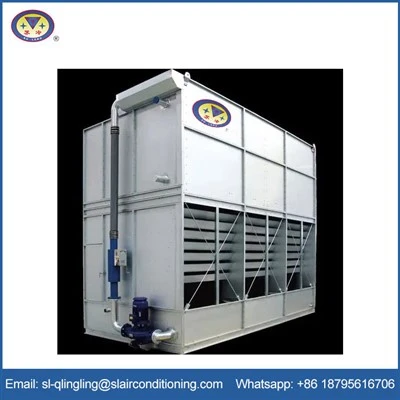
As a supplier of industrial water condensers, I am frequently asked whether our products can be effectively utilized in chemical industries. This question is not only relevant but also crucial for both the chemical industry players and our business. In this blog, I will explore the feasibility, benefits, and considerations of using industrial water condensers in chemical industries.
Feasibility of Using Industrial Water Condensers in Chemical Industries
Chemical industries involve a wide range of processes, including distillation, condensation, and heat exchange. These processes often generate a significant amount of heat that needs to be removed efficiently to ensure the safety and efficiency of the operations. Industrial water condensers are designed to transfer heat from a vapor or gas to a liquid, typically water, through a cooling process. This makes them well - suited for the heat removal requirements in chemical industries.
One of the key factors in determining the feasibility of using industrial water condensers in chemical industries is the compatibility of the condenser materials with the chemicals involved. Chemicals can be corrosive, and if the condenser is made of materials that are not resistant to the specific chemicals, it can lead to degradation and failure of the equipment. However, modern industrial water condensers can be constructed from a variety of materials, such as stainless steel, titanium, and certain plastics, which offer excellent corrosion resistance. For example, Titanium condensers are highly resistant to many corrosive chemicals, including seawater and some acids, making them suitable for use in chemical processes where these substances are present.
Another aspect of feasibility is the ability of the condenser to handle the specific operating conditions in chemical industries. Chemical processes can operate at high pressures and temperatures. Some industrial water condensers are designed to withstand these extreme conditions. For instance, Airwell Water Cooled Condenser is engineered to handle a wide range of pressures and temperatures, making it a viable option for many chemical applications.
Benefits of Using Industrial Water Condensers in Chemical Industries
Energy Efficiency
One of the primary benefits of using industrial water condensers in chemical industries is energy efficiency. In chemical processes, the heat generated often needs to be removed to maintain the desired reaction conditions. By using a water condenser, the heat can be transferred to the cooling water, and in some cases, this heat can be recovered and reused within the process. This reduces the overall energy consumption of the chemical plant. For example, in a distillation process, the vapor can be condensed using a water condenser, and the heat released during condensation can be used to pre - heat the incoming feed, thus saving energy.
Process Control
Industrial water condensers provide precise control over the condensation process. In chemical industries, accurate temperature control is essential for the quality and yield of the products. Water condensers allow for fine - tuning of the cooling rate, which in turn affects the condensation rate. This enables chemical engineers to optimize the process and achieve the desired product specifications. For instance, in the production of certain pharmaceuticals, precise temperature control during the condensation step is critical to ensure the purity and efficacy of the final product.
Cost - Effectiveness
Water is a relatively inexpensive and readily available cooling medium. Compared to other cooling methods, such as air - cooled condensers, industrial water condensers can be more cost - effective in the long run. While the initial installation cost of a water condenser may be higher, the lower operating costs due to the lower energy consumption and the use of water as a cooling medium can offset the initial investment. Additionally, the water used in the condenser can be recycled, further reducing the operating costs. You can find more information about cost - related aspects such as Evaporative Condenser Price.


Reduced Environmental Impact
Using industrial water condensers can contribute to a reduced environmental impact. By recovering and reusing heat, the overall energy consumption of the chemical plant is reduced, which in turn decreases the greenhouse gas emissions associated with energy production. Moreover, the use of water as a cooling medium is generally more environmentally friendly than some other cooling methods that may use refrigerants or other chemicals with high global warming potential.
Considerations When Using Industrial Water Condensers in Chemical Industries
Water Quality
The quality of the cooling water used in the condenser is of utmost importance. Impurities in the water, such as minerals, suspended solids, and microorganisms, can cause fouling and scaling on the condenser surfaces. This reduces the heat transfer efficiency of the condenser and can lead to increased energy consumption and maintenance costs. Therefore, it is necessary to implement proper water treatment systems to ensure the quality of the cooling water.
Maintenance Requirements
Industrial water condensers require regular maintenance to ensure their optimal performance. This includes cleaning the condenser tubes to remove any fouling or scaling, inspecting the seals and gaskets for leaks, and checking the integrity of the condenser materials. In chemical industries, where the condensers are exposed to potentially corrosive chemicals, the maintenance requirements may be more stringent. For example, in a condenser used in a process involving sulfuric acid, more frequent inspections for corrosion are necessary.
Safety Precautions
Chemical industries deal with hazardous substances, and the use of industrial water condensers in these environments requires strict safety precautions. The condensers should be designed and installed in a way that minimizes the risk of leaks and spills. Additionally, proper ventilation systems should be in place to prevent the accumulation of any harmful vapors. It is also important to ensure that the condenser materials are compatible with the chemicals to avoid any chemical reactions that could lead to safety hazards.
Compatibility with Process Flows
The industrial water condenser should be compatible with the specific process flows in the chemical plant. This includes considerations such as the flow rate of the vapor or gas to be condensed, the temperature and pressure of the process, and the chemical composition of the substances involved. For example, in a high - flow distillation process, a condenser with a large enough surface area and a suitable flow design is required to ensure efficient condensation.
Popular Options in Industrial Water Condensers for Chemical Industries
There are several types of industrial water condensers that are commonly used in chemical industries. One such option is the Evapco Evaporative Condenser. Evapco evaporative condensers use the principle of evaporation to enhance the heat transfer process. They are known for their high efficiency and compact design, making them suitable for applications where space is limited.
Another popular choice is the shell - and - tube condenser. Shell - and - tube condensers consist of a series of tubes enclosed in a shell. The vapor or gas to be condensed flows through the tubes, while the cooling water flows around the tubes in the shell. This design provides a large surface area for heat transfer, allowing for efficient condensation.
Conclusion
In conclusion, industrial water condensers can definitely be used in chemical industries. They offer numerous benefits, including energy efficiency, process control, cost - effectiveness, and reduced environmental impact. However, careful consideration needs to be given to factors such as water quality, maintenance requirements, safety precautions, and compatibility with process flows. As a supplier of industrial water condensers, we are committed to providing high - quality products that are tailored to the specific needs of the chemical industry.
If you are involved in the chemical industry and are considering the use of industrial water condensers, I encourage you to contact us for a detailed discussion. We can help you select the most suitable condenser for your application and provide you with all the necessary technical support and after - sales service.
References
- Green, D. W., & Perry, R. H. (2007). Perry's Chemical Engineers' Handbook. McGraw - Hill.
- Walas, S. M. (1985). Chemical Process Equipment: Selection and Design. Butterworth - Heinemann.