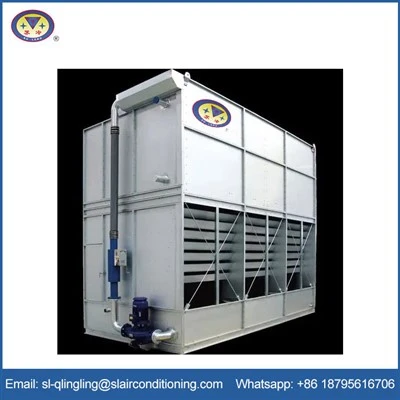
As a supplier of Quick Freezing Air Coolers, I often encounter questions from customers regarding the power supply requirements of these essential cooling devices. In this blog post, I aim to delve into the topic of whether a Quick Freezing Air Cooler requires a special power supply, providing you with detailed insights and scientific explanations.
Understanding Quick Freezing Air Coolers
Quick Freezing Air Coolers are designed to rapidly lower the temperature in a given space, making them ideal for applications such as cold storage rooms, food processing facilities, and industrial settings. These coolers work by circulating cold air throughout the area, removing heat and moisture to maintain a consistent and low temperature.
Our Quick Freezing Air Cooler models are engineered with advanced technology to ensure efficient and reliable performance. They are equipped with high - capacity compressors, powerful fans, and precision temperature control systems to achieve rapid freezing and maintain optimal conditions.
Power Supply Basics
Before discussing whether a special power supply is needed, it's important to understand the basic power requirements of an air cooler. Most electrical appliances, including Quick Freezing Air Coolers, operate on standard electrical power sources. In many regions, the standard household voltage is either 110 - 120 volts (in countries like the United States) or 220 - 240 volts (in many other parts of the world).
The power consumption of a Quick Freezing Air Cooler depends on several factors, such as its size, cooling capacity, and the efficiency of its components. Smaller, residential - grade air coolers may have a relatively low power consumption, typically ranging from a few hundred watts to around 1000 watts. Larger, industrial - grade Quick Freezing Air Coolers, on the other hand, can consume several thousand watts of power.
When a Special Power Supply Might Be Required
High - Capacity Industrial Models
In industrial settings, large - scale Quick Freezing Air Coolers are often used to cool large cold rooms or processing areas. These high - capacity coolers may require a three - phase power supply. A three - phase power system provides a more stable and efficient power delivery compared to a single - phase system, especially for heavy - duty electrical equipment.
For example, our Cold Room Air Cooler models designed for large cold storage facilities may have a high power demand that can only be met by a three - phase power supply. The three - phase power allows the compressor and other components to operate more smoothly, reducing the risk of power fluctuations and ensuring consistent performance.
Remote or Off - Grid Locations
In some cases, Quick Freezing Air Coolers may be installed in remote locations where access to a standard electrical grid is limited or non - existent. In such situations, a special power supply, such as a generator or a solar power system, may be required.
A generator can provide a reliable source of power, but it needs to be properly sized to meet the power requirements of the air cooler. Solar power systems, on the other hand, offer a more sustainable and cost - effective solution in the long run. However, they require careful planning and installation to ensure that they can generate enough power to run the air cooler, especially during periods of low sunlight.
Voltage and Frequency Requirements
Some regions may have specific voltage or frequency requirements that differ from the standard. For example, in some areas, the voltage may be slightly lower or higher than the typical values, or the frequency may be different. In these cases, a voltage regulator or a frequency converter may be needed to ensure that the Quick Freezing Air Cooler operates safely and efficiently.
Our Vertical Type Blast Freezing Air Cooler models are designed to be adaptable to different power conditions, but in some extreme cases, additional equipment may be necessary to adjust the power supply to the appropriate specifications.
Determining the Power Supply Needs
When determining whether a special power supply is required for a Quick Freezing Air Cooler, it's essential to consider the following factors:


- Cooler Specifications: Check the manufacturer's specifications for the power requirements of the specific air cooler model. This will include information on the voltage, current, and power consumption.
- Installation Location: Consider the location where the air cooler will be installed. If it's an industrial facility, a three - phase power supply may be necessary. If it's a remote area, alternative power sources should be explored.
- Local Electrical Grid: Research the local electrical grid conditions, including the voltage, frequency, and power quality. This will help determine if any additional equipment is needed to ensure proper operation.
Conclusion
In summary, while many Quick Freezing Air Coolers can operate on standard power supplies, there are situations where a special power supply may be required. High - capacity industrial models, remote locations, and non - standard electrical grid conditions can all necessitate alternative power solutions.
As a supplier, we are committed to providing our customers with the best possible solutions for their cooling needs. Our team of experts can assist you in determining the appropriate power supply for your Quick Freezing Air Cooler, ensuring that it operates efficiently and reliably.
If you are interested in purchasing a Quick Freezing Air Cooler or have any questions about power supply requirements, please feel free to contact us for a consultation. We look forward to working with you to meet your cooling requirements.
References
- ASHRAE Handbook - Refrigeration. American Society of Heating, Refrigerating and Air - Conditioning Engineers.
- Electrical Installation Standards. National Electrical Code (NEC) or equivalent local electrical codes.