

How are industrial water condensers applied in power plants?
Hey there! If you're involved in the power plant industry or just curious about how these massive operations work, you're in the right place. I'm from a company that supplies Industrial Water Condensers, and today, I'm gonna walk you through how these condensers are used in power plants.
The Basics of Power Plants
First off, let's have a quick rundown of how power plants operate. Most power plants generate electricity by converting heat into mechanical energy, which then drives a generator. This heat can come from various sources like coal, natural gas, nuclear reactions, or even renewable resources such as solar thermal energy.
The process typically involves heating water to create steam, and this high - pressure steam is used to spin a turbine. After the steam has done its job in the turbine, it needs to be condensed back into water to complete the cycle. That's where industrial water condensers come in.
Role of Industrial Water Condensers in Power Plants
Condensing Steam
The primary function of an Industrial Water Condenser in a power plant is to convert the low - pressure steam exiting the turbine back into liquid water. This is crucial because it allows the water to be reused in the boiler, reducing the need for a constant supply of fresh water.
When the steam enters the condenser, it comes into contact with a large surface area of cold water tubes. The heat from the steam is transferred to the water flowing through these tubes, causing the steam to condense. This condensation creates a vacuum in the condenser, which helps to improve the efficiency of the turbine by increasing the pressure difference between the inlet and outlet of the turbine.
Maintaining System Efficiency
Efficiency is key in power plants, and industrial water condensers play a significant role in this. By condensing the steam effectively, they ensure that the cycle can continue smoothly. A well - functioning condenser can help to reduce the amount of heat loss in the system, which in turn increases the overall efficiency of the power plant.
Moreover, the vacuum created by the condenser allows the turbine to operate at a lower exhaust pressure. This means that more energy can be extracted from the steam, resulting in more electricity generation for the same amount of fuel input.
Types of Industrial Water Condensers Used in Power Plants
Surface Condensers
Surface condensers are the most commonly used type of condenser in power plants. In a surface condenser, the steam and the cooling water do not come into direct contact. Instead, the steam passes over a series of tubes through which the cooling water flows. The heat transfer occurs through the walls of the tubes, and the condensed steam is collected at the bottom of the condenser.
These condensers are known for their high efficiency and reliability. They can handle large volumes of steam and are suitable for use in both small - scale and large - scale power plants.
Evaporative Condensing Unit
Evaporative condensing units work by using the principle of evaporation to cool the steam. In these condensers, a small amount of water is sprayed onto the outside of the condenser tubes. As the steam inside the tubes transfers its heat to the tubes, the water on the outside evaporates, taking away a large amount of heat in the process.
The advantage of evaporative condensing units is that they require less cooling water compared to surface condensers. This makes them a more water - efficient option, especially in areas where water is scarce.
Water Cooled Refrigeration Condenser
Water - cooled refrigeration condensers are also used in power plants, especially in systems where precise temperature control is required. These condensers use a water - based refrigerant to cool the steam. The refrigerant absorbs the heat from the steam and then transfers it to the cooling water.
They are often used in conjunction with other types of condensers to provide additional cooling capacity and improve the overall performance of the power plant.
Challenges and Solutions in Condenser Operation
Fouling
One of the major challenges in condenser operation is fouling. Fouling occurs when debris, sediment, or biological organisms accumulate on the surface of the condenser tubes. This reduces the heat transfer efficiency of the condenser and can lead to increased energy consumption and reduced power output.
To combat fouling, regular cleaning and maintenance of the condenser are essential. Some power plants use chemical treatments to prevent the growth of biological organisms, while others use mechanical cleaning methods such as tube brushing or high - pressure water jetting.
Corrosion
Corrosion is another common problem in industrial water condensers. The constant exposure to water and steam can cause the metal components of the condenser to corrode over time. This can weaken the structural integrity of the condenser and lead to leaks.
To prevent corrosion, condensers are often made from corrosion - resistant materials such as stainless steel or titanium. Additionally, water treatment processes can be used to control the pH and oxygen levels in the cooling water, which can help to reduce the risk of corrosion.
Impact of Industrial Water Condensers on the Environment
Water Usage
Power plants with industrial water condensers are significant water consumers. The large amount of water required for cooling can put a strain on local water resources, especially in arid regions. However, as mentioned earlier, the use of Evaporative Condensing Unit and other water - efficient technologies can help to reduce water consumption.
Thermal Pollution
When the cooling water is discharged back into the environment, it is often warmer than the ambient water temperature. This can cause thermal pollution, which can have a negative impact on aquatic ecosystems. To mitigate this, power plants can use cooling towers or other heat - dissipation methods to reduce the temperature of the discharged water.

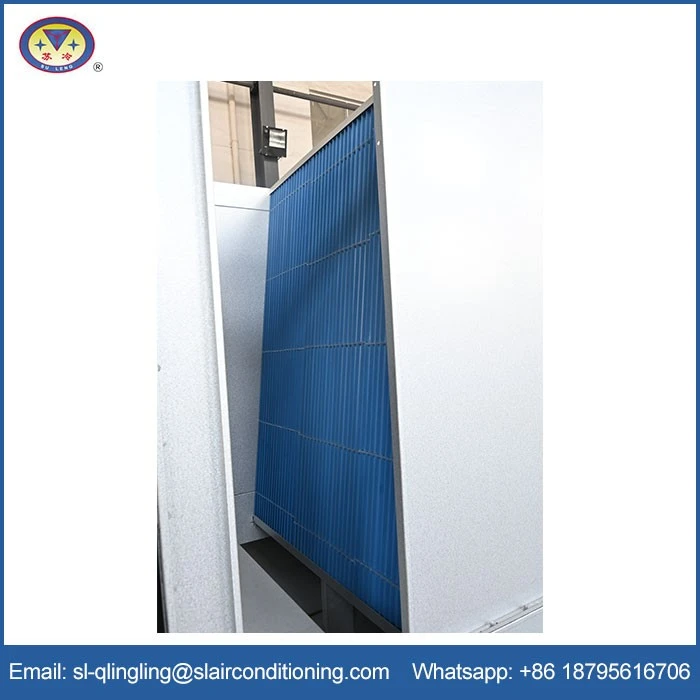
Why Choose Our Industrial Water Condensers
As an Industrial Water Condenser supplier, we take pride in offering high - quality products that are designed to meet the specific needs of power plants. Our condensers are made from the best materials and are engineered for maximum efficiency and reliability.
We have a wide range of products, including Industrial Evaporative Condenser, Water Cooled Refrigeration Condenser, and Air Condenser Unit. Whether you're looking for a solution for a small - scale power plant or a large - scale industrial facility, we've got you covered.
Our team of experts is always on hand to provide technical support and advice. We can help you choose the right condenser for your application, and we can also assist with installation, maintenance, and troubleshooting.
If you're in the market for an industrial water condenser for your power plant, don't hesitate to get in touch. We're here to help you improve the efficiency and performance of your power generation system. Contact us today to start a conversation about your specific requirements and how we can meet them.


