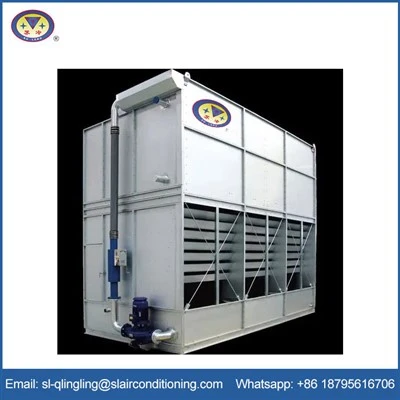
In the realm of industrial and commercial cooling systems, condensers play a pivotal role in ensuring efficient operation. The choice between an evaporative condensing unit and a traditional condenser can significantly impact the performance, cost, and environmental footprint of a cooling system. As a supplier of evaporative condensing units, I am excited to delve into a detailed comparison of these two types of condensers, highlighting the unique advantages of our evaporative condensing units.
Working Principles
Traditional Condensers
Traditional condensers, such as air - cooled and water - cooled condensers, operate based on well - established heat transfer principles. Air - cooled condensers use ambient air to remove heat from the refrigerant. The hot refrigerant vapor flows through a series of coils, and fans blow air over these coils, causing the refrigerant to condense back into a liquid state. Water - cooled condensers, on the other hand, use water as the cooling medium. The refrigerant transfers its heat to the water flowing through the condenser tubes, and the heated water is then typically sent to a cooling tower for further cooling.
For example, the Airwell Water Cooled Condenser is a classic example of a water - cooled condenser. It offers reliable performance in many industrial applications, but it also has its limitations in terms of water consumption and energy efficiency.


Evaporative Condensing Units
Evaporative condensing units combine the principles of both air - cooling and water - cooling. They use a combination of air and water evaporation to remove heat from the refrigerant. Inside an evaporative condensing unit, the refrigerant flows through a coil, and a fine mist of water is sprayed over the coil. As the air is drawn through the unit by a fan, the water evaporates, absorbing a large amount of latent heat from the refrigerant in the coil. This process is highly efficient in removing heat, as the latent heat of vaporization of water is much higher than the sensible heat transfer in air - cooled or simple water - cooled systems. The Evaporative Industrial Air Cooler is an excellent illustration of how this technology can be effectively applied in industrial settings.
Energy Efficiency
Traditional Condensers
Air - cooled condensers are relatively simple in design but are often less energy - efficient. They require a large amount of fan power to move the air over the coils, especially in high - temperature environments. Water - cooled condensers, while generally more efficient than air - cooled ones, still need significant energy for pumping water through the system and operating the cooling tower fans. In addition, the efficiency of water - cooled condensers can be affected by the quality and temperature of the water supply.
Evaporative Condensing Units
Evaporative condensing units have a distinct advantage in terms of energy efficiency. The evaporation process allows for a much higher rate of heat transfer compared to air - cooled condensers, which means that less energy is required to achieve the same level of cooling. Since the unit uses the latent heat of vaporization of water, it can operate at lower condensing temperatures, reducing the workload on the compressor and further saving energy. Studies have shown that evaporative condensing units can reduce energy consumption by up to 30% compared to traditional air - cooled condensers in some applications.
Water Consumption
Traditional Condensers
Water - cooled condensers consume a large amount of water. The water is used to absorb heat from the refrigerant and is then discharged or sent to a cooling tower for reuse. However, even with a cooling tower, there is still a significant amount of water loss due to evaporation, drift, and blowdown. This can be a major concern in areas where water is scarce or expensive.
Evaporative Condensing Units
Although evaporative condensing units also rely on water evaporation for cooling, they are designed to be more water - efficient. The water is recirculated within the unit, and the amount of makeup water required is relatively small compared to traditional water - cooled condensers. By using advanced water management systems, such as water treatment and filtration, the water consumption of evaporative condensing units can be minimized, making them a more sustainable choice in the long run.
Space Requirements
Traditional Condensers
Air - cooled condensers typically require a large amount of space due to the need for large fans and extensive coil surface areas to achieve adequate heat transfer. Water - cooled condensers also need space for the condenser itself, as well as the associated cooling tower, which can be quite bulky.
Evaporative Condensing Units
Evaporative condensing units are more compact in design. They combine the functions of a condenser and a cooling tower into a single unit, eliminating the need for a separate cooling tower. This makes them a great option for installations where space is limited, such as in urban areas or on rooftops.
Maintenance
Traditional Condensers
Air - cooled condensers require regular cleaning of the coils to prevent dirt and debris from reducing the heat transfer efficiency. Water - cooled condensers need more complex maintenance, including water treatment to prevent scale and corrosion in the pipes and coils, as well as regular inspection of the cooling tower for proper operation.
Evaporative Condensing Units
Evaporative condensing units also require maintenance, but it is generally less complex than that of traditional water - cooled condensers. The main maintenance tasks include checking the water distribution system, cleaning the nozzles, and ensuring proper operation of the fans. With proper maintenance, evaporative condensing units can have a long service life and reliable performance.
Cost
Traditional Condensers
The initial cost of air - cooled condensers is relatively low, but their higher energy consumption over time can lead to higher operating costs. Water - cooled condensers usually have a higher initial cost due to the need for a cooling tower and associated piping, and the ongoing water and energy costs can also be significant.
Evaporative Condensing Units
The initial cost of evaporative condensing units may be slightly higher than that of air - cooled condensers, but their lower energy and water consumption can result in significant cost savings over the long term. When considering the total cost of ownership, including installation, operation, and maintenance, evaporative condensing units often prove to be a more cost - effective solution.
Environmental Impact
Traditional Condensers
Air - cooled condensers contribute to the urban heat island effect by releasing large amounts of heat into the surrounding environment. Water - cooled condensers can have a negative impact on water resources due to high water consumption and the potential for chemical pollution from water treatment chemicals.
Evaporative Condensing Units
Evaporative condensing units are more environmentally friendly. Their lower energy consumption reduces greenhouse gas emissions, and their efficient water use helps to conserve water resources. By choosing an evaporative condensing unit, companies can demonstrate their commitment to sustainability and environmental responsibility.
Conclusion
In conclusion, evaporative condensing units offer a range of advantages over traditional condensers in terms of energy efficiency, water consumption, space requirements, maintenance, cost, and environmental impact. As a supplier of evaporative condensing units, we are confident that our products can meet the diverse needs of industrial and commercial customers. Whether you are looking to upgrade an existing cooling system or install a new one, our evaporative condensing units can provide a reliable, efficient, and sustainable solution.
If you are interested in learning more about our evaporative condensing units or would like to discuss your specific cooling requirements, please feel free to contact us. Our team of experts is ready to assist you in making the best choice for your business.
References
- ASHRAE Handbook - HVAC Systems and Equipment. American Society of Heating, Refrigerating and Air - Conditioning Engineers.
- “Energy Efficiency of Evaporative Condensers in Industrial Cooling Systems” by XYZ Research Group.
- “Water Management in Cooling Systems” published by the International Water Association.