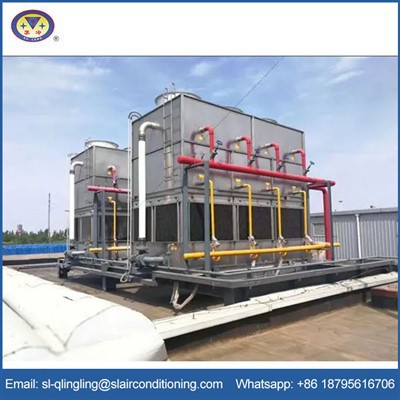
In the realm of refrigeration systems, the hybrid approach has gained significant traction for its efficiency and adaptability. A key component in many hybrid refrigeration setups is the Evaporative Condensing Unit. As a leading supplier of these units, I'm excited to delve into how an Evaporative Condensing Unit operates within a hybrid refrigeration system.
Basics of Hybrid Refrigeration Systems
Hybrid refrigeration systems combine different types of condensers to optimize performance under various operating conditions. Typically, they integrate an air - cooled condenser and an evaporative condenser. The goal is to take advantage of the unique characteristics of each condenser type. Air - cooled condensers are simple and reliable, but they can be less efficient in high - temperature environments. On the other hand, evaporative condensers offer higher efficiency by using the latent heat of evaporation, but they require a water supply.
How an Evaporative Condensing Unit Works
An Evaporative Condensing Unit consists of several key components: a coil, a water distribution system, a fan, and a sump. The refrigerant, which is in a high - pressure and high - temperature vapor state after leaving the compressor, enters the coil of the evaporative condensing unit.
The water distribution system sprays water over the outside of the coil. As the water evaporates, it absorbs heat from the refrigerant inside the coil. This heat transfer causes the refrigerant to condense from a vapor to a liquid state. The fan in the unit plays a crucial role. It draws air through the unit, which helps in the evaporation process by removing the water vapor from the vicinity of the coil. The air also aids in cooling the remaining water that has not evaporated, which can then be recirculated.
The sump at the bottom of the unit collects the water that has not evaporated. A pump in the system then recirculates this water back to the water distribution system for reuse. This closed - loop water system is designed to minimize water consumption, making the evaporative condensing unit an environmentally friendly option in many cases.


The Role of Evaporative Condensing Units in Hybrid Systems
In a hybrid refrigeration system, the evaporative condensing unit and the Air Condenser Unit work in tandem. During mild weather conditions, the air - cooled condenser can handle the majority of the heat rejection load. It operates with relatively low energy consumption and does not require a water supply. This is ideal for times when the ambient temperature is low enough for the air - cooled condenser to function efficiently.
However, when the ambient temperature rises, the performance of the air - cooled condenser begins to decline. This is where the evaporative condensing unit steps in. The evaporative cooling effect allows it to maintain high efficiency even in hot weather. By using the latent heat of evaporation, it can reject a large amount of heat with relatively less energy input compared to an air - cooled condenser under the same high - temperature conditions.
Advantages of Using Evaporative Condensing Units in Hybrid Systems
One of the main advantages is energy efficiency. The combination of air - cooled and evaporative condensers allows the system to operate at optimal efficiency across a wide range of ambient temperatures. This leads to significant energy savings over the long term, which is a major concern for industrial and commercial users.
Another benefit is the reduced water consumption. While evaporative condensers do require water, the closed - loop water system in modern evaporative condensing units minimizes water wastage. In comparison to traditional evaporative cooling systems that continuously use fresh water, these units are much more water - efficient.
The hybrid system also offers flexibility. It can adapt to changing environmental conditions and operational requirements. For example, in regions with seasonal temperature variations, the system can switch between the air - cooled and evaporative condensers based on the weather.
Types of Evaporative Condensing Units
There are different types of evaporative condensing units available in the market. Industrial Evaporative Condenser units are designed for large - scale industrial applications. They are built to handle high heat loads and are often used in industries such as food processing, chemical manufacturing, and power generation.
Evapco Evaporative Condenser is another well - known type. Evapco has a reputation for producing high - quality evaporative condensers with advanced design features. These condensers are known for their reliability and energy efficiency, making them a popular choice for many commercial and industrial refrigeration systems.
Maintenance of Evaporative Condensing Units
Proper maintenance is essential to ensure the long - term performance of evaporative condensing units. Regular cleaning of the coil is necessary to prevent the buildup of dirt, scale, and other contaminants. This can impede heat transfer and reduce the efficiency of the unit.
The water quality in the system also needs to be monitored. Hard water can cause scale formation on the coil and other components. Water treatment chemicals may be required to control scale, corrosion, and biological growth in the water system.
The fan and pump should be inspected regularly for proper operation. Any signs of wear or malfunction should be addressed promptly to avoid system failures.
Conclusion
Evaporative condensing units play a vital role in hybrid refrigeration systems. Their ability to provide high - efficiency heat rejection, especially in high - temperature conditions, makes them an indispensable part of modern refrigeration setups. The combination of air - cooled and evaporative condensers in a hybrid system offers numerous advantages, including energy efficiency, reduced water consumption, and flexibility.
If you are in the market for an efficient and reliable refrigeration solution, consider the benefits of a hybrid system with an evaporative condensing unit. As a leading supplier of evaporative condensing units, we are committed to providing high - quality products and excellent customer service. Whether you need an Industrial Evaporative Condenser for a large - scale industrial application or an Evapco Evaporative Condenser for a commercial refrigeration system, we have the right solution for you. Contact us today to discuss your specific requirements and start the procurement process.
References
ASHRAE Handbook of Refrigeration. American Society of Heating, Refrigerating and Air - Conditioning Engineers.
Dossat, R. J. (1991). Principles of Refrigeration. Prentice Hall.
Stoecker, W. F., & Jones, J. W. (1982). Refrigeration and Air Conditioning. McGraw - Hill.