As a leading supplier of condensers for water coolers, I've witnessed firsthand the intricate dance of refrigerants within these vital components. Understanding how the refrigerant flows in a condenser of a water cooler is not only crucial for those in the HVAC industry but also for anyone interested in the science behind cooling systems. In this blog, I'll delve into the details of this process, providing insights that can help you make informed decisions when it comes to choosing the right condenser for your water cooler.
The Basics of a Water Cooler Condenser
Before we dive into the refrigerant flow, let's briefly review the role of a condenser in a water cooler. A condenser is a heat exchanger that plays a pivotal role in the refrigeration cycle. Its primary function is to remove heat from the refrigerant, causing it to change from a high-pressure vapor to a high-pressure liquid. This phase change is essential for the efficient operation of the water cooler, as it allows the refrigerant to absorb heat from the water being cooled and then release it outside the system.
The Refrigerant Flow Process
The refrigerant flow in a condenser of a water cooler can be broken down into several key stages:


1. Entry into the Condenser
The refrigerant enters the condenser as a high-pressure, high-temperature vapor. This vapor is typically produced by the compressor, which increases the pressure and temperature of the refrigerant to facilitate heat transfer. As the refrigerant enters the condenser, it encounters a series of tubes or coils that are designed to maximize the surface area available for heat exchange.
2. Heat Transfer
Once inside the condenser, the refrigerant begins to transfer heat to the surrounding environment. This heat transfer occurs through a combination of conduction, convection, and radiation. In most water cooler condensers, the refrigerant is cooled by either air or water.
- Air-Cooled Condensers: In air-cooled condensers, a fan blows ambient air over the condenser coils, carrying away the heat from the refrigerant. As the air absorbs the heat, the refrigerant temperature decreases, causing it to condense into a liquid. The efficiency of an air-cooled condenser depends on factors such as the ambient air temperature, the airflow rate, and the surface area of the condenser coils. For more information on air-cooled condensers, you can visit our Air Condenser Unit page.
- Water-Cooled Condensers: In water-cooled condensers, water is used as the cooling medium. The refrigerant flows through the condenser tubes, while water circulates around the tubes, absorbing the heat from the refrigerant. The warm water is then typically sent to a cooling tower or other heat rejection device to be cooled before being recirculated. Water-cooled condensers are generally more efficient than air-cooled condensers, especially in hot climates, but they require a reliable water source and proper water treatment to prevent scaling and corrosion.
3. Condensation
As the refrigerant loses heat, it begins to condense from a vapor to a liquid. This phase change occurs at a constant temperature, known as the saturation temperature, which is determined by the pressure of the refrigerant. As the refrigerant continues to condense, the liquid refrigerant accumulates at the bottom of the condenser.
4. Exit from the Condenser
Once the refrigerant has fully condensed into a liquid, it exits the condenser and flows towards the expansion valve. The expansion valve is responsible for reducing the pressure of the refrigerant, allowing it to expand and cool further before entering the evaporator, where it will absorb heat from the water being cooled.
Factors Affecting Refrigerant Flow
Several factors can affect the refrigerant flow in a condenser of a water cooler:
- Refrigerant Type: Different refrigerants have different physical properties, such as boiling point, specific heat, and density, which can affect their performance in a condenser. For example, some refrigerants may require higher pressures or temperatures to condense, while others may have better heat transfer characteristics.
- Condenser Design: The design of the condenser, including the size, shape, and material of the tubes or coils, can also impact the refrigerant flow. A well-designed condenser will have a large surface area for heat exchange, efficient airflow or water flow patterns, and minimal pressure drop.
- Operating Conditions: The operating conditions of the water cooler, such as the ambient temperature, the water temperature, and the load on the system, can also affect the refrigerant flow. For example, in hot weather, the condenser may need to work harder to remove heat from the refrigerant, which can lead to higher pressures and temperatures.
Importance of Proper Refrigerant Flow
Proper refrigerant flow is essential for the efficient and reliable operation of a water cooler. If the refrigerant flow is restricted or disrupted, it can lead to several problems, including:
- Reduced Cooling Capacity: A restricted refrigerant flow can reduce the amount of heat that the condenser can remove from the refrigerant, which can result in a decrease in the cooling capacity of the water cooler.
- Higher Energy Consumption: When the refrigerant flow is restricted, the compressor may need to work harder to maintain the desired pressure and temperature, which can increase the energy consumption of the system.
- Component Damage: Over time, a restricted refrigerant flow can cause damage to the compressor, condenser, and other components of the water cooler, leading to costly repairs or premature failure.
Choosing the Right Condenser for Your Water Cooler
As a supplier of condensers for water coolers, we understand the importance of choosing the right condenser for your specific application. When selecting a condenser, it's important to consider factors such as the cooling capacity, the operating conditions, the refrigerant type, and the available space.
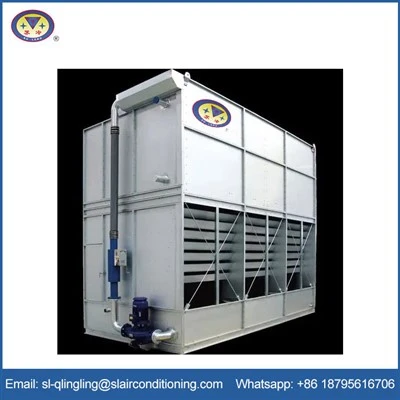
- Evaporative Condensers: Evaporative condensers are a popular choice for water coolers, especially in large commercial or industrial applications. These condensers use a combination of air and water to cool the refrigerant, which can result in higher efficiency and lower energy consumption compared to air-cooled or water-cooled condensers. For more information on evaporative condensers and their prices, you can visit our Evaporative Condenser Price page.
- Evapco Evaporative Condensers: Evapco is a leading manufacturer of evaporative condensers, known for their high-quality products and innovative designs. Our Evapco Evaporative Condenser page provides more information on these products and their features.
Conclusion
Understanding how the refrigerant flows in a condenser of a water cooler is essential for anyone involved in the design, installation, or maintenance of these systems. By choosing the right condenser and ensuring proper refrigerant flow, you can improve the efficiency, reliability, and performance of your water cooler.
If you're in the market for a condenser for your water cooler, we invite you to contact us to discuss your specific needs. Our team of experts can help you select the right condenser for your application and provide you with the support and guidance you need to ensure a successful installation.
References
- ASHRAE Handbook of Refrigeration. American Society of Heating, Refrigerating and Air-Conditioning Engineers.
- Refrigeration and Air Conditioning Technology. William C. Whitman, William M. Johnson, and John Tomczyk.