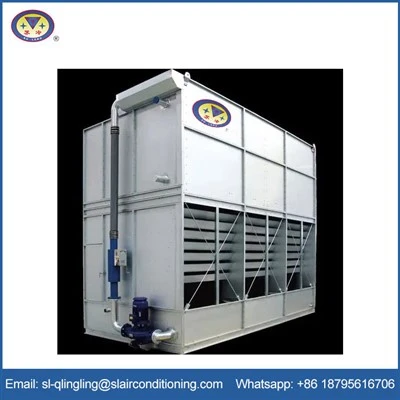
Hey there! As a supplier of Air Condenser Units, I often get asked a bunch of questions from customers. One question that pops up quite a bit is, "Is it necessary to insulate the pipes connected to an air condenser unit?" Well, let's dig into this topic and find out.
First off, let's understand what an air condenser unit does. It's a key part of a refrigeration or air - conditioning system. The condenser unit takes in hot, high - pressure refrigerant gas and cools it down so that it turns back into a liquid. This process is crucial for the whole system to work properly. The pipes connected to the air condenser unit are responsible for carrying the refrigerant between different parts of the system.
Benefits of Insulating the Pipes
Energy Efficiency
One of the main reasons to insulate the pipes is energy efficiency. When the pipes aren't insulated, there can be a significant amount of heat transfer. In a cooling system, the refrigerant in the pipes is supposed to be cold. If the pipes are exposed, they'll absorb heat from the surrounding environment. This means the air condenser unit has to work harder to keep the refrigerant at the right temperature. By insulating the pipes, we can reduce this unwanted heat transfer. As a result, the air condenser unit doesn't have to use as much energy to do its job. Over time, this can lead to some serious savings on energy bills. For example, in a commercial building with a large - scale air - conditioning system, the energy savings from pipe insulation can be quite substantial.
Preventing Condensation
Another big benefit is preventing condensation. When cold refrigerant flows through uninsulated pipes, the surface of the pipes can get really cold. If the surrounding air is warm and humid, moisture in the air will condense on the pipes. This can lead to a whole bunch of problems. For one, the water from condensation can drip onto the floor, causing slippery surfaces and potential safety hazards. It can also damage the surrounding equipment and structures over time due to corrosion. Insulating the pipes creates a barrier that keeps the surface temperature of the pipes closer to the ambient air temperature. This reduces the likelihood of condensation forming on the pipes.
Noise Reduction
Believe it or not, pipe insulation can also help with noise reduction. The flow of refrigerant through the pipes can create some noise, especially when the system is running at high capacity. Insulation can act as a sound - absorbing material, dampening the noise generated by the refrigerant flow. This is particularly important in places where a quiet environment is needed, like hospitals, libraries, or offices.
Situations Where Insulation Might Not Be as Necessary
Short Pipe Runs
If the pipe runs are very short, the amount of heat transfer and potential for condensation might be minimal. For example, in a small residential air - conditioning system where the pipes between the air condenser unit and the indoor unit are only a few feet long, the impact of heat gain or condensation might not be significant enough to justify the cost of insulation. However, even in these cases, a small amount of insulation can still provide some benefits in terms of energy efficiency and noise reduction.
Controlled Environments
In some industrial settings where the environment is tightly controlled, such as a clean room with a very stable temperature and humidity level, the need for pipe insulation might be reduced. Since the surrounding conditions are consistent, there's less risk of heat transfer and condensation. But keep in mind that even in these environments, insulation can still offer some energy - saving advantages.


Types of Pipe Insulation
There are several types of pipe insulation available on the market. One common type is foam insulation. Foam insulation is easy to install and has good thermal insulation properties. It comes in different thicknesses and can be cut to fit the size of the pipes. Another type is fiberglass insulation. Fiberglass is known for its high - temperature resistance and is often used in industrial applications. There are also rubber - based insulations, which are flexible and resistant to moisture.
When choosing the right insulation for the pipes connected to an air condenser unit, it's important to consider factors like the temperature range of the refrigerant, the environmental conditions, and the budget.
Our Products and Services
As an Air Condenser Unit supplier, we not only provide high - quality air condenser units but also offer expert advice on pipe insulation. We understand that every system is different, and we can help you determine whether pipe insulation is necessary for your specific situation. Our team of technicians can also assist with the installation of pipe insulation if needed.
If you're interested in learning more about evaporative condensers, you can check out our resources on Evaporative Condenser Refrigeration. We also have information on Water Condenser From Air and Industrial Evaporative Condenser.
Conclusion
So, is it necessary to insulate the pipes connected to an air condenser unit? In most cases, the answer is yes. The benefits of energy efficiency, preventing condensation, and noise reduction usually outweigh the cost of insulation. However, there are some situations where the need for insulation might be less critical.
If you're in the market for an air condenser unit or need advice on pipe insulation, don't hesitate to reach out. We're here to help you make the best decisions for your refrigeration or air - conditioning system. Whether you're a homeowner looking to upgrade your air - conditioning or a business owner in need of a large - scale industrial solution, we've got you covered. Contact us today to start the conversation about your specific requirements.
References
- ASHRAE Handbook - HVAC Systems and Equipment
- Insulation Manufacturers Association Technical Guides