

What are the control options available for an industrial cooler?
As an industrial cooler supplier, I understand the importance of having effective control options for industrial coolers. These control options not only ensure the efficient operation of the coolers but also contribute to energy savings and overall system reliability. In this blog post, I will discuss the various control options available for industrial coolers and how they can benefit your industrial cooling needs.
Temperature Control
One of the most fundamental control options for an industrial cooler is temperature control. Maintaining the desired temperature is crucial in industrial settings, whether it's for preserving perishable goods in a cold room or controlling the temperature in a manufacturing process.
Thermostats are commonly used for temperature control. They can be set to a specific temperature, and when the temperature in the cooling area deviates from the set point, the thermostat signals the cooler to turn on or off. There are different types of thermostats, including mechanical and digital. Digital thermostats offer more precise temperature control and often come with additional features such as programmable settings and temperature display.
For more advanced temperature control, proportional - integral - derivative (PID) controllers can be used. PID controllers continuously adjust the cooling output based on the difference between the set temperature and the actual temperature. They calculate the error, the rate of change of the error, and the integral of the error over time to provide a more accurate and stable temperature control.
Humidity Control
In addition to temperature, humidity control is also important in many industrial applications. High humidity can lead to issues such as mold growth, corrosion, and damage to sensitive equipment.
Humidistats are used to control humidity levels. Similar to thermostats, they can be set to a specific humidity level. When the humidity in the cooling area exceeds or falls below the set point, the humidistat signals the cooler to adjust its operation. Some industrial coolers are equipped with built - in humidity control systems that can both dehumidify and humidify the air as needed.
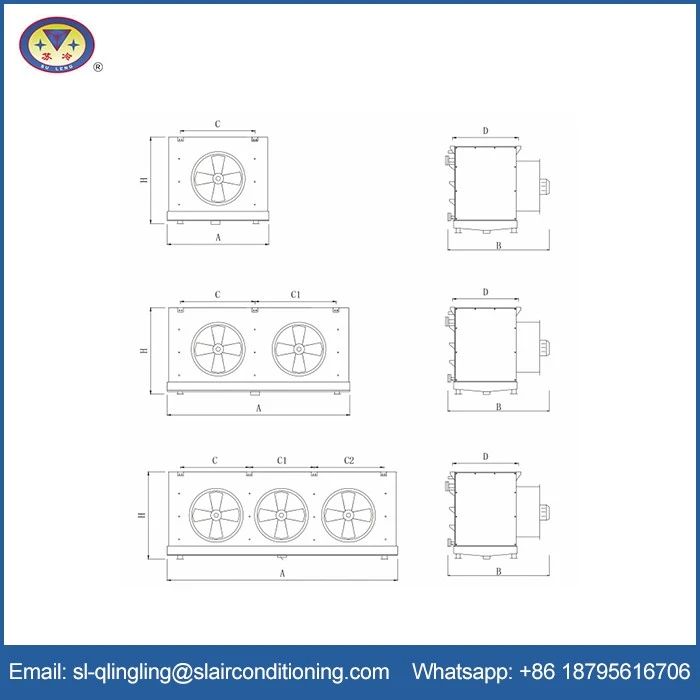

Fan Speed Control
The fan in an industrial cooler plays a crucial role in distributing the cooled air. Controlling the fan speed can help optimize the cooling process and save energy.
Variable frequency drives (VFDs) are commonly used to control fan speed. VFDs allow the fan to operate at different speeds based on the cooling requirements. When the cooling demand is low, the fan can run at a lower speed, reducing energy consumption. As the cooling demand increases, the fan speed can be increased to provide more airflow.
On - Off Control
On - off control is the simplest form of control for an industrial cooler. The cooler is either turned on or off based on a set condition, such as reaching a certain temperature or a timer. While this is a basic control method, it can be effective in some applications where precise control is not required.
However, on - off control can lead to energy inefficiencies, as the cooler may cycle on and off frequently, consuming more energy than necessary. In addition, frequent cycling can also put additional stress on the cooler components, reducing their lifespan.
Remote Monitoring and Control
With the advancement of technology, remote monitoring and control have become increasingly popular for industrial coolers. Remote monitoring allows you to keep track of the cooler's performance, temperature, humidity, and other parameters from a remote location. You can receive real - time alerts if there are any issues with the cooler, such as a temperature deviation or a malfunction.
Remote control enables you to adjust the cooler's settings, such as temperature, fan speed, and on - off status, without being physically present at the cooler. This is especially useful for large industrial facilities where multiple coolers are installed in different locations.
Energy Management Control
Energy management control options are designed to optimize the energy consumption of industrial coolers. These options can include features such as load shedding, peak shaving, and energy - efficient operation modes.
Load shedding involves reducing the cooling load during periods of high energy demand. For example, the cooler can be programmed to reduce its cooling capacity during peak hours to avoid overloading the electrical grid. Peak shaving is similar, but it focuses on reducing the peak energy consumption of the cooler.
Energy - efficient operation modes can be set to adjust the cooler's operation based on the actual cooling requirements. For example, the cooler can operate at a lower capacity during periods of low cooling demand, saving energy without sacrificing the cooling performance.
Benefits of Different Control Options
- Energy Savings: By using control options such as temperature control, fan speed control, and energy management control, industrial coolers can operate more efficiently, reducing energy consumption and lowering operating costs.
- Improved Performance: Precise control of temperature, humidity, and fan speed ensures that the industrial cooler can provide the optimal cooling conditions for your industrial processes or storage needs.
- Enhanced Reliability: Remote monitoring and control options allow you to detect and address issues with the cooler in a timely manner, reducing the risk of breakdowns and downtime.
- Customization: Different control options can be tailored to meet the specific needs of your industrial application, providing a customized cooling solution.
Conclusion
As an industrial cooler supplier, I offer a wide range of control options for our industrial coolers. Whether you need basic on - off control or advanced remote monitoring and energy management control, we can provide a solution that meets your requirements.
If you are interested in learning more about our industrial coolers and the control options available, please visit our product pages: Air Coolers for Cold Room, Water Cooled Air Conditioner, and Cold Room Industrial Air Cooler. We are always ready to assist you in selecting the right industrial cooler and control options for your business. Contact us today to start the procurement process and discuss your specific needs.


