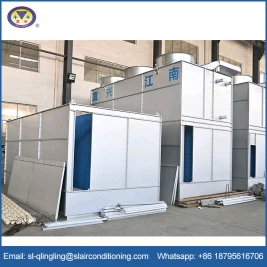
In view of typhoon disaster, the prevention work of evaporative condenser mainly focuses on preventing equipment damage, maintaining normal operation of equipment and reducing subsequent maintenance costs. Here are some specific precautions to take:
1. Preventive measures before typhoon
Fixed equipment:
Before the typhoon, ensure that the evaporative condenser and its related equipment (such as pumps, fans, etc.) are firmly fixed to the foundation to prevent displacement or overturn caused by strong winds.
Key components are reinforced with additional fixtures (e.g. ropes, chains, etc.) to ensure their stability in extreme weather.
Check drainage system:
Clean and inspect evaporative condenser drainage system to ensure smooth drainage. This includes cleaning drainage pipes, checking drainage pumps, etc., to prevent damage to equipment caused by stagnant water.
Turn off non-essential equipment:
Before the typhoon, if conditions permit, you can shut down non-essential equipment to reduce the risk of equipment operation in extreme weather.
Prepare emergency supplies:
Prepare necessary emergency supplies, such as tarps, sandbags, flashlights, backup power, etc., to make emergency repairs or protect equipment during or after a typhoon.
2. Protection measures during typhoons
Monitoring equipment status:
If conditions permit, the operating status of the evaporative condenser can be monitored in real time through the remote monitoring system. Once an abnormal situation is found, measures should be taken immediately to deal with it.
Close doors and Windows:
If the evaporative condenser is installed indoors or around equipment that needs to be protected, the doors and Windows should be closed to reduce the invasion of wind and rain.
Power failure protection:
During a typhoon, if extreme weather such as strong winds and heavy rain is expected, you can consider temporarily cutting off the power supply to the evaporating condenser to prevent equipment damage or safety accidents.
3. Recovery and inspection after typhoon
Check for equipment damage:
After the typhoon, the evaporative condenser and its related equipment should be checked first for damage. The contents of the inspection include but are not limited to the appearance, internal structure, drainage system, and electrical wiring of the equipment.
Clean up the site:
Clean up water and debris around the equipment to ensure that the equipment is in a dry and clean environment.
Repair or replace damaged parts:
Repair or replace damaged parts according to inspection results. For example, if the drainage pipe is found to be blocked or broken, it should be cleaned or replaced in time.
To restart the device:
After confirming that the equipment has been repaired and is in good condition, the evaporative condenser can be restarted. Before starting, check whether the electrical line is safe and the drainage system is smooth.
Record and summary:
Record the operation, damage, and maintenance process of the evaporating condenser during a typhoon, to sum up experience and lessons and provide reference for future prevention work.
Through the implementation of the above preventive measures, the impact of typhoon disasters on evaporative condensers can be effectively reduced, and the normal operation and service life of the equipment can be ensured in extreme weather.