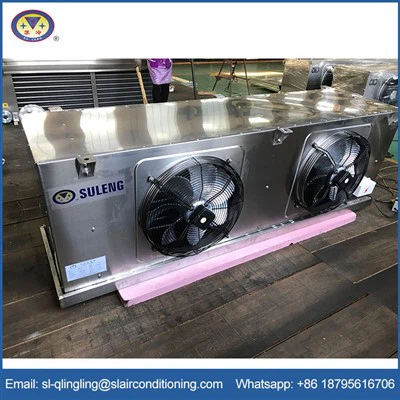
In recent years, there has been a growing emphasis on environmental sustainability across various industries, and the air - cooling sector is no exception. As a supplier of ceiling air coolers, I am often asked whether ceiling air coolers are environmentally friendly. In this blog post, I will delve into the environmental aspects of ceiling air coolers, exploring their energy consumption, refrigerant use, and overall impact on the environment.
Energy Efficiency
One of the primary factors in determining the environmental friendliness of an air - cooling system is its energy efficiency. Ceiling air coolers generally have a significant advantage in this regard. Unlike traditional air - conditioning units that rely on compressors to cool the air, ceiling air coolers operate on the principle of evaporative cooling.
Evaporative cooling is a natural process where water absorbs heat from the surrounding air as it evaporates. Ceiling air coolers use a fan to draw warm air through water - soaked pads, causing the water to evaporate and cool the air. This process consumes far less energy compared to the refrigeration cycle used in conventional air conditioners.
Most ceiling air coolers have a relatively low power rating, typically ranging from 100 to 500 watts, depending on the size and model. In contrast, a standard split - system air conditioner can consume anywhere from 1000 to 5000 watts or more. This substantial difference in energy consumption means that ceiling air coolers can significantly reduce electricity bills and, more importantly, lower the overall demand for electricity.


The reduced energy consumption also has a positive impact on the environment. Power generation is a major source of greenhouse gas emissions, especially when fossil fuels such as coal, oil, and natural gas are used. By using less electricity, ceiling air coolers help to decrease the amount of fossil fuels burned for power generation, thereby reducing carbon dioxide and other pollutant emissions.
Refrigerant Use
Another crucial aspect of environmental friendliness is the use of refrigerants. Traditional air - conditioning systems rely on refrigerants such as hydrofluorocarbons (HFCs) to transfer heat and cool the air. However, many HFCs are potent greenhouse gases with a high global warming potential (GWP). When these refrigerants leak into the atmosphere, they can contribute to climate change.
Ceiling air coolers, on the other hand, do not use refrigerants in the same way as conventional air conditioners. Since they operate on the principle of evaporative cooling, they do not require a refrigerant - based refrigeration cycle. This eliminates the risk of refrigerant leaks and the associated environmental damage.
The absence of refrigerants also simplifies the manufacturing and disposal processes of ceiling air coolers. There is no need for specialized equipment to handle and recycle refrigerants, reducing the overall environmental impact of the product lifecycle.
Water Consumption
While ceiling air coolers offer many environmental benefits in terms of energy and refrigerant use, water consumption is a factor that needs to be considered. Evaporative cooling requires a continuous supply of water to keep the cooling pads wet. The amount of water consumed by a ceiling air cooler depends on several factors, including the ambient temperature, humidity, and the size of the unit.
In regions with abundant water resources, the water consumption of ceiling air coolers may not be a significant concern. However, in areas facing water scarcity, the water usage of these coolers could be a drawback. To address this issue, some modern ceiling air coolers are designed with water - saving features. For example, they may have adjustable water flow rates or sensors that can detect the humidity level and adjust the water supply accordingly.
Air Quality
Ceiling air coolers can also have a positive impact on indoor air quality. As the air passes through the water - soaked pads, dust, pollen, and other airborne particles are trapped in the water. This natural filtration process helps to improve the quality of the air circulated in the room.
In addition, evaporative cooling adds moisture to the air, which can be beneficial in dry climates. Maintaining an appropriate level of humidity in indoor spaces can prevent dry skin, irritated eyes, and respiratory problems. By improving indoor air quality and comfort, ceiling air coolers can reduce the need for other air - treatment devices, further contributing to energy savings and environmental protection.
Types of Ceiling Air Coolers and Their Environmental Impact
There are different types of ceiling air coolers available in the market, each with its own environmental characteristics.
- Ceiling Mounted Evaporative Cooler: The Ceiling Mounted Evaporative Cooler is a popular choice for industrial and commercial applications. These coolers are designed to be mounted on the ceiling, saving floor space and providing efficient cooling. They operate on the evaporative cooling principle, offering low - energy consumption and no refrigerant use. Their large - scale design allows them to cool large areas effectively, making them a sustainable option for big spaces.
- Dual Discharge Ceiling Air Cooler: The Dual Discharge Ceiling Air Cooler is another innovative product. With dual - discharge functionality, it can distribute cool air more evenly in a room. This type of cooler also benefits from the energy - efficient evaporative cooling process and the absence of harmful refrigerants. The even distribution of cool air means that less energy is wasted on over - cooling certain areas.
- Quick - freezing Storage Air Cooler: The Quick - freezing Storage Air Cooler is specifically designed for cold storage applications. Although it may have different performance requirements compared to regular ceiling air coolers, it still adheres to the principles of energy efficiency and environmental friendliness. By using evaporative cooling techniques, it can maintain low temperatures in storage areas with relatively low energy consumption.
Conclusion
In conclusion, ceiling air coolers are generally environmentally friendly. Their low energy consumption, lack of harmful refrigerants, and potential to improve air quality make them a sustainable alternative to traditional air - conditioning systems. While water consumption is a factor that needs to be managed, especially in water - scarce regions, modern designs are addressing this issue with water - saving features.
As a supplier of ceiling air coolers, I am committed to providing products that not only meet the cooling needs of our customers but also contribute to a more sustainable future. If you are interested in learning more about our ceiling air coolers or are considering a purchase for your home, office, or industrial space, I encourage you to contact us for a detailed discussion. We can help you choose the most suitable model based on your specific requirements and environmental considerations.