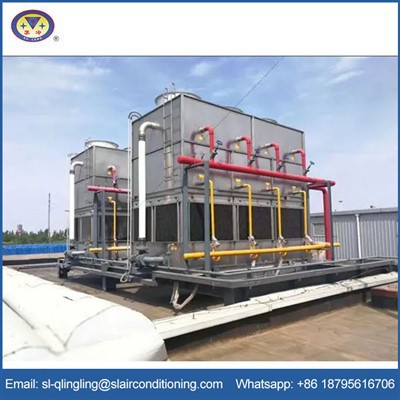
As a supplier of condensers for water coolers, I often encounter a common question from customers in hot climates: Can a condenser for a water cooler be used in a hot climate? This question is not only relevant to the functionality of the equipment but also to the overall efficiency and cost - effectiveness of the cooling system. In this blog, I will delve into the technical aspects, advantages, and limitations of using water cooler condensers in hot climates.
Understanding the Function of a Condenser in a Water Cooler
Before we discuss the suitability of using a condenser in a hot climate, it's essential to understand its basic function. A condenser in a water cooler is a critical component of the refrigeration cycle. Its main role is to convert the high - pressure, high - temperature refrigerant vapor coming from the compressor into a high - pressure liquid. This process releases heat, which is then dissipated into the surrounding environment.
The efficiency of a condenser is measured by its ability to transfer heat effectively. The better the heat transfer, the more efficient the refrigeration cycle, and the cooler the water in the water cooler. The heat transfer process depends on several factors, including the design of the condenser, the type of refrigerant used, and the temperature and humidity of the surrounding environment.
Challenges in Hot Climates
Hot climates present several challenges for the operation of condensers in water coolers. One of the most significant challenges is the high ambient temperature. When the outside temperature is high, the temperature difference between the refrigerant in the condenser and the surrounding air is reduced. This makes it more difficult for the condenser to transfer heat effectively.
According to thermodynamics, the rate of heat transfer is proportional to the temperature difference between the hot and cold substances. In a hot climate, this temperature difference is minimized, leading to a decrease in the heat transfer rate. As a result, the condenser has to work harder to achieve the same level of cooling, which can lead to increased energy consumption and reduced efficiency.
Another challenge is the high humidity often associated with hot climates. High humidity can cause moisture to accumulate on the surface of the condenser, which can insulate it and further reduce its heat transfer efficiency. Additionally, the presence of moisture can lead to corrosion and other forms of damage to the condenser over time.
Types of Condensers and Their Suitability in Hot Climates
There are several types of condensers used in water coolers, each with its own advantages and disadvantages in hot climates.
Air - Cooled Condensers
Air - cooled condensers are the most common type of condensers used in water coolers. They work by using fans to blow air over the condenser coils, which helps to dissipate the heat. In hot climates, air - cooled condensers can face significant challenges. As mentioned earlier, the high ambient temperature reduces the temperature difference for heat transfer. However, some modern air - cooled condensers are designed with advanced features to improve their performance in hot conditions.
For example, the Air Condenser Unit is equipped with high - efficiency fans and fins that increase the surface area for heat transfer. These features can help to mitigate the effects of high ambient temperatures to some extent. However, they still require proper ventilation and regular maintenance to ensure optimal performance.
Evaporative Condensers
Evaporative condensers use the process of evaporation to enhance heat transfer. They work by spraying water over the condenser coils, and as the water evaporates, it absorbs heat from the refrigerant. Evaporative condensers are generally more efficient than air - cooled condensers in hot climates because the evaporation process can significantly increase the heat transfer rate.
The Finned Energy Saving Condenser is a type of evaporative condenser that combines the benefits of fins for increased surface area and the evaporative cooling effect. This design can help to maintain high efficiency even in high - temperature and high - humidity conditions. However, evaporative condensers require a constant supply of water, which can be a limitation in areas with water scarcity.
Steam Condensate Drain Coolers
Steam condensate drain coolers are another type of condenser that can be used in water coolers. They are designed to cool the steam condensate before it is drained from the system. In hot climates, steam condensate drain coolers can help to improve the overall efficiency of the water cooler by recovering some of the heat from the condensate.
The Steam Condensate Drain Cooler is a reliable option for hot climates. It can operate effectively even when the ambient temperature is high, as it focuses on the heat recovery from the condensate rather than relying solely on the ambient air for cooling.
Strategies to Improve Condenser Performance in Hot Climates
To ensure the optimal performance of condensers in hot climates, several strategies can be implemented.
Proper Sizing and Selection
It is crucial to select the right size and type of condenser for the specific requirements of the water cooler and the climate conditions. A condenser that is too small will not be able to handle the heat load effectively, while a condenser that is too large will be inefficient and costly. Consulting with a professional engineer or a knowledgeable supplier can help in making the right selection.
Regular Maintenance
Regular maintenance is essential for the proper functioning of condensers in hot climates. This includes cleaning the condenser coils to remove dirt, dust, and debris that can reduce heat transfer efficiency. It also involves checking and replacing any worn - out components, such as fans and motors, to ensure that the condenser is operating at its best.
Installation in a Suitable Location
The location where the condenser is installed can also have a significant impact on its performance. It should be installed in a well - ventilated area away from direct sunlight and other sources of heat. This will help to ensure that the ambient air temperature around the condenser is as low as possible, improving the heat transfer rate.
Conclusion
In conclusion, while using a condenser for a water cooler in a hot climate presents several challenges, it is indeed possible with the right type of condenser and proper strategies in place. Air - cooled condensers, evaporative condensers, and steam condensate drain coolers each have their own advantages and limitations in hot climates. By selecting the appropriate condenser, implementing proper maintenance procedures, and ensuring a suitable installation location, it is possible to achieve efficient and reliable operation of water coolers in hot climates.


If you are looking for high - quality condensers for your water coolers, especially for use in hot climates, we are here to help. Our company offers a wide range of condensers, including the Finned Energy Saving Condenser, Air Condenser Unit, and Steam Condensate Drain Cooler. We are committed to providing our customers with the best products and solutions to meet their cooling needs. If you have any questions or would like to discuss your requirements, please feel free to contact us for procurement and further discussions.
References
- ASHRAE Handbook - Refrigeration. American Society of Heating, Refrigerating and Air - Conditioning Engineers.
- Incropera, F. P., & DeWitt, D. P. (2002). Fundamentals of Heat and Mass Transfer. Wiley.
- Thermodynamics: An Engineering Approach. Cengel, Y. A., & Boles, M. A. (2015). McGraw - Hill Education.