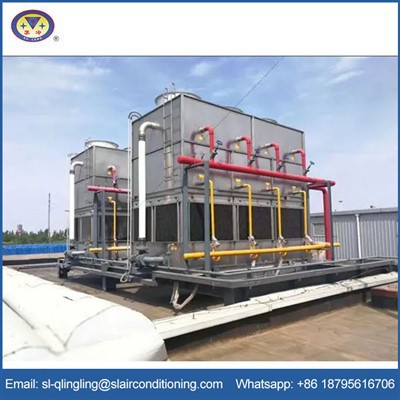
As a supplier of Water Condensers From Air, I often get asked about the practicality of using these innovative devices in Recreational Vehicles (RVs). The idea of generating water from the air while on the road or at a campsite is appealing, especially in remote areas where water sources may be scarce or unreliable. In this blog post, I'll explore the feasibility, benefits, and challenges of using a water condenser from air in an RV.
How Water Condensers From Air Work
Before delving into the RV application, it's essential to understand how water condensers from air operate. These devices function based on the principle of condensation. They draw in ambient air, which contains water vapor. The air is then cooled to a temperature below its dew point, causing the water vapor to condense into liquid water. This condensed water is collected and, in some cases, purified for consumption.
The process typically involves a compressor, a refrigerant, and a heat exchanger. The compressor circulates the refrigerant, which absorbs heat from the incoming air, cooling it down. As the air cools, the water vapor turns into droplets that are collected in a reservoir. Some advanced models also include filtration systems to remove impurities and ensure the water is safe to drink.
Feasibility of Using a Water Condenser From Air in an RV
The feasibility of using a water condenser from air in an RV depends on several factors, including the climate, the size of the RV, and the power supply.
Climate: The effectiveness of a water condenser from air is highly dependent on the humidity level of the surrounding air. In regions with high humidity, such as coastal areas or tropical climates, these devices can produce a significant amount of water. However, in dry climates, the water production may be limited. For example, in the desert, where humidity levels can be as low as 10%, the water condenser may struggle to generate enough water to meet the needs of an RV traveler.
Size of the RV: The size of the RV also plays a role in determining the feasibility of using a water condenser from air. Larger RVs may have more space to accommodate the device and its associated components, such as the water reservoir and the filtration system. Smaller RVs, on the other hand, may have limited space, which could make installation challenging. Additionally, the weight of the water condenser and the collected water should be considered to ensure it does not exceed the RV's weight capacity.
Power Supply: Water condensers from air require a power source to operate. Most models are designed to run on electricity, which can be a challenge in an RV, especially when camping off the grid. Some RVs are equipped with solar panels or generators to provide power, but these may not be sufficient to run the water condenser continuously. It's important to choose a model that is energy-efficient and can operate on the available power supply.
Benefits of Using a Water Condenser From Air in an RV
Despite the challenges, there are several benefits to using a water condenser from air in an RV.
Self-Sufficiency: One of the primary advantages of using a water condenser from air is the ability to generate your own water. This can be particularly useful when traveling in remote areas where access to clean water is limited. By having a water condenser on board, you can reduce your reliance on external water sources and ensure a constant supply of fresh water.
Convenience: Carrying large amounts of water in an RV can be cumbersome and take up valuable space. A water condenser from air eliminates the need to transport water, making it more convenient for RV travelers. You can simply generate the water you need as you go, without having to worry about running out or finding a place to refill your water tanks.
Environmental Sustainability: Using a water condenser from air is a more environmentally friendly option compared to traditional water sources. It reduces the need for plastic water bottles, which can contribute to pollution and waste. Additionally, by generating water from the air, you are using a renewable resource, which helps to conserve water and reduce your carbon footprint.


Challenges of Using a Water Condenser From Air in an RV
While there are many benefits to using a water condenser from air in an RV, there are also some challenges that need to be addressed.
Cost: Water condensers from air can be relatively expensive, especially high-end models with advanced features such as filtration systems and energy-efficient design. The initial investment may be a deterrent for some RV travelers, especially those on a budget.
Maintenance: Like any other device, water condensers from air require regular maintenance to ensure optimal performance. This includes cleaning the filters, checking the refrigerant levels, and inspecting the components for any signs of wear or damage. Maintenance can be time-consuming and may require specialized knowledge or tools.
Noise: Some water condensers from air can be noisy, especially when the compressor is running. This can be a nuisance, especially when trying to sleep or relax in the RV. It's important to choose a model that is quiet and does not produce excessive noise.
Choosing the Right Water Condenser From Air for Your RV
If you're considering using a water condenser from air in your RV, there are several factors to consider when choosing the right model.
Water Production Capacity: The water production capacity of the condenser is an important factor to consider. You'll need to choose a model that can produce enough water to meet your needs, based on the number of people traveling in the RV and your daily water consumption.
Energy Efficiency: Since power supply can be a challenge in an RV, it's important to choose a water condenser that is energy-efficient. Look for models with features such as variable speed compressors and energy-saving modes to reduce power consumption.
Size and Weight: As mentioned earlier, the size and weight of the water condenser are important considerations, especially in a small RV. Choose a model that is compact and lightweight, and that can be easily installed and stored in the RV.
Filtration System: If you plan to use the water for drinking, it's important to choose a water condenser with a reliable filtration system. Look for models that can remove impurities such as bacteria, viruses, and chemicals to ensure the water is safe to drink.
Conclusion
In conclusion, using a water condenser from air in an RV is a feasible option, but it's important to consider the climate, the size of the RV, and the power supply before making a decision. While there are some challenges, such as cost, maintenance, and noise, the benefits of self-sufficiency, convenience, and environmental sustainability make it a worthwhile investment for many RV travelers.
If you're interested in learning more about our Water Condenser From Air products or would like to discuss your specific needs, please don't hesitate to contact us. We also offer Industrial Water Condenser and Industrial Evaporative Condenser solutions for other applications. Our team of experts is here to help you find the right water condenser for your needs.
References
- ASHRAE Handbook - Fundamentals. American Society of Heating, Refrigerating and Air-Conditioning Engineers (ASHRAE).
- "Water Generation from Air: A Review of Technologies and Applications." Journal of Water Resources and Protection.
- "Feasibility Study of Water Condensation from Ambient Air for Domestic Use in Arid Regions." Desalination and Water Treatment.