

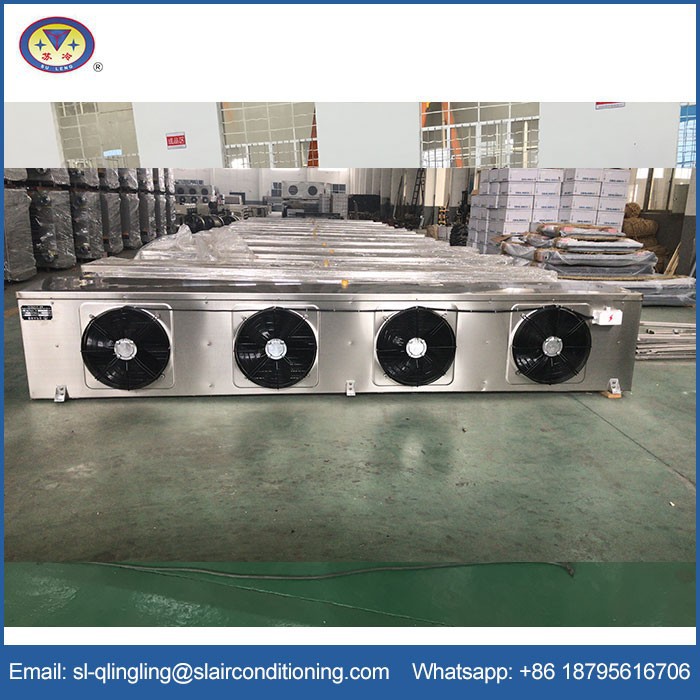
As a supplier of the Four Fans Air Cooler, I've had the privilege of witnessing the diverse applications and performance variations of our product in different environments. One factor that significantly impacts the performance of air coolers is altitude. In this blog, I'll explore how the performance of the Four Fans Air Cooler varies with different altitudes, providing valuable insights for potential customers.
Understanding the Basics of Air Cooling
Before delving into the effects of altitude on the Four Fans Air Cooler, it's essential to understand the basic principles of air cooling. Air coolers work on the principle of evaporative cooling. When hot, dry air passes through a wet cooling pad, the water in the pad evaporates, absorbing heat from the air and reducing its temperature. The cooled air is then circulated into the surrounding environment by the fans.
The efficiency of this process depends on several factors, including the temperature and humidity of the incoming air, the surface area of the cooling pad, and the airflow generated by the fans. Altitude plays a crucial role in altering some of these factors, thereby affecting the performance of the air cooler.
How Altitude Affects Air Properties
Altitude has a significant impact on the properties of air, which in turn influence the performance of air coolers. As altitude increases, the following changes occur in the air:
- Air Density: Air density decreases with increasing altitude. At higher altitudes, the air molecules are more spread out, resulting in lower air pressure. This reduced air density means that there are fewer air molecules available to carry heat away from the cooling pad during the evaporation process.
- Humidity: The relative humidity of the air can vary with altitude. In general, the air tends to be drier at higher altitudes, which is beneficial for evaporative cooling. However, this also depends on local weather conditions and geographical factors.
- Temperature: Temperature typically decreases with increasing altitude. This lower ambient temperature can have both positive and negative effects on the performance of the air cooler, as we'll discuss in the following sections.
Performance of the Four Fans Air Cooler at Low Altitudes
At low altitudes (below 1,000 meters), the air is denser, and the air pressure is higher. This means that there are more air molecules available to carry heat away from the cooling pad, resulting in more efficient evaporation and better cooling performance. The Four Fans Air Cooler can effectively cool large spaces at low altitudes, providing a comfortable environment even in hot and humid conditions.
The higher air density also allows the fans to move more air, increasing the airflow and circulation in the room. This helps to distribute the cooled air evenly, reducing hot spots and ensuring a consistent temperature throughout the space.
In addition, the relatively higher humidity at low altitudes can further enhance the cooling effect of the air cooler. As the water in the cooling pad evaporates, it adds moisture to the air, which can help to alleviate dryness and improve comfort.
Performance of the Four Fans Air Cooler at High Altitudes
At high altitudes (above 2,000 meters), the performance of the Four Fans Air Cooler can be significantly different from that at low altitudes. The lower air density and pressure at high altitudes pose several challenges for the air cooler:
- Reduced Evaporation Efficiency: With fewer air molecules available to carry heat away from the cooling pad, the evaporation process is less efficient. This means that the air cooler may not be able to cool the air as effectively as it does at low altitudes.
- Lower Airflow: The reduced air density also affects the performance of the fans. The fans may have to work harder to move the same amount of air, resulting in lower airflow and reduced circulation in the room.
- Cold Air Issues: At high altitudes, the ambient temperature is generally lower. While this may seem like an advantage, it can actually pose a problem for the air cooler. If the incoming air is already cold, the evaporation process may not be able to cool the air further, and the air cooler may not provide any additional cooling benefit.
However, the drier air at high altitudes can also be an advantage for the Four Fans Air Cooler. The lower humidity allows for more rapid evaporation, which can compensate for the reduced air density to some extent. Additionally, the Four Fans Air Cooler is designed with powerful fans and a large cooling pad, which can help to overcome the challenges posed by high altitudes.
Comparison with Other Air Coolers
To better understand the performance of the Four Fans Air Cooler at different altitudes, it's useful to compare it with other types of air coolers, such as the Two Fans Air Cooler and the Industrial Portable Air Cooler.
- Two Fans Air Cooler: The Two Fans Air Cooler has a lower airflow capacity compared to the Four Fans Air Cooler. At low altitudes, it may be sufficient to cool small to medium-sized spaces, but at high altitudes, its performance may be even more limited due to the reduced air density.
- Industrial Portable Air Cooler: The Industrial Portable Air Cooler is designed for large spaces and heavy-duty applications. It typically has a larger cooling pad and more powerful fans, which can help to overcome the challenges posed by high altitudes. However, it may also consume more energy and be more expensive than the Four Fans Air Cooler.
Tips for Using the Four Fans Air Cooler at Different Altitudes
To optimize the performance of the Four Fans Air Cooler at different altitudes, here are some tips:
- Low Altitudes: At low altitudes, make sure to keep the cooling pad wet at all times to ensure efficient evaporation. You can also adjust the fan speed according to the size of the room and the ambient temperature.
- High Altitudes: At high altitudes, it's important to position the air cooler in a well-ventilated area to improve airflow. You may also need to increase the water flow to the cooling pad to compensate for the reduced evaporation efficiency. Additionally, consider using the air cooler in combination with other cooling methods, such as fans or air conditioning, to achieve the desired cooling effect.
Conclusion
In conclusion, the performance of the Four Fans Air Cooler varies significantly with different altitudes. At low altitudes, the air cooler can provide efficient cooling in large spaces, thanks to the higher air density and humidity. At high altitudes, the performance may be slightly reduced due to the lower air density and pressure, but the drier air can also be an advantage.
As a supplier of the Four Fans Air Cooler, we understand the importance of providing our customers with the best possible cooling solutions. Whether you're located at a low altitude or a high altitude, our air cooler is designed to meet your needs and provide a comfortable environment.
If you're interested in learning more about the Four Fans Air Cooler or would like to discuss your specific cooling requirements, please feel free to contact us. We're here to help you make the right choice and ensure that you get the most out of your air cooler.

References
- ASHRAE Handbook of Fundamentals. American Society of Heating, Refrigerating and Air-Conditioning Engineers.
- "Evaporative Cooling Systems: Principles and Applications." By John W. Mitchell.


