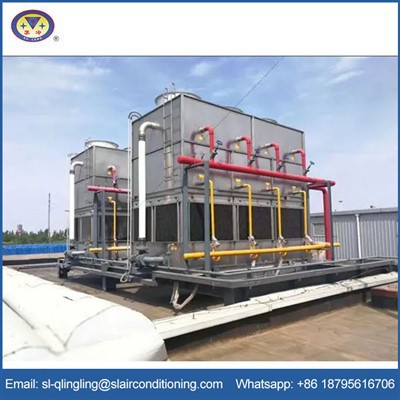
Hey there! As a supplier of industrial evaporative condensers, I often get asked about how to measure the performance of these nifty machines. It's a crucial question, especially for businesses that rely on efficient cooling systems to keep their operations running smoothly. In this blog, I'll break down the key factors and methods for evaluating the performance of an industrial evaporative condenser.
Understanding the Basics of Industrial Evaporative Condensers
First off, let's quickly go over what an industrial evaporative condenser is. It's a type of heat exchanger that uses the evaporation of water to remove heat from a refrigerant. This process is highly efficient and can save a significant amount of energy compared to other types of condensers. If you're interested in learning more about different types of condensers, check out our Industrial Water Condenser page.
Key Performance Indicators
1. Heat Removal Capacity
One of the most important metrics for measuring the performance of an industrial evaporative condenser is its heat removal capacity. This refers to the amount of heat that the condenser can transfer from the refrigerant to the surrounding environment per unit of time. To calculate the heat removal capacity, you'll need to know the mass flow rate of the refrigerant, the specific heat capacity of the refrigerant, and the temperature difference between the inlet and outlet of the refrigerant.
The formula for heat removal capacity (Q) is:
Q = m * Cp * ΔT
where:
- m is the mass flow rate of the refrigerant (kg/s)
- Cp is the specific heat capacity of the refrigerant (kJ/kg·K)
- ΔT is the temperature difference between the inlet and outlet of the refrigerant (K)
A higher heat removal capacity means that the condenser can cool the refrigerant more effectively, which is essential for maintaining the efficiency of the refrigeration system.
2. Approach Temperature
The approach temperature is another critical performance indicator. It's defined as the difference between the temperature of the refrigerant leaving the condenser and the temperature of the wet-bulb air entering the condenser. A lower approach temperature indicates that the condenser is operating more efficiently, as it means that the refrigerant is being cooled closer to the wet-bulb temperature of the air.
To measure the approach temperature, you'll need to use a thermometer to measure the temperature of the refrigerant leaving the condenser and a psychrometer to measure the wet-bulb temperature of the air entering the condenser. The goal is to keep the approach temperature as low as possible, typically between 5°F and 10°F (2.8°C and 5.6°C).
3. Water Consumption
Water consumption is an important consideration, especially in areas where water is scarce or expensive. An efficient industrial evaporative condenser should use as little water as possible while still maintaining optimal performance. To measure water consumption, you can install a water meter on the water supply line to the condenser and monitor the amount of water used over a period of time.


There are several factors that can affect water consumption, including the design of the condenser, the operating conditions, and the quality of the water. For example, if the water contains a high level of dissolved solids, it may cause scaling on the condenser tubes, which can reduce the efficiency of the condenser and increase water consumption. To address this issue, you can use a Condenser Water Treatment System to remove impurities from the water.
4. Fan Power Consumption
The fan is an essential component of an industrial evaporative condenser, as it helps to circulate the air through the condenser and enhance the evaporation process. However, the fan also consumes a significant amount of energy, so it's important to measure and optimize its power consumption.
To measure the fan power consumption, you can use a wattmeter to monitor the electrical power consumed by the fan motor. You can then calculate the specific fan power (SFP), which is the ratio of the fan power consumption to the air flow rate. A lower SFP indicates that the fan is operating more efficiently.
Methods for Measuring Performance
1. Direct Measurement
The most straightforward method for measuring the performance of an industrial evaporative condenser is to directly measure the key performance indicators using appropriate instruments. For example, you can use thermometers, flow meters, and pressure gauges to measure the temperature, flow rate, and pressure of the refrigerant and water at different points in the system. You can also use a psychrometer to measure the wet-bulb temperature of the air.
By collecting and analyzing this data, you can calculate the heat removal capacity, approach temperature, water consumption, and fan power consumption of the condenser. This method provides accurate and reliable results, but it can be time-consuming and requires specialized equipment.
2. Performance Testing
Another method for measuring the performance of an industrial evaporative condenser is to conduct performance testing. This involves operating the condenser under specific conditions and measuring its performance using standardized test procedures.
For example, you can perform a full-load test to determine the maximum heat removal capacity of the condenser. During this test, you'll operate the condenser at its maximum capacity and measure the temperature, flow rate, and pressure of the refrigerant and water. You can also perform a part-load test to evaluate the performance of the condenser under different operating conditions.
Performance testing can provide valuable insights into the performance of the condenser and help you identify any issues or areas for improvement. However, it requires specialized equipment and expertise, and it can be costly and time-consuming.
3. Monitoring and Analysis
In addition to direct measurement and performance testing, you can also use monitoring and analysis techniques to measure the performance of an industrial evaporative condenser over time. This involves installing sensors and monitoring equipment on the condenser and collecting data continuously.
By analyzing this data, you can track the performance of the condenser and identify any trends or changes. For example, you can monitor the heat removal capacity, approach temperature, water consumption, and fan power consumption over a period of months or years and look for any signs of degradation or inefficiency.
Monitoring and analysis can help you detect potential problems early and take corrective actions before they cause significant damage or downtime. It can also help you optimize the performance of the condenser and reduce operating costs.
Factors Affecting Performance
There are several factors that can affect the performance of an industrial evaporative condenser, including:
1. Ambient Conditions
The ambient temperature, humidity, and air quality can all have a significant impact on the performance of the condenser. For example, high ambient temperatures and humidity can reduce the efficiency of the evaporation process and increase the approach temperature. Poor air quality can also cause fouling and corrosion of the condenser tubes, which can reduce the heat transfer efficiency and increase water consumption.
2. Refrigerant Type and Charge
The type and charge of the refrigerant used in the condenser can also affect its performance. Different refrigerants have different thermodynamic properties, which can affect the heat transfer efficiency and the operating pressure of the condenser. The refrigerant charge also needs to be carefully controlled to ensure optimal performance.
3. Water Quality
As mentioned earlier, the quality of the water used in the condenser can have a significant impact on its performance. Water that contains a high level of dissolved solids, minerals, or contaminants can cause scaling, fouling, and corrosion of the condenser tubes, which can reduce the heat transfer efficiency and increase water consumption.
4. Maintenance and Cleaning
Regular maintenance and cleaning are essential for ensuring the optimal performance of an industrial evaporative condenser. This includes cleaning the condenser tubes, checking the water distribution system, and inspecting the fan and motor. Neglecting maintenance can lead to a decrease in performance, increased energy consumption, and premature equipment failure.
Conclusion
Measuring the performance of an industrial evaporative condenser is essential for ensuring its efficient operation and maximizing its lifespan. By monitoring key performance indicators such as heat removal capacity, approach temperature, water consumption, and fan power consumption, you can identify any issues or areas for improvement and take corrective actions.
If you're in the market for an industrial evaporative condenser or need help with performance measurement and optimization, don't hesitate to reach out. We're here to provide you with the best solutions and support for your cooling needs. Whether you're interested in Evaporative Condenser Refrigeration, Water Cooled Refrigeration Condenser, or Evapco Evaporative Condenser, we've got you covered.
Let's start a conversation and see how we can help you achieve your cooling goals!