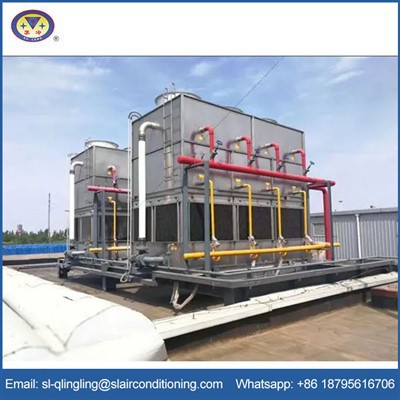
Hey there! As a proud supplier of Water Condensers From Air, I'm stoked to dive into the nitty - gritty of designing a water - collection system using these amazing devices. It's not only an eco - friendly solution but can also be a game - changer in areas facing water scarcity.
Understanding the Basics of Air Water Condensers
First off, let's understand how an air water condenser works. It's all about the science of condensation. Moist air contains water vapor. When this moist air is cooled down to its dew point, the water vapor changes back into liquid water. That's the core principle behind these condensers.
We have a wide range of condensers at our supply. For example, the Condenser for Water Cooler is great for small - scale applications. It's compact and efficient, making it suitable for home use or small offices. On the other hand, if you're looking for something more heavy - duty, our Industrial Water Condenser can handle large volumes of air and collect significant amounts of water.
Step - by - Step Design of a Water - Collection System
1. Assessing Your Needs
The first step in designing a water - collection system is to figure out how much water you need. Are you planning to use it for drinking, irrigation, or industrial purposes? The demand will determine the size and capacity of the condenser you need. A small family might only need a condenser that can collect a few liters of water a day, while a large farm or factory will require a much larger system.
2. Location, Location, Location
The placement of your condenser is crucial. You want to put it in an area where the air has a high humidity level. Coastal areas are usually great because the air near the ocean is often saturated with water vapor. Also, make sure the location has good air circulation. Avoid placing it in a corner where the air is stagnant. This will ensure that a continuous flow of moist air reaches the condenser.
3. Selecting the Right Condenser
Based on your needs and location, choose the appropriate condenser. If you're on a budget, you can start with a smaller, more basic model and upgrade later as your needs grow. Consider factors like energy efficiency and ease of maintenance.


The cost of the condenser is also a significant factor. You can check out Air Conditioner Condenser Cost to get an idea of the price range. Remember, a more expensive condenser might have better features and a longer lifespan, so it's a long - term investment.
4. Setting Up the Collection Tanks
Once you have your condenser, you need a place to store the collected water. Tanks should be made of food - grade materials if the water is for drinking. They should also be properly sealed to prevent contamination. You can connect multiple tanks to increase your storage capacity. Make sure the tanks are placed below the condenser so that the water can flow down by gravity.
5. Installation and Maintenance
Installing the condenser can be a DIY project if you're handy, but for larger systems, it's best to hire a professional. They'll ensure that everything is set up correctly and safely.
Regular maintenance is key to keep your system running smoothly. Clean the condenser coils regularly to remove dust and debris. Check the water quality in the tanks and treat it if necessary. Replace any worn - out parts as soon as possible.
Advantages of Using an Air Water Condenser for Water Collection
One of the biggest advantages is that it provides a clean and reliable source of water. Unlike surface water sources that can be contaminated, the water collected from the air is often free from pollutants. It's also a sustainable solution. It doesn't rely on traditional water sources like rivers and groundwater, which are becoming increasingly scarce in many parts of the world.
Another benefit is that it can operate independently. You don't need a connection to a central water supply, which is great for remote areas. It can also be scaled up or down according to your needs, making it a versatile solution.
Overcoming Challenges
Of course, designing and operating a water - collection system using an air water condenser isn't without its challenges. One of the main issues is the energy consumption. Condensing water from air requires cooling, which uses electricity. To overcome this, you can consider using renewable energy sources like solar panels to power your condenser.
The efficiency of the system can also be affected by low humidity levels. In arid regions, the amount of water vapor in the air is low, so the condenser might not collect as much water. However, there are advanced condensers that are designed to work in low - humidity conditions.
Conclusion
Designing a water - collection system using a water condenser from air is an exciting and practical solution. Whether it's for personal use or large - scale industrial applications, it offers a sustainable way to access clean water.
If you're interested in learning more about our range of air water condensers or want to discuss a custom - designed water - collection system for your specific needs, don't hesitate to reach out. We're here to help you make the most of this innovative technology and start collecting your own water from the air.
References
- Principles of Thermodynamics and Heat Transfer textbooks
- Industry reports on air water condenser technology and applications