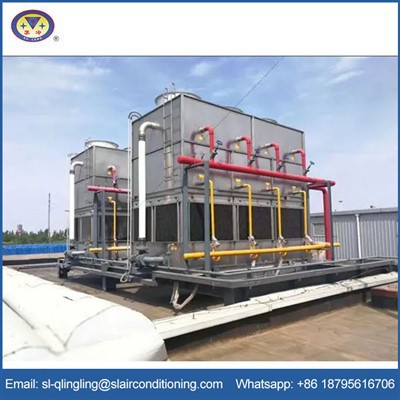
Hey there! As a supplier of condensers for water coolers, I've had my fair share of customers asking about the differences between domestic and commercial water cooler condensers. So, I thought I'd take a moment to break it down for you all.
1. Size and Capacity
First off, let's talk about size. Domestic water coolers are usually meant for homes, small offices, or maybe a single room. They're designed to serve a relatively small number of people, say 1 - 10 folks. Because of this, the condensers in domestic water coolers are generally smaller. They don't need to cool large volumes of water quickly.
On the flip side, commercial water coolers are used in places like large offices, factories, schools, and hospitals. These places have a high demand for cold water throughout the day. So, the condensers in commercial water coolers are much larger. They have a higher capacity to handle the continuous cooling of large amounts of water. For instance, a domestic water cooler condenser might be able to cool around 5 - 10 liters of water per hour, while a commercial one could handle 50 liters or more.
If you're looking for a condenser suitable for a single - room setup, check out our Single Room Evaporative Condenser. It's perfect for those smaller spaces.
2. Cooling Efficiency
Cooling efficiency is another major difference. Domestic water cooler condensers are built with energy efficiency in mind. Since they're used in smaller settings, they don't need to work as hard. They're designed to cool water at a moderate pace while consuming less electricity. This is great for homeowners who want to keep their energy bills down.
Commercial condensers, however, need to be highly efficient. They have to cool water rapidly to meet the high demand. They often use advanced cooling technologies and better - quality materials. For example, some commercial condensers use a combination of air - cooling and water - cooling methods to achieve faster and more efficient cooling. This might result in higher energy consumption, but it's a necessary trade - off to keep up with the large - scale demand.
3. Durability and Maintenance
When it comes to durability, commercial condensers have to be tough. They're in constant use, sometimes 24/7 in places like hospitals. They're built with heavy - duty materials that can withstand continuous operation. The components are also more robust, and the design is more rugged to handle the wear and tear of long - term use.
Domestic condensers, while still built to last, don't need to be as durable. They're used less frequently and for shorter periods. Maintenance is also different. Commercial condensers usually require more frequent maintenance. They need regular cleaning, filter changes, and inspections to ensure they're working at their best. Domestic condensers can get away with less frequent maintenance, maybe just an annual check - up.
If you're dealing with a large - scale commercial setup, our Evaporative Industrial Air Cooler is a great option. It's built to last and can handle the demands of an industrial environment.


4. Cost
Cost is an obvious difference. Domestic water cooler condensers are generally more affordable. They're smaller, use less advanced technology, and have a lower capacity. So, the manufacturing cost is lower, and that's reflected in the price.
Commercial condensers, on the other hand, are more expensive. The high - end technology, larger size, and heavy - duty construction all contribute to a higher price tag. But it's important to remember that you're paying for the performance and durability that you need in a commercial setting.
5. Noise Level
Noise can be a big factor, especially in a home or a quiet office. Domestic water cooler condensers are designed to operate quietly. They use smaller fans and compressors, which produce less noise. This way, you won't be bothered by a loud humming sound while you're relaxing at home or working in a small office.
Commercial condensers, because of their larger size and higher power, tend to be noisier. However, manufacturers are constantly working on reducing the noise level. They use better insulation and more advanced fan designs to keep the noise to a minimum. But in general, you can expect a bit more noise from a commercial condenser.
6. Water Treatment Requirements
Water treatment is crucial for both domestic and commercial water coolers, but the requirements differ. Domestic water coolers usually use tap water, and a simple filtration system might be enough to keep the water clean. The condenser doesn't need to deal with a large volume of water, so the risk of scale buildup and corrosion is relatively low.
Commercial water coolers often use a large amount of water, and the quality of the water can vary depending on the location. To prevent scale buildup, corrosion, and bacterial growth, a more comprehensive water treatment system is needed. Our Condenser Water Treatment System is specifically designed to meet the needs of commercial water cooler condensers. It helps to extend the lifespan of the condenser and ensures the quality of the cooled water.
Conclusion
So, there you have it - the main differences between domestic and commercial water cooler condensers. Whether you're a homeowner looking for a quiet and energy - efficient condenser or a business owner in need of a high - capacity, durable one, it's important to choose the right condenser for your needs.
If you're interested in purchasing a condenser for your water cooler, I'd love to talk to you. Feel free to reach out and we can discuss your specific requirements. We have a wide range of condensers to suit different needs and budgets.
References
- HVACR Handbook: A Comprehensive Guide to Heating, Ventilation, Air Conditioning, and Refrigeration Systems
- Water Cooling Technology Journal: Latest Research and Innovations in Water Cooling Condensers