What are the electrical requirements for a cold room air cooler?
As a supplier of cold room air coolers, I understand the critical role that electrical requirements play in the proper functioning of these essential cooling units. Cold room air coolers are used in a variety of applications, from small food storage rooms to large industrial freezers, and ensuring that they are properly powered is crucial for their efficiency, reliability, and longevity.
Voltage and Frequency
The first and most fundamental electrical requirement for a cold room air cooler is the correct voltage and frequency. Cold room air coolers are typically designed to operate on either single - phase or three - phase electrical systems, depending on their size and capacity.
Single - phase systems are commonly used for smaller cold room air coolers, such as those used in small commercial kitchens or walk - in coolers. These systems usually operate at voltages of 110V or 230V, with a frequency of 50Hz or 60Hz, depending on the region. For example, in the United States, the standard voltage for single - phase residential and small commercial applications is 120V at 60Hz, while in many European countries, it is 230V at 50Hz.
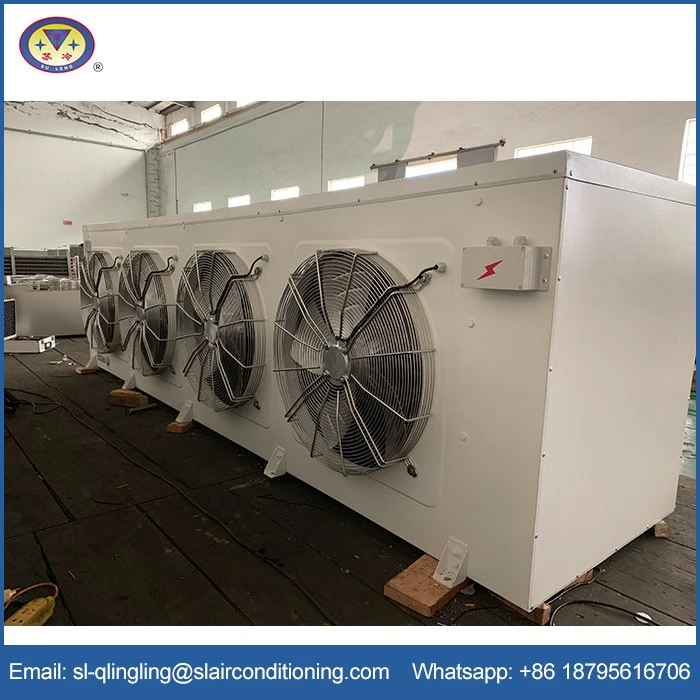

Larger cold room air coolers, especially those used in industrial settings or large cold storage facilities, often require three - phase electrical power. Three - phase systems provide a more balanced and efficient power supply, capable of delivering higher power levels. The most common voltages for three - phase systems are 208V, 230V, 380V, 400V, 480V, etc., with frequencies of 50Hz or 60Hz. It is essential to match the voltage and frequency requirements of the air cooler with the available electrical supply at the installation site. Incorrect voltage or frequency can lead to inefficient operation, overheating, and even damage to the compressor and other components of the air cooler.
Power Consumption
Another important electrical requirement is the power consumption of the cold room air cooler. Power consumption is measured in watts (W) or kilowatts (kW) and indicates the amount of electrical energy the unit uses per hour of operation. The power consumption of a cold room air cooler depends on several factors, including its size, cooling capacity, efficiency rating, and operating conditions.
Smaller cold room air coolers may have a power consumption of a few hundred watts, while larger industrial units can consume several kilowatts or even tens of kilowatts. For example, a small room cooling unit Room Cooling Unit with a cooling capacity of around 1 - 2 tons of refrigeration may consume between 500W and 1500W, depending on its design and efficiency. On the other hand, a large freezer air cooler Large Freezer Air Cooler used in a large cold storage warehouse with a high cooling capacity may consume 5kW to 20kW or more.
It is important to consider the power consumption of the air cooler when planning the electrical system for the cold room. The electrical supply must be able to handle the maximum power demand of the air cooler, as well as any other electrical equipment that may be operating in the same area, such as lighting, fans, and temperature control systems. Oversizing the electrical supply can be costly, while undersizing it can lead to power shortages, tripped circuit breakers, and unreliable operation.
Starting Current
In addition to the normal power consumption, cold room air coolers also have a starting current requirement. When the air cooler is first turned on, the compressor and other motors in the unit require a higher amount of current to start up. This starting current, also known as inrush current, can be several times higher than the normal operating current.
The starting current is typically expressed as a multiple of the rated current of the air cooler. For example, a compressor may have a starting current that is 3 - 7 times its rated current. This high starting current can cause a temporary voltage drop in the electrical system, especially if the electrical supply is not adequately sized. To prevent problems caused by high starting currents, it is important to ensure that the electrical system has sufficient capacity to handle the inrush current. This may involve using larger conductors, higher - rated circuit breakers, or soft - start devices that gradually ramp up the power to the compressor, reducing the starting current.
Electrical Protection
Proper electrical protection is essential for the safe and reliable operation of cold room air coolers. Electrical protection devices are designed to prevent damage to the air cooler and the electrical system in case of overcurrent, short - circuit, or other electrical faults.
Circuit breakers are one of the most common electrical protection devices. They are installed in the electrical panel and automatically trip when the current in the circuit exceeds a certain level. Circuit breakers come in different ratings, and it is important to select the appropriate rating for the air cooler based on its power consumption and starting current requirements.
Overload relays are another type of electrical protection device. They are used to protect the motor in the air cooler from overheating due to excessive current. Overload relays monitor the current flowing through the motor and trip the circuit if the current exceeds a preset limit for a certain period of time.
In addition to circuit breakers and overload relays, other electrical protection measures may include ground - fault circuit interrupters (GFCIs), which protect against electrical shock, and surge protectors, which protect the air cooler from voltage spikes caused by lightning or other electrical disturbances.
Control and Monitoring Systems
Modern cold room air coolers often come with advanced control and monitoring systems that require electrical power. These systems are used to regulate the temperature, humidity, and other operating parameters of the cold room, as well as to monitor the performance of the air cooler.
The control and monitoring systems typically include sensors, controllers, and displays. The sensors measure the temperature, humidity, and other environmental conditions in the cold room, and the controllers use this information to adjust the operation of the air cooler. The displays provide real - time information about the operating status of the air cooler, such as temperature, fan speed, and compressor status.
The electrical requirements for the control and monitoring systems are relatively low compared to the main cooling components of the air cooler. However, it is important to ensure that the electrical supply for these systems is stable and reliable. Any power interruptions or fluctuations can cause the control system to malfunction, leading to inaccurate temperature control and potential damage to the stored products.
Conclusion
In conclusion, understanding the electrical requirements for a cold room air cooler is essential for its proper installation, operation, and maintenance. From voltage and frequency to power consumption, starting current, electrical protection, and control systems, every aspect of the electrical requirements must be carefully considered to ensure the efficient, reliable, and safe operation of the air cooler.
As a supplier of cold room air coolers, we offer a wide range of products with different electrical requirements to meet the needs of various applications. Whether you need a small room cooling unit for a commercial kitchen or a large quick - freezing storage air cooler Quick - freezing Storage Air Cooler for an industrial cold storage facility, we can provide you with the right solution.
If you are interested in our cold room air coolers and would like to discuss your specific electrical requirements and cooling needs, please feel free to contact us. Our team of experts is ready to assist you in selecting the most suitable air cooler for your application and ensuring that it is properly installed and integrated into your electrical system.
References
- ASHRAE Handbook - Refrigeration. American Society of Heating, Refrigerating and Air - Conditioning Engineers.
- Electrical Installation Guide for Refrigeration Systems. International Electrotechnical Commission (IEC).
- Manufacturer's technical documentation for cold room air coolers.