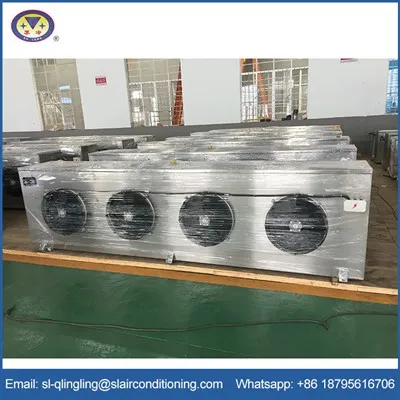
As a trusted supplier of industrial coolers, I've witnessed firsthand the critical role these machines play in various industries. Industrial coolers are essential for maintaining optimal temperatures in factories, warehouses, cold storage rooms, and other large - scale facilities. One of the most important aspects of an industrial cooler is its heat dissipation method. In this blog, we'll explore the different heat dissipation methods of industrial coolers.
Air - Cooling Method
The air - cooling method is one of the most common heat dissipation methods for industrial coolers. It works by using fans to blow air over the hot components of the cooler, such as the condenser coils. The air absorbs the heat from the coils and carries it away, thus cooling the system.
One of the main advantages of air - cooling is its simplicity. It doesn't require complex plumbing or a constant supply of water, which makes it relatively easy to install and maintain. Air - cooled industrial coolers are also more suitable for areas where water is scarce or expensive. For example, in arid regions or some remote industrial sites, air - cooled coolers can operate efficiently without the need for a large water source.
However, air - cooling also has its limitations. The cooling efficiency is highly dependent on the ambient air temperature. In hot weather, the air may not be able to absorb as much heat, which can reduce the overall cooling performance of the cooler. Additionally, air - cooled systems may produce more noise due to the operation of the fans.
If you're interested in air - cooled industrial coolers, you can check out our Industrial Cooler product page for more details.
Water - Cooling Method
Water - cooling is another popular heat dissipation method for industrial coolers. In a water - cooled system, water is used as a coolant to absorb heat from the hot components. The heated water is then pumped to a cooling tower or a heat exchanger, where it releases the heat into the atmosphere.
One of the significant advantages of water - cooling is its high cooling efficiency. Water has a much higher heat capacity than air, which means it can absorb more heat per unit volume. This allows water - cooled industrial coolers to achieve lower operating temperatures and better cooling performance, especially in high - heat environments.
Water - cooled systems are also more energy - efficient in some cases. Since water can transfer heat more effectively, the compressor in the cooler doesn't have to work as hard, which can result in lower energy consumption. However, water - cooled systems require a reliable water source and a proper drainage system. They also need regular maintenance to prevent scale buildup in the pipes and cooling towers.
For industrial applications that require precise temperature control, such as in pharmaceutical manufacturing or high - tech electronics production, water - cooled Industrial Air Cooler for Cold Storage Room can be an excellent choice.
Evaporative Cooling Method
Evaporative cooling is a natural and energy - efficient heat dissipation method. It works based on the principle that when water evaporates, it absorbs heat from the surrounding environment. In an evaporative cooling system, water is sprayed onto a cooling pad or a media. As air passes through the wet pad, the water evaporates, and the air is cooled.


Evaporative coolers are particularly effective in dry climates. They can provide significant cooling with relatively low energy consumption. For industrial facilities in desert areas or regions with low humidity, evaporative cooling can be a cost - effective solution.
However, evaporative cooling has its drawbacks. It is less effective in humid environments because the air is already saturated with moisture, and there is less room for water to evaporate. Also, evaporative coolers add moisture to the air, which may not be suitable for applications where low humidity is required, such as in some food storage facilities.
Hybrid Cooling Method
To take advantage of the benefits of different cooling methods while minimizing their drawbacks, some industrial coolers use a hybrid cooling method. A hybrid cooling system combines air - cooling and water - cooling or evaporative cooling.
For example, a hybrid cooler may use air - cooling under normal operating conditions. When the ambient temperature is too high and the air - cooling efficiency drops, the water - cooling system can be activated to provide additional cooling. This way, the cooler can maintain a stable and efficient cooling performance in a wide range of environmental conditions.
Hybrid cooling systems offer flexibility and high performance. They can adapt to different industrial requirements and environmental factors. Our company offers a variety of hybrid - cooled Commercial Cooler that are designed to meet the diverse needs of our customers.
Choosing the Right Heat Dissipation Method
When choosing an industrial cooler, it's crucial to select the right heat dissipation method based on your specific needs. Here are some factors to consider:
- Environmental Conditions: If you're located in a hot and dry area, evaporative cooling or a hybrid system that includes evaporative cooling may be a good choice. In a humid environment, air - cooling or water - cooling might be more suitable.
- Cooling Requirements: High - heat applications, such as metal smelting or large - scale data centers, may require the high - efficiency cooling provided by water - cooling systems. For less demanding applications, air - cooling could be sufficient.
- Water Availability: If water is scarce or expensive in your area, an air - cooled system would be a more practical option. On the other hand, if you have access to a reliable water source, water - cooling can offer better performance.
- Energy Efficiency: If reducing energy consumption is a priority, consider evaporative cooling or hybrid systems that can optimize energy use based on the operating conditions.
Conclusion
Understanding the different heat dissipation methods of industrial coolers is essential for making an informed decision when purchasing a cooler. Each method has its own advantages and limitations, and the choice depends on various factors such as environmental conditions, cooling requirements, water availability, and energy efficiency.
As a leading supplier of industrial coolers, we are committed to providing high - quality products with the most suitable heat dissipation methods for your industrial needs. Whether you need an air - cooled, water - cooled, evaporative - cooled, or hybrid - cooled industrial cooler, we have the right solution for you.
If you're interested in learning more about our industrial coolers or have any questions regarding the heat dissipation methods, we encourage you to contact us for a detailed consultation. Our team of experts is ready to assist you in finding the perfect industrial cooler for your application and guide you through the procurement process.