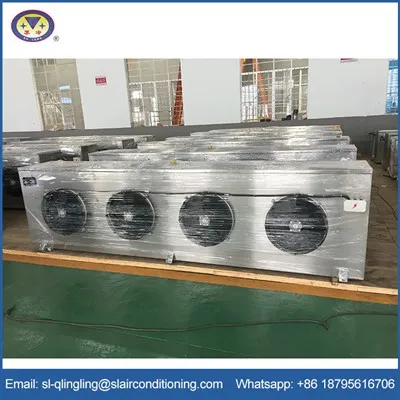
An industrial water condenser is a crucial piece of equipment in various industrial processes, playing a vital role in heat transfer and energy management. As a leading supplier of Industrial Water Condensers, I am excited to share with you the design principles that underpin the creation of these essential devices.
1. Heat Transfer Efficiency
The primary function of an industrial water condenser is to transfer heat from a hot vapor or gas to a cooling medium, usually water. The design principle here is centered around maximizing the heat transfer rate. This is achieved through several means.
First, the choice of heat transfer surface area is critical. A larger surface area allows for more contact between the hot fluid and the cooling water, facilitating greater heat exchange. Condensers are often designed with tubes, fins, or plates to increase the available surface area. For example, in shell - and - tube condensers, a large number of tubes are arranged inside a shell. The hot vapor flows inside the tubes, while the cooling water circulates around the tubes in the shell. The fins on the tubes can further enhance the heat transfer by increasing the surface area exposed to the cooling water.
Second, the flow arrangement of the hot fluid and the cooling water is carefully designed. Counter - flow arrangement is commonly used because it provides the highest average temperature difference between the two fluids over the entire length of the heat exchanger. This temperature difference is the driving force for heat transfer, and a larger temperature difference results in more efficient heat transfer.
2. Material Selection
The materials used in an industrial water condenser are selected based on several factors, including corrosion resistance, thermal conductivity, and mechanical strength.
For the heat transfer surfaces, materials with high thermal conductivity are preferred to ensure efficient heat transfer. Copper and aluminum are commonly used due to their excellent thermal conductivity. However, in environments where corrosion is a concern, stainless steel or titanium may be used. These materials are more resistant to corrosion, especially in the presence of aggressive chemicals or high - salinity water.


The shell and other structural components of the condenser also need to be made of materials that can withstand the operating pressures and temperatures. Carbon steel is often used for the shell because of its high strength and relatively low cost. However, it may need to be coated or lined to prevent corrosion.
3. Pressure Drop Considerations
In the design of an industrial water condenser, minimizing pressure drop is an important principle. Pressure drop refers to the decrease in pressure of the fluid as it flows through the condenser. A high pressure drop can increase the energy consumption of the pumps or compressors used to move the fluids through the system.
To reduce pressure drop, the flow passages in the condenser should be designed with smooth walls and appropriate dimensions. The shape and size of the tubes, channels, or plates should be optimized to ensure a laminar flow or a low - turbulence flow regime. This not only reduces pressure drop but also improves heat transfer efficiency in some cases.
4. Condensation Mechanism
Understanding the condensation mechanism is essential for the proper design of an industrial water condenser. Condensation can occur in two main ways: filmwise condensation and dropwise condensation.
In filmwise condensation, a continuous film of condensate forms on the heat transfer surface. This film acts as a thermal resistance, reducing the heat transfer rate. Dropwise condensation, on the other hand, occurs when the condensate forms as discrete droplets on the surface. Dropwise condensation can provide much higher heat transfer coefficients than filmwise condensation. However, achieving and maintaining dropwise condensation is challenging, as it requires special surface treatments or the addition of certain chemicals to the vapor.
5. Maintenance and Serviceability
A good industrial water condenser design should also consider ease of maintenance and serviceability. Components should be easily accessible for inspection, cleaning, and repair. For example, in a shell - and - tube condenser, the tubes should be removable to allow for cleaning or replacement.
The design should also incorporate features to prevent fouling, such as the use of smooth surfaces and proper water treatment. Fouling occurs when deposits build up on the heat transfer surface, reducing the heat transfer efficiency and increasing pressure drop. Regular maintenance, including cleaning and water treatment, is essential to ensure the long - term performance of the condenser.
6. Compatibility with the Industrial Process
The industrial water condenser must be designed to be compatible with the specific industrial process in which it will be used. This includes considerations such as the type of vapor or gas to be condensed, the operating temperature and pressure, and the flow rate.
For example, in a chemical plant, the condenser may need to be designed to handle corrosive vapors or high - temperature gases. In a power plant, the condenser may need to be designed for large - scale heat transfer and efficient operation at high pressures.
Our Product Range
We, as an Industrial Water Condenser supplier, offer a wide range of products to meet different industrial needs. Our Evaporative Industrial Air Cooler is designed to provide efficient cooling in industrial settings where water is scarce. It combines the principles of evaporation and heat transfer to cool the hot vapor effectively.
Our Steam Condensate Drain Cooler is specifically designed to handle the condensate from steam systems. It ensures that the condensate is cooled down to a suitable temperature before being drained, which can save energy and prevent damage to downstream equipment.
We also offer Water Condenser From Air, which is an innovative solution for extracting water from the air while condensing the hot vapor. This product is ideal for applications where water conservation is a priority.
Conclusion
In conclusion, the design principles of an industrial water condenser involve a careful balance of heat transfer efficiency, material selection, pressure drop considerations, condensation mechanism, maintenance, and compatibility with the industrial process. As a supplier, we are committed to applying these principles to design and manufacture high - quality industrial water condensers that meet the diverse needs of our customers.
If you are looking for an industrial water condenser for your specific application, we encourage you to contact us for a detailed discussion. Our team of experts can help you select the most suitable condenser and provide customized solutions to optimize your industrial process. We look forward to the opportunity to collaborate with you and contribute to the success of your business.