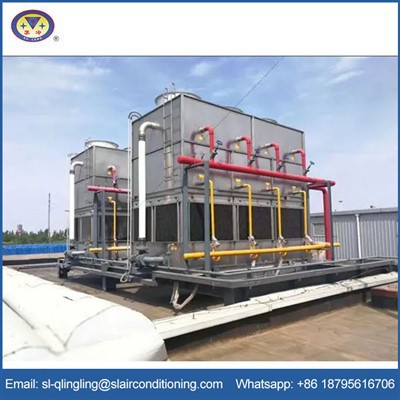
As a supplier of Evaporative Condensing Units, I am often asked about the key components that make up these essential pieces of equipment. Evaporative condensing units play a crucial role in various industrial and commercial applications, including refrigeration and air - conditioning systems. Understanding the key components can help customers make informed decisions when it comes to purchasing, maintaining, and operating these units.
Condensing Coils
The condensing coils are one of the most vital components of an Evaporative Condensing Unit. These coils are typically made of copper or aluminum due to their excellent thermal conductivity. The hot refrigerant gas enters the condensing coils, and as it flows through, heat is transferred from the refrigerant to the surrounding environment.
In an evaporative condensing unit, the condensing coils are designed to work in conjunction with the water spray system. The water sprayed on the coils helps to enhance the heat transfer process. As the water evaporates, it absorbs a large amount of heat from the refrigerant in the coils, causing the refrigerant to condense from a gas to a liquid state. The efficiency of the condensing coils directly impacts the overall performance of the unit. A well - designed coil with a large surface area and proper tube arrangement can significantly improve heat transfer and reduce energy consumption. For more information about the overall unit, you can visit Evaporative Condensing Unit.
Water Spray System
The water spray system is another key component. It consists of nozzles, pumps, and a water distribution network. The nozzles are strategically placed above the condensing coils to ensure uniform water distribution. The pumps are responsible for drawing water from a water source, usually a sump at the bottom of the unit, and delivering it to the nozzles at the appropriate pressure.
The water sprayed on the condensing coils not only helps with heat transfer but also cleans the coils. Over time, dirt, dust, and other contaminants can accumulate on the coils, reducing their efficiency. The water spray helps to wash away these contaminants, maintaining the performance of the condensing coils. However, proper water treatment is essential to prevent the growth of algae, bacteria, and the formation of scale in the water spray system. Scale buildup can clog the nozzles and pipes, reducing the effectiveness of the water spray and potentially damaging the equipment.
Fan Assembly
The fan assembly is crucial for the operation of an evaporative condensing unit. Fans are used to draw air through the unit. As the air passes over the wet condensing coils, it helps to facilitate the evaporation of the water on the coils. The movement of air increases the rate of heat transfer by carrying away the latent heat of vaporization from the evaporating water.
There are different types of fans used in evaporative condensing units, such as axial fans and centrifugal fans. Axial fans are commonly used because they are efficient at moving large volumes of air at relatively low pressures. Centrifugal fans, on the other hand, can generate higher pressures and are suitable for applications where there are more significant air - flow restrictions. The size and power of the fan are selected based on the size and capacity of the evaporative condensing unit. A properly sized and functioning fan ensures that the unit can maintain the desired temperature and pressure levels for efficient operation.
Sump and Water Level Control
The sump is a reservoir at the bottom of the evaporative condensing unit that collects the water after it has passed over the condensing coils. It serves as a water source for the water spray system. Maintaining the proper water level in the sump is essential for the reliable operation of the unit.
A water level control system is used to monitor and adjust the water level in the sump. This system typically includes a float switch or a level sensor. When the water level drops below a certain point, the float switch or sensor sends a signal to a water supply valve, which opens to add more water to the sump. Conversely, if the water level rises too high, the valve closes to prevent overflow. Proper water level control helps to ensure that the water spray system has a continuous supply of water and prevents damage to the unit due to water shortages or over - filling.
Controls and Instrumentation
Modern evaporative condensing units are equipped with advanced controls and instrumentation. These components are used to monitor and regulate the operation of the unit. Temperature sensors are used to measure the temperature of the refrigerant, the air, and the water in the unit. Pressure sensors are used to monitor the pressure of the refrigerant and the air - flow.
The control system uses the data from these sensors to adjust the operation of the fan, the water spray system, and other components. For example, if the temperature of the refrigerant is too high, the control system may increase the speed of the fan or the flow rate of the water spray to enhance heat transfer. Additionally, the control system can provide diagnostic information, such as fault codes, to help technicians quickly identify and troubleshoot problems.
Structural Frame and Enclosure
The structural frame and enclosure provide support and protection for the other components of the evaporative condensing unit. The frame is typically made of steel or aluminum and is designed to withstand the weight of the condensing coils, fans, and other heavy components. It also provides a stable base for the unit to be installed on.


The enclosure protects the internal components from the elements, such as rain, snow, and dust. It also helps to reduce noise levels generated by the operation of the unit. The enclosure is usually made of corrosion - resistant materials to ensure long - term durability. Some enclosures are designed with access doors and panels, allowing easy maintenance and inspection of the internal components.
Importance of Quality Components
Using high - quality components in an evaporative condensing unit is essential for its performance, reliability, and longevity. Inferior components may fail prematurely, leading to costly repairs and downtime. High - quality condensing coils, for example, are less likely to develop leaks or corrosion, ensuring efficient heat transfer over a long period.
Similarly, well - designed fans and pumps are more energy - efficient, reducing operating costs. Quality controls and instrumentation can provide accurate and reliable data, enabling better management of the unit's operation. As a supplier, we understand the importance of using top - notch components in our evaporative condensing units. We source our components from reputable manufacturers and conduct rigorous quality control checks to ensure that our units meet the highest standards.
Cost Considerations
When considering the purchase of an evaporative condensing unit, cost is an important factor. The cost of an evaporative condensing unit is influenced by several factors, including the size, capacity, and the quality of the components. Larger units with higher capacities generally cost more than smaller ones.
However, it's important to look beyond the initial purchase price. The long - term operating cost, including energy consumption and maintenance costs, should also be considered. A more expensive unit with high - quality components may have lower energy consumption and fewer maintenance requirements, resulting in lower overall costs over its lifespan. For more information on cost, you can refer to Air Conditioner Condenser Cost.
Industrial Applications
Evaporative condensing units are widely used in industrial applications. In industrial refrigeration systems, they are used to condense the refrigerant in cold storage facilities, food processing plants, and chemical manufacturing plants. The high - efficiency heat transfer capabilities of evaporative condensing units make them ideal for these applications, where large amounts of heat need to be removed.
In addition, they are also used in industrial air - conditioning systems. In large factories and warehouses, evaporative condensing units can help to maintain a comfortable working environment by removing heat from the air - conditioning system. For more details about industrial applications, visit Industrial Evaporative Condenser.
Contact for Purchase and Consultation
If you are in the market for an evaporative condensing unit, we are here to assist you. Our team of experts can provide you with detailed information about our products, help you select the right unit for your specific application, and offer support throughout the installation and maintenance process. Whether you have a small - scale commercial project or a large - scale industrial application, we have the solutions to meet your needs. Contact us today to start the procurement process and discuss how our evaporative condensing units can benefit your operations.
References
- ASHRAE Handbook of Refrigeration.
- Perry's Chemical Engineers' Handbook.
- Manufacturer's technical documentation for evaporative condensing units.