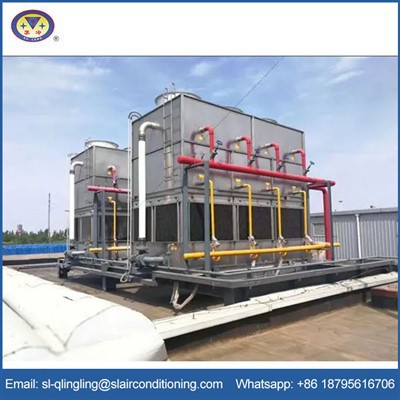
Hey there! As a supplier of Industrial Water Condensers, I'm super stoked to share with you all the materials used in these nifty devices. I mean, condensers play a massive role in so many industrial processes, from power generation to petrochemical and food processing. So, what exactly are they made of? Let's dive right in!
Copper
Copper is hands - down one of the most commonly used materials in industrial water condensers. It's got excellent thermal conductivity, which is crucial for a condenser. What does that mean? Well, it can transfer heat really efficiently. When a hot vapor enters the condenser, copper quickly pulls the heat out of it, turning the vapor back into a liquid.
Another great thing about copper is its corrosion resistance. In industrial settings, water often contains all sorts of chemicals and impurities. Copper can stand up to these and doesn't corrode easily. That means the condenser will last longer and need fewer repairs.
But it's not all sunshine and rainbows. Copper is a relatively expensive material, and its price can be a bit of a bummer for some budget - conscious customers. However, considering its performance and durability, many industries still see it as a worthy investment. If you're interested in a condenser that uses copper, check out our Industrial Water Condenser.
Stainless Steel
Stainless steel is another heavy - hitter in the condenser world. It comes in different grades, like 304 and 316, and each has its own set of perks.
One of the main advantages of stainless steel is its robustness. It's tough as nails and can withstand high pressures and temperatures. This makes it ideal for industrial applications where the conditions can be pretty extreme.
Stainless steel also has great corrosion resistance, especially in harsh environments. For example, in the chemical industry where condensers are exposed to all kinds of corrosive substances, stainless steel is a go - to material. It doesn't rust easily, so the condenser can keep working effectively for a long time.


On the flip side, stainless steel has a lower thermal conductivity compared to copper. That means it might not transfer heat as quickly. But manufacturers have come up with smart designs to compensate for this, like using finned tubes to increase the surface area and improve heat transfer. If you're in an industry where durability is key, you might want to look at our Condenser for Water Cooler, which can be made with stainless steel.
Aluminum
Aluminum is lightweight and cost - effective, which are two big selling points. It's a popular choice for condensers in applications where weight is a concern, like in some portable or mobile equipment.
Aluminum also has decent thermal conductivity. It can transfer heat well enough for many industrial processes. And it's easy to shape and manufacture, so you can get condensers in all sorts of shapes and sizes made from aluminum.
However, aluminum is more prone to corrosion than copper and stainless steel. In water with high levels of certain chemicals or in acidic environments, it can corrode. But with proper coatings and maintenance, these issues can be managed. We offer some Air Condenser Unit options that use aluminum, which are great for applications where weight and cost are important factors.
Titanium
Titanium is a bit of a high - end material in the condenser industry. It's incredibly corrosion - resistant, even in the most aggressive environments. In industries like offshore oil and gas, where condensers are exposed to saltwater and corrosive chemicals, titanium is a game - changer.
It also has a good strength - to - weight ratio, which means it can withstand high pressures while still being relatively light. But, and here's the catch, titanium is very expensive. It's not the most cost - effective option for every application. But for industries where reliability and long - term performance are absolutely crucial, it's worth the investment.
Other Materials
There are also some other materials used in smaller capacities or for specific applications. For example, some condensers use brass. Brass is a combination of copper and zinc, and it has good thermal conductivity and corrosion resistance. It's often used in smaller, less demanding applications.
In addition, some polymers are being explored for condenser use. Polymers can be resistant to certain chemicals and are lightweight. However, their thermal conductivity is generally lower than metals, so they're still in the experimental stage for many large - scale industrial applications.
Factors Influencing Material Choice
When it comes to choosing the right material for an industrial water condenser, there are several factors at play.
First off, the operating environment is a huge deal. If the condenser is going to be used in a marine environment, where there's a lot of saltwater, a highly corrosion - resistant material like titanium or stainless steel would be a better bet. On the other hand, if the environment is relatively clean and mild, copper or aluminum could work just fine.
The thermal requirements also matter. If the process requires very rapid heat transfer, a material with high thermal conductivity like copper is preferred. But if the heat transfer rate can be a bit slower, other factors like cost and durability might take precedence.
Cost is, of course, always a consideration. Industries have budgets to stick to, and the material cost can make or break a project. A company might choose a less expensive material like aluminum or a lower - grade stainless steel if they're on a tight budget, even if it means sacrificing a bit of performance.
Maintenance is another factor. Some materials, like copper and stainless steel, require less maintenance because of their corrosion resistance. Others, like aluminum, might need more frequent inspections and coatings to prevent corrosion.
Conclusion
So, there you have it! A rundown of the main materials used in industrial water condensers. Each material has its own strengths and weaknesses, and the choice depends on a variety of factors. Whether it's the excellent thermal conductivity of copper, the durability of stainless steel, the cost - effectiveness of aluminum, or the high - end corrosion resistance of titanium, there's a material out there for every industrial need.
If you're in the market for an industrial water condenser or just want to learn more, don't hesitate to reach out. We're here to help you find the right condenser with the perfect material for your specific application. Let's get the ball rolling and start a great procurement partnership!
References
- Incropera, F. P., DeWitt, D. P., Bergman, T. L., & Lavine, A. S. (2019). Fundamentals of Heat and Mass Transfer. Wiley.
- Green, D. W., & Perry, R. H. (2007). Perry's Chemical Engineers' Handbook. McGraw - Hill.