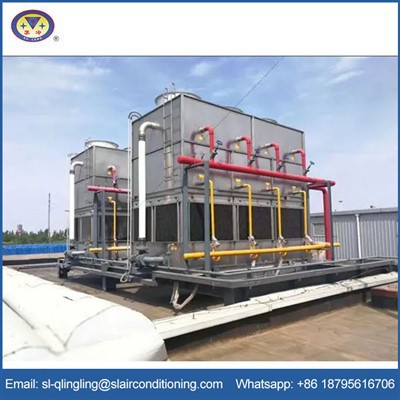
Hey there! As an industrial air cooler supplier, I often get asked about the cooling capacity of industrial air coolers. So, I thought I'd break it down for you in this blog post.
First things first, what exactly is cooling capacity? In simple terms, it's the amount of heat an air cooler can remove from a space in a given amount of time. It's usually measured in British Thermal Units (BTUs) per hour. The higher the BTU rating, the more powerful the air cooler is and the larger the area it can cool.
Let's talk about why cooling capacity matters. In an industrial setting, maintaining the right temperature is crucial. Whether it's a factory floor, a warehouse, or a data center, excessive heat can lead to a whole host of problems. It can cause equipment to overheat and malfunction, reduce worker productivity, and even pose safety risks. That's where industrial air coolers come in. They help keep the temperature at a comfortable and safe level, ensuring smooth operations.
Now, how do you determine the cooling capacity you need for your industrial space? Well, there are a few factors to consider.
Size of the Space
This is probably the most obvious factor. The larger the area you need to cool, the higher the cooling capacity you'll require. A small workshop might only need an air cooler with a relatively low BTU rating, while a large manufacturing facility will need a much more powerful unit. For example, a space of around 500 square feet might need an air cooler with a capacity of about 5,000 - 6,000 BTUs per hour. But if you're looking at a 2,000 - square - foot area, you'll likely need something in the range of 14,000 - 18,000 BTUs per hour.
Heat Sources
Industrial spaces often have a lot of heat - generating equipment. Machines, computers, and even the people working in the area all produce heat. You need to take these heat sources into account when calculating the cooling capacity. If you have a lot of heavy - duty machinery running constantly, you'll need an air cooler with a higher BTU rating to counteract the extra heat.
Insulation
The insulation of the building plays a big role too. A well - insulated space will retain cool air better, meaning you might not need as high a cooling capacity. On the other hand, if the building has poor insulation, heat will seep in more easily, and you'll need a more powerful air cooler to maintain the desired temperature.
Ceiling Height
Higher ceilings can make it a bit trickier to cool a space. Cool air tends to sink, so in a room with high ceilings, you might need an air cooler with a higher capacity to ensure that the cool air reaches the floor level where people and equipment are.
As an industrial air cooler supplier, we offer a wide range of products with different cooling capacities to meet various needs. For instance, our Ceiling Mounted Cooling Fan is a great option for smaller industrial spaces. It's designed to provide efficient cooling and is easy to install on the ceiling, saving floor space.
If you're looking for something more powerful for a larger area, our Ceiling Mounted Air Cooler might be the perfect fit. It has a higher cooling capacity and can cover a significant amount of square footage.
And if you're interested in a solution that combines the benefits of a ceiling fan and an air cooler, check out our Cool Air From Ceiling Fan. It's a unique product that can distribute cool air effectively throughout the space.
But how do industrial air coolers actually achieve their cooling capacity? There are a few different technologies at play.


Evaporative Cooling
Many industrial air coolers use evaporative cooling technology. This works by passing warm air through water - saturated pads. As the air passes through the pads, the water evaporates, which cools the air. It's a relatively simple and energy - efficient way to cool a space. Evaporative coolers are great for dry climates, as the evaporation process is more effective when the air is dry.
Refrigerant - Based Cooling
Some industrial air coolers use a refrigerant - based system, similar to traditional air conditioners. These units are more powerful and can achieve lower temperatures, but they also tend to consume more energy. They work by compressing and expanding a refrigerant gas to absorb and release heat.
Airflow
The airflow of an air cooler is also important in determining its cooling capacity. A unit with a high - volume airflow can distribute cool air more effectively throughout the space. This is why many industrial air coolers are designed with large fans and optimized ducting systems to ensure maximum airflow.
So, how can you make sure you're getting the most out of your industrial air cooler's cooling capacity?
Proper Installation
Make sure your air cooler is installed correctly. This includes positioning it in the right location, ensuring proper ventilation, and making sure all the connections are secure. A poorly installed air cooler won't be able to perform at its best.
Regular Maintenance
Just like any other piece of equipment, industrial air coolers need regular maintenance. This includes cleaning the filters, checking the water levels (for evaporative coolers), and inspecting the refrigerant levels (for refrigerant - based units). Regular maintenance will keep your air cooler running efficiently and help maintain its cooling capacity.
Adjusting Settings
Depending on the time of day, the number of people in the space, and the heat sources, you might need to adjust the settings of your air cooler. For example, you might want to turn it up during the hottest part of the day or when there are a lot of machines running.
In conclusion, understanding the cooling capacity of industrial air coolers is essential for choosing the right unit for your industrial space. By considering factors like the size of the space, heat sources, insulation, and ceiling height, you can make an informed decision. And remember, as an industrial air cooler supplier, we're here to help you every step of the way. Whether you have questions about cooling capacity, installation, or maintenance, feel free to reach out to us. We can work with you to find the perfect solution for your cooling needs. So, if you're in the market for an industrial air cooler, don't hesitate to contact us for a consultation and let's start the procurement process together.
References
ASHRAE Handbook - Fundamentals. American Society of Heating, Refrigerating and Air - Conditioning Engineers.
Industrial Cooling Systems: Principles and Applications. A technical guidebook on industrial cooling technologies.