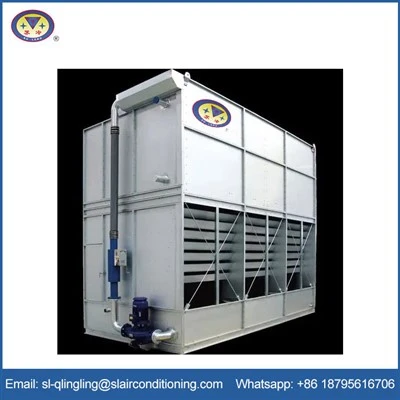
In the world of temperature control, coolers play a crucial role. From keeping our drinks cold at a picnic to maintaining optimal conditions in large industrial settings, the concept of a cooler is familiar to most. However, there is a significant difference between an industrial cooler and a regular cooler. As an industrial cooler supplier, I have witnessed firsthand the unique features and applications of these two types of coolers. In this blog post, I will delve into the distinctions between industrial coolers and regular coolers, exploring their design, functionality, and usage.
Design and Construction
One of the most obvious differences between industrial coolers and regular coolers lies in their design and construction. Regular coolers, often used for personal or small - scale applications, are typically made of lightweight materials such as plastic or thin - walled metal. They are designed to be portable and easy to carry, with features like handles and wheels for convenience. For example, a common regular cooler used for a family barbecue might be a small, rectangular plastic box with a lid that seals to keep ice from melting too quickly.


On the other hand, industrial coolers are built to withstand harsh environments and heavy - duty use. They are constructed from robust materials such as thick - gauge steel, stainless steel, or high - density plastics. These materials provide durability and resistance to corrosion, ensuring a long lifespan even in demanding industrial settings. Industrial coolers are also much larger in size compared to regular coolers. They are designed to cool large volumes of air or liquids, which requires a more substantial physical structure. For instance, an industrial cooler used in a food processing plant might be a large, walk - in unit with thick insulation and heavy - duty doors.
Cooling Capacity
Cooling capacity is another key differentiator between industrial coolers and regular coolers. Regular coolers are designed to maintain a relatively low temperature for a limited amount of time and a small volume of items. They usually rely on ice or small refrigeration units to achieve cooling. For example, a regular cooler might be able to keep a few dozen cans of soda cold for a day at a picnic. The cooling capacity is measured in terms of the amount of heat they can remove from the contents over a specific period, and for regular coolers, this capacity is relatively modest.
Industrial coolers, however, have a significantly higher cooling capacity. They are capable of cooling large spaces or large quantities of materials to very low temperatures. In industrial applications, such as chemical manufacturing or cold storage for pharmaceuticals, precise temperature control is essential. Industrial coolers can remove a large amount of heat quickly, ensuring that the products or processes are kept at the required temperature. Some industrial coolers can achieve extremely low temperatures, well below freezing, which is far beyond the capabilities of regular coolers.
Energy Efficiency
Energy efficiency is an important consideration in both types of coolers, but the requirements and performance vary. Regular coolers are generally less energy - intensive because of their smaller size and lower cooling capacity. Many regular coolers use simple cooling mechanisms, such as ice packs, which do not require a continuous supply of electricity. Even those with small refrigeration units are designed to consume relatively little power to keep the cost of operation low for personal use.
Industrial coolers, on the other hand, consume a large amount of energy due to their high - capacity cooling requirements. However, modern industrial coolers are designed with advanced technologies to improve energy efficiency. For example, they may use variable - speed compressors, which adjust the cooling output according to the actual demand, reducing energy waste. Additionally, industrial coolers often have better insulation, which helps to minimize heat transfer and keep the internal temperature stable, further reducing energy consumption.
Control and Monitoring
The level of control and monitoring in industrial coolers and regular coolers also differs significantly. Regular coolers typically have very basic controls. In the case of ice - based coolers, there is little control other than adding more ice when needed. For those with small refrigeration units, the controls may be limited to a simple on/off switch and perhaps a basic temperature adjustment.
Industrial coolers, in contrast, are equipped with sophisticated control and monitoring systems. These systems allow for precise temperature control, humidity control, and even remote monitoring. In an industrial setting, it is crucial to maintain the correct environmental conditions at all times. For example, in a cold storage facility for Seafood Cold Storage Air Cooler, the temperature and humidity need to be carefully regulated to prevent spoilage. Industrial coolers can be programmed to maintain specific temperature and humidity levels, and operators can monitor these conditions in real - time through sensors and control panels.
Applications
The applications of industrial coolers and regular coolers are tailored to their respective capabilities. Regular coolers are commonly used for personal and domestic purposes. They are ideal for picnics, camping trips, tailgating parties, and small - scale food storage at home. They provide a convenient way to keep food and drinks cold in outdoor or non - refrigerated environments.
Industrial coolers, on the other hand, are used in a wide range of industries. In the food and beverage industry, they are used for cold storage of raw materials, finished products, and during the production process. For example, in a brewery, industrial coolers are used to control the temperature during fermentation. In the pharmaceutical industry, industrial coolers are essential for storing vaccines and other temperature - sensitive medications. They are also used in data centers to cool servers, in chemical plants to control reaction temperatures, and in many other industrial processes where precise temperature control is critical. The Commercial Cooler is a prime example of an industrial cooler that is widely used in commercial settings.
Cost
Cost is an important factor to consider when comparing industrial coolers and regular coolers. Regular coolers are generally inexpensive, with prices ranging from a few dollars for a small plastic cooler to a few hundred dollars for a larger, more feature - rich model. The low cost makes them accessible to a wide range of consumers for personal use.
Industrial coolers, however, are much more expensive. The high cost is due to their large size, advanced technology, and heavy - duty construction. In addition to the initial purchase price, there are also significant costs associated with installation, maintenance, and energy consumption. However, for industrial businesses, the investment in an industrial cooler is often justified by the benefits it provides, such as improved product quality, increased productivity, and compliance with industry regulations.
Conclusion
In conclusion, the differences between industrial coolers and regular coolers are substantial. From design and construction to cooling capacity, energy efficiency, control and monitoring, applications, and cost, each type of cooler is tailored to specific needs. Regular coolers are perfect for personal and small - scale use, offering portability and affordability. Industrial coolers, on the other hand, are essential for large - scale industrial operations, providing high - performance cooling, precise control, and durability.
If you are in the market for an industrial cooler, whether it's a Cooler Ac Unit, a commercial cooler, or a seafood cold storage air cooler, I invite you to contact us for more information. Our team of experts can help you select the right cooler for your specific requirements and provide you with a competitive quote. We are committed to delivering high - quality industrial coolers that meet the highest standards of performance and reliability.
References
- ASHRAE Handbook - Refrigeration. American Society of Heating, Refrigerating and Air - Conditioning Engineers.
- Industrial Refrigeration Handbook. CRC Press.
- Cooling Technology Institute Standards. Cooling Technology Institute.