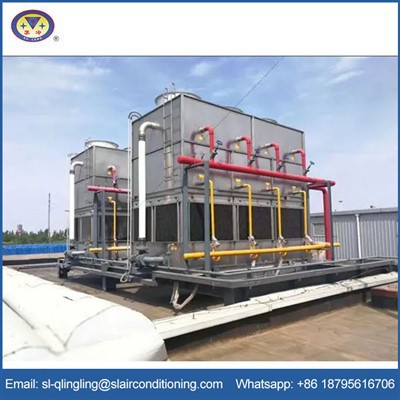
Hey there! As a supplier of Condenser for Water Cooler, I've been getting a lot of questions lately about the heat transfer mechanism in a condenser for a water cooler. So, I thought I'd take a few minutes to break it down for you.
First off, let's talk about what a condenser does in a water cooler. In simple terms, a condenser is a device that takes a gas or vapor and turns it back into a liquid. This process is crucial in a water cooler because it helps remove heat from the system. When the refrigerant in the cooler absorbs heat from the water, it turns into a vapor. The condenser then cools this vapor down, causing it to condense back into a liquid, and releases the heat outside the cooler.
Now, let's dive into the three main heat transfer mechanisms that occur in a condenser for a water cooler: conduction, convection, and radiation.
Conduction
Conduction is the transfer of heat through a solid material. In a condenser, this usually happens through the walls of the tubes that carry the refrigerant. When the hot refrigerant vapor flows through the tubes, the heat is transferred from the vapor to the tube walls. The tube material, typically made of copper or aluminum, is a good conductor of heat, which allows the heat to move quickly from the inside of the tube to the outside.
The rate of conduction depends on several factors, including the thermal conductivity of the tube material, the thickness of the tube walls, and the temperature difference between the refrigerant and the outside of the tube. For example, copper has a higher thermal conductivity than aluminum, so copper tubes can transfer heat more efficiently. However, copper is also more expensive, so manufacturers need to balance cost and performance when choosing the tube material.
Convection
Convection is the transfer of heat through the movement of a fluid, either a liquid or a gas. In a condenser, there are two types of convection that occur: forced convection and natural convection.
Forced convection happens when a fan or a pump is used to move the fluid. In most water coolers, a fan is used to blow air over the outside of the condenser tubes. This helps to increase the rate of heat transfer by removing the heated air from the surface of the tubes and replacing it with cooler air. The faster the air moves, the more heat can be transferred.
Natural convection, on the other hand, occurs when the fluid moves due to differences in density caused by temperature variations. When the air around the condenser tubes is heated, it becomes less dense and rises, creating a natural flow of air. While natural convection can help with heat transfer, it is generally less efficient than forced convection, so most condensers rely on forced convection to achieve the desired cooling effect.
Radiation
Radiation is the transfer of heat through electromagnetic waves. All objects emit and absorb radiation, and the amount of radiation depends on the temperature of the object. In a condenser, radiation plays a relatively small role in the overall heat transfer process compared to conduction and convection. However, it can still contribute to the cooling of the condenser, especially in situations where there is a large temperature difference between the condenser and its surroundings.
The amount of radiation heat transfer can be increased by using a surface with a high emissivity, which is a measure of how well an object emits radiation. For example, a black surface has a higher emissivity than a shiny surface, so painting the condenser tubes black can help to increase the radiation heat transfer.
Factors Affecting Heat Transfer in a Condenser
There are several factors that can affect the heat transfer efficiency of a condenser for a water cooler. These include:


- Refrigerant Type: Different refrigerants have different properties, such as boiling point and heat capacity, which can affect the heat transfer process. For example, some refrigerants are more efficient at absorbing and releasing heat than others.
- Condenser Design: The design of the condenser, including the number and arrangement of the tubes, the fin design, and the size of the condenser, can also have a significant impact on heat transfer. A well-designed condenser will have a large surface area for heat transfer and a good flow path for the refrigerant and the cooling air.
- Operating Conditions: The operating conditions of the water cooler, such as the temperature and flow rate of the refrigerant, the temperature and humidity of the surrounding air, and the speed of the fan, can all affect the heat transfer efficiency. For example, if the ambient air temperature is too high, the condenser may not be able to cool the refrigerant effectively.
Our Condenser Products
At our company, we offer a range of high-quality condensers for water coolers, including Steam Condensate Drain Cooler and Airwell Water Cooled Condenser. Our condensers are designed to maximize heat transfer efficiency while minimizing energy consumption.
We use the latest technology and high-quality materials to ensure that our condensers are reliable and durable. Our engineers work closely with customers to understand their specific needs and design condensers that meet their requirements. Whether you need a condenser for a small residential water cooler or a large commercial system, we have the expertise and experience to provide you with the right solution.
Contact Us for Procurement
If you're in the market for a condenser for your water cooler, we'd love to hear from you. Our team of experts can help you choose the right condenser for your application and provide you with a competitive quote. Whether you're a small business owner or a large industrial manufacturer, we have the products and services to meet your needs.
So, don't hesitate to reach out to us if you have any questions or if you're ready to start a procurement discussion. We're here to help you get the most out of your water cooler system.
References
- Incropera, F. P., & DeWitt, D. P. (2002). Fundamentals of Heat and Mass Transfer. Wiley.
- Cengel, Y. A., & Ghajar, A. J. (2015). Heat and Mass Transfer: Fundamentals and Applications. McGraw-Hill Education.