


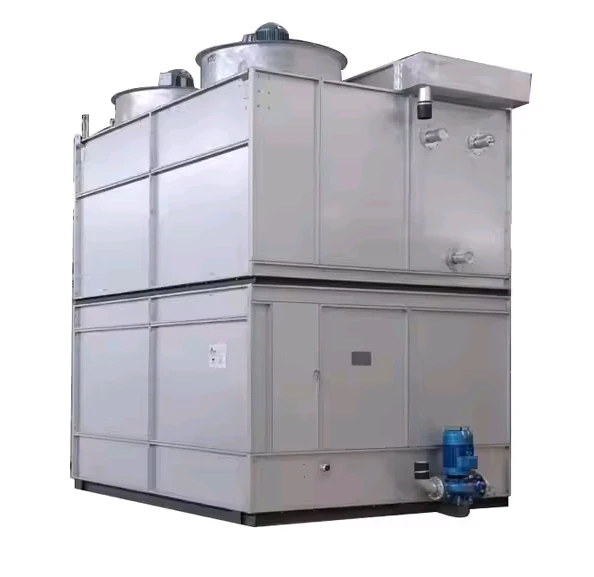
Working Principle
The evaporative condenser operates through the following process:
Hot refrigerant gas from the compressor enters the condenser's coil tubes.
Water is sprayed over the coils while a fan draws air across them, causing partial evaporation of the water.
The evaporation process absorbs heat from the refrigerant, cooling and condensing it into a liquid.
The remaining water is collected and recirculated, while the evaporated moisture is expelled with the exhaust air.
Key Components
Condenser Coils: Typically made of carbon steel (hot-dip galvanized), aluminum, or stainless steel for corrosion resistance.
Water Spray System: Nozzles distribute water evenly over the coils to maximize heat transfer.
Fan & Airflow System: Axial or centrifugal fans enhance air movement for better evaporation.
Water Collection Basin & Pump: Recirculates water and includes filtration to prevent clogging.
Drift Eliminators: Minimize water loss by capturing droplets before they escape with the air.
Advantages Of Traditional Condensers
Higher Efficiency: Uses evaporative cooling, which is more effective than air-cooled systems, especially in hot climates.
Lower Energy Consumption: Reduces compressor workload, cutting power costs by 15-30%.
Space-saving: Compact compared to cooling towers and shell-and-tube condensers.
Water Conservation: Recirculates water, reducing consumption compared to once-through cooling systems.
Applications
Industrial Refrigeration: Cold storage, food processing, and chemical plants.
HVAC Systems: Large commercial buildings and data centers.
Specialized Uses: Seawater desalination, underground cooling systems, and power plants.
Maintenance & Challenges
Scale & Corrosion: Hard water can cause mineral buildup, requiring regular cleaning and water treatment.
Freeze Protection: In cold climates, systems must drain water or use heaters to prevent ice damage.
Evaporative condensers offer a cost-effective, energy-efficient solution for high-capacity cooling needs. Their ability to lower refrigerant temperatures effectively makes them ideal for industries where heat rejection is critical. Proper maintenance ensures long-term performance and reliability.


