


An evaporative condenser efficiently cools and condenses refrigerant vapor by combining water evaporation and forced airflow. It is widely used in industrial refrigeration, HVAC, and large-scale cooling systems due to its superior heat rejection capability compared to air-cooled or water-cooled alternatives.
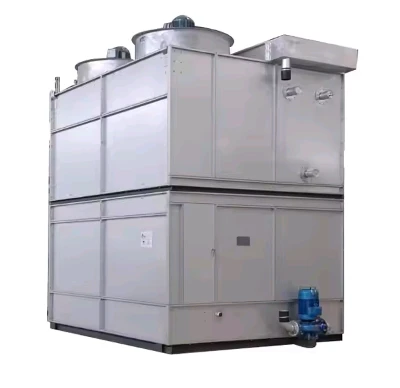
Step-by-Step Working Process
Hot Refrigerant Entry
High-pressure, high-temperature refrigerant vapor from the compressor enters the condenser's coil tubes.
Water Spray & Airflow
A water pump sprays water over the coils, forming a thin film.
Simultaneously, a fan (axial or centrifugal) draws ambient air across the wet coils.
Evaporation & Heat Transfer
As air passes over the water-covered coils, evaporation occurs, absorbing heat from the refrigerant.
This phase-change cooling rapidly lowers the refrigerant temperature, converting it into a high-pressure liquid.
Condensate Collection & Recirculation
The condensed refrigerant flows out for reuse in the refrigeration cycle.
Excess water collects in a basin and is recirculated via the pump system.
Heat & Moisture Discharge
The warm, moist air is expelled outside, while drift eliminators minimize water loss.
Key Advantages
Energy Efficiency: Reduces compressor load by 15-30% compared to air-cooled systems.
Compact Design: More space-efficient than cooling towers.
Effective in High Ambient Temperatures: Performs better than air-cooled condensers in hot climates.
Maintenance Needs
Scale Prevention: Water treatment prevents mineral deposits.
Corrosion Protection: Galvanized or stainless-steel coils enhance durability.


