Hey there! As a supplier of condensers for water coolers, I get asked a lot of questions about how these components work and what can go wrong with them. One question that pops up quite often is, "Can a dirty condenser cause a water cooler to stop working?" Well, let's dive into this topic and find out.
First off, let's understand what a condenser does in a water cooler. The condenser is a vital part of the refrigeration cycle. Its main job is to release heat from the refrigerant. When the refrigerant, which has absorbed heat from the water in the cooler, reaches the condenser, it goes through a process of changing from a high-pressure gas to a high-pressure liquid. This change is accompanied by the release of heat to the surrounding environment.
Now, when a condenser gets dirty, it can really mess things up. A dirty condenser has a layer of dust, dirt, or debris on its surface. This layer acts as an insulator, preventing the efficient transfer of heat from the refrigerant to the outside air. You see, for the condenser to work properly, it needs to be able to dissipate heat quickly. But with all that gunk on it, the heat gets trapped inside.


Let's talk about the effects of a dirty condenser on a water cooler. One of the most immediate effects is reduced cooling efficiency. The water cooler has to work harder to achieve the same level of cooling because the condenser can't release heat as effectively. This means that the compressor, which is another important part of the refrigeration system, has to run for longer periods. The compressor is like the heart of the water cooler, and overworking it can lead to a whole bunch of problems.
As the compressor runs longer and harder, it starts to generate more heat itself. This extra heat can cause the compressor to overheat. And when a compressor overheats, it can trip the thermal overload protector. This is a safety feature designed to prevent the compressor from getting damaged. Once the thermal overload protector trips, the compressor shuts off, and the water cooler stops working.
Another issue that can arise from a dirty condenser is increased energy consumption. Since the water cooler has to work harder to cool the water, it uses more electricity. This not only means higher energy bills for you but also puts more strain on the environment.
So, how can you tell if your condenser is dirty? One sign is if your water cooler is taking longer to cool the water than usual. You might also notice that the compressor is running more frequently or making louder noises. If you look at the condenser, you can see if there's a visible layer of dust or dirt on it.
Now, what can you do to prevent a dirty condenser from causing your water cooler to stop working? Regular maintenance is key. You should clean the condenser at least once every few months. You can use a soft brush or a vacuum cleaner to gently remove the dust and debris from the surface of the condenser. Make sure to turn off the water cooler and unplug it before you start cleaning to avoid any electrical hazards.
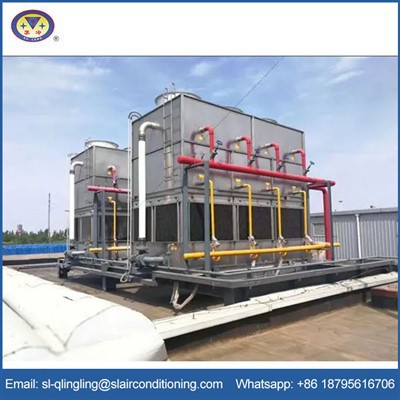
If you're in the market for a new condenser for your water cooler, we've got you covered. We offer a wide range of high-quality condensers that are designed to work efficiently and last a long time. Our Evaporative Industrial Air Cooler is a great option for industrial settings, while our Water Cooled Refrigeration Condenser and Water Cooled Refrigeration Condenser are perfect for commercial and residential applications.
In conclusion, a dirty condenser can definitely cause a water cooler to stop working. It reduces cooling efficiency, overworks the compressor, and increases energy consumption. But with regular maintenance and the right condenser, you can keep your water cooler running smoothly for years to come.
If you're interested in purchasing a condenser for your water cooler or have any questions about our products, don't hesitate to reach out. We're here to help you find the best solution for your needs.
References:
- "Refrigeration and Air Conditioning Technology" by William C. Whitman, William M. Johnson, and John Tomczyk
- Various industry reports on water cooler maintenance and condenser performance