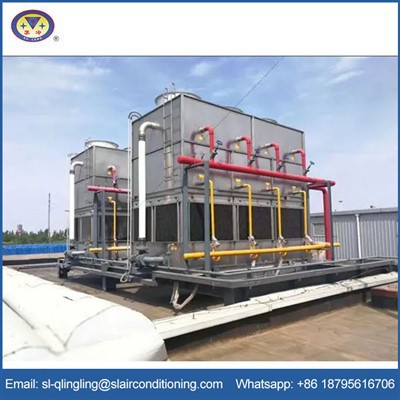
As a supplier of Cold Storage Air Coolers, I often encounter questions from customers about the defrosting process of these essential units. One of the most frequently asked questions is whether the defrosting process of a cold storage air cooler can be automated. In this blog post, I will delve into this topic, exploring the feasibility, benefits, and challenges of automating the defrosting process, and also introduce some of our products that are related to this discussion.


The Necessity of Defrosting in Cold Storage Air Coolers
Cold storage air coolers play a crucial role in maintaining the low temperatures required for preserving perishable goods. However, during their operation, moisture in the air can condense on the evaporator coils of the air cooler and freeze, forming a layer of frost. This frost buildup can significantly reduce the efficiency of the air cooler. It acts as an insulator, reducing the heat transfer rate between the refrigerant in the coils and the air in the cold storage. As a result, the air cooler has to work harder to achieve the desired temperature, leading to increased energy consumption and potentially higher operating costs. Moreover, excessive frost can also restrict the airflow through the coils, further impairing the cooling performance and potentially causing damage to the equipment over time. Therefore, regular defrosting is essential to ensure the optimal operation of cold storage air coolers.
Can the Defrosting Process be Automated?
The short answer is yes, the defrosting process of a cold storage air cooler can be automated. In fact, automation of the defrosting process has become increasingly common in modern cold storage systems. There are several methods available for automating defrosting, each with its own advantages and limitations.
Time - Based Defrosting
One of the simplest and most widely used methods of automated defrosting is time - based defrosting. In this method, a timer is set to initiate the defrosting cycle at regular intervals. For example, the defrosting cycle might be programmed to occur every 6, 8, or 12 hours, depending on the operating conditions of the cold storage. This method is relatively easy to implement and requires minimal additional equipment. However, it has a significant drawback. Since it is based on a fixed time schedule, it may not accurately reflect the actual frost buildup on the coils. In some cases, the defrosting cycle may be initiated when there is little or no frost, leading to unnecessary energy consumption. Conversely, if the time interval between defrosting cycles is too long, excessive frost may accumulate, reducing the efficiency of the air cooler.
Demand - Based Defrosting
To overcome the limitations of time - based defrosting, demand - based defrosting methods have been developed. These methods use sensors to monitor the actual conditions in the cold storage and initiate the defrosting cycle only when necessary. For example, temperature sensors can be used to detect the temperature difference across the evaporator coils. As frost builds up on the coils, the temperature difference increases. When the temperature difference reaches a pre - set threshold, the defrosting cycle is automatically initiated. Another approach is to use pressure sensors to measure the pressure drop across the coils. As frost restricts the airflow, the pressure drop increases, and the defrosting cycle can be triggered accordingly. Demand - based defrosting is more energy - efficient than time - based defrosting because it ensures that the defrosting cycle is only activated when there is a significant amount of frost on the coils.
Benefits of Automated Defrosting
Automating the defrosting process offers several benefits for cold storage operators.
Energy Efficiency
As mentioned earlier, automated defrosting, especially demand - based defrosting, can significantly reduce energy consumption. By only defrosting when necessary, the air cooler does not waste energy on unnecessary defrosting cycles. This can lead to substantial cost savings over time, especially for large - scale cold storage facilities.
Improved Cooling Performance
Automated defrosting helps to maintain the optimal performance of the air cooler. By removing frost from the coils regularly, the heat transfer rate and airflow are improved, ensuring that the cold storage maintains a consistent and accurate temperature. This is crucial for preserving the quality of perishable goods stored in the cold storage.
Reduced Maintenance Requirements
Automated defrosting can also reduce the maintenance requirements of the air cooler. Excessive frost buildup can cause mechanical stress on the coils and other components of the air cooler, leading to premature wear and tear. By preventing excessive frost accumulation, automated defrosting helps to extend the lifespan of the equipment and reduce the frequency of maintenance and repairs.
Challenges of Automated Defrosting
While automated defrosting offers many benefits, it also presents some challenges.
Sensor Accuracy
The effectiveness of demand - based defrosting depends on the accuracy of the sensors used to monitor the conditions in the cold storage. Sensors can be affected by various factors such as dust, humidity, and temperature fluctuations, which can lead to inaccurate readings. If the sensors provide false signals, the defrosting cycle may be initiated at the wrong time, either wasting energy or allowing excessive frost to accumulate.
Initial Investment
Implementing an automated defrosting system, especially a demand - based system, requires an initial investment in sensors, controllers, and other equipment. This can be a significant cost for some cold storage operators, especially those with smaller facilities. However, it is important to consider the long - term savings in energy costs and maintenance expenses when evaluating the cost - effectiveness of an automated defrosting system.
Our Cold Storage Air Cooler Products
At our company, we offer a range of cold storage air coolers that are designed with automated defrosting capabilities. Our Screw Cold Storage Air Cooler is a high - performance product that features advanced defrosting technology. It can be configured with either time - based or demand - based defrosting systems, depending on the customer's requirements. The screw compressor in this air cooler provides efficient and reliable operation, while the automated defrosting system ensures optimal performance and energy efficiency.
Our Cold Room Industrial Air Cooler is another popular product that is suitable for large - scale cold storage applications. It is equipped with a state - of - the - art demand - based defrosting system that uses multiple sensors to accurately monitor the frost buildup on the coils. This ensures that the defrosting cycle is only initiated when necessary, maximizing energy savings and reducing operating costs.
For customers who are looking for the latest in intelligent cooling technology, our Intelligent Air Cooling Cold Storage Air Cooler is the ideal choice. This air cooler uses advanced algorithms and sensors to optimize the defrosting process. It can adapt to changing operating conditions in real - time, ensuring that the cold storage maintains the best possible performance at all times.
Conclusion
In conclusion, the defrosting process of a cold storage air cooler can be effectively automated. Automated defrosting offers significant benefits in terms of energy efficiency, cooling performance, and reduced maintenance requirements. While there are some challenges associated with automated defrosting, such as sensor accuracy and initial investment, the long - term advantages outweigh these challenges. As a supplier of cold storage air coolers, we are committed to providing our customers with high - quality products that incorporate the latest automated defrosting technology. If you are interested in learning more about our products or discussing your specific cold storage requirements, please feel free to contact us for a detailed discussion and potential procurement.
References
- ASHRAE Handbook - Refrigeration. American Society of Heating, Refrigerating and Air - Conditioning Engineers.
- "Energy - Efficient Defrost Strategies for Commercial Refrigeration Systems." Department of Energy, USA.
- "Advanced Defrosting Technologies for Cold Storage Equipment." Journal of Refrigeration Technology.