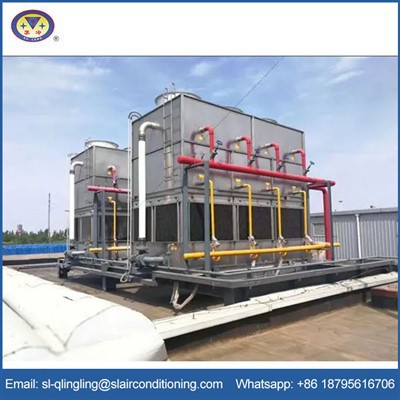
As a supplier of Air Condenser Units, I understand the crucial role that compressor performance plays in the overall efficiency and functionality of these systems. A well - performing compressor ensures that the air condenser unit operates at its best, providing optimal cooling and reducing energy consumption. In this blog, I'll share some key insights on how to check the compressor performance of an air condenser unit.
1. Initial Visual Inspection
Before diving into complex measurements, a simple visual inspection can reveal a lot about the compressor's condition. Start by checking for any visible signs of damage such as physical dents, cracks, or leaks in the compressor housing. Leaks can be identified by looking for oil stains around the compressor. Oily residue is often an indication of refrigerant leaks, which can significantly impact the compressor's performance.
Inspect the compressor's electrical connections. Loose or corroded connections can lead to intermittent power supply, overheating, and ultimately, compressor failure. Make sure all wires are securely attached and that there are no signs of burning or melting. Cable insulation should be intact, protecting the wires from electrical short - circuits.
Also, examine the compressor's mounting. A compressor that is not securely mounted can vibrate excessively during operation. This vibration can cause damage to internal components and reduce the compressor's lifespan.
2. Measuring Compressor Current
One of the essential parameters to measure is the compressor current. You can use a clamp - on ammeter for this purpose. First, ensure that the air condenser unit is running under normal operating conditions. Then, carefully place the ammeter around one of the compressor's power wires.
Compare the measured current with the manufacturer's specifications. If the current is significantly higher than the specified value, it could indicate several issues. For example, there might be a mechanical problem within the compressor, such as a seized piston or a damaged bearing. High current can also be a result of an overload in the refrigeration system, perhaps due to a blocked condenser or a restricted refrigerant flow.
Conversely, if the current is too low, it may suggest an issue with the electrical supply, a faulty motor winding, or a refrigerant undercharge.
3. Checking Compressor Discharge and Suction Pressures
Pressure measurements are another vital aspect of evaluating compressor performance. You'll need a pressure gauge set with appropriate adapters to access the compressor's discharge and suction ports.
The discharge pressure is the pressure of the refrigerant leaving the compressor. A higher - than - normal discharge pressure can be caused by a blocked condenser. The condenser is responsible for rejecting heat from the refrigerant. If it is dirty or blocked, the refrigerant cannot release heat efficiently, leading to an increase in pressure on the discharge side.
On the other hand, low discharge pressure might indicate a refrigerant undercharge or a problem with the compressor's internal valves.
The suction pressure is the pressure of the refrigerant entering the compressor. A low suction pressure can be a sign of a restriction in the refrigerant line, such as a clogged filter - drier or a throttle valve malfunction. High suction pressure can be due to an overcharge of refrigerant or a faulty expansion valve.
4. Analyzing Compressor Temperature
Temperature is a key indicator of compressor health. You can use an infrared thermometer to measure the compressor's surface temperature. Most compressors operate within a certain temperature range specified by the manufacturer.
If the compressor is running too hot, it can lead to premature wear and tear of components, reduced lubrication effectiveness, and increased risk of electrical failures. Overheating can be caused by high ambient temperatures, restricted airflow around the compressor, electrical problems, or excessive compression due to abnormal pressure conditions.
On the contrary, if the compressor is running too cold, it could be a sign of a refrigerant undercharge or a problem with the compressor's cooling mechanism. Monitoring the compressor temperature regularly can help you detect potential problems early and take corrective action.
5. Evaluating Compressor Noise and Vibration
A well - functioning compressor should operate relatively quietly. Excessive noise can be an early sign of trouble. Noisy compressors may have loose internal components, worn bearings, or a damaged motor. Listen for rattling, clicking, or grinding sounds during compressor operation.
In addition to noise, excessive vibration can also indicate problems. While some vibration is normal in a compressor due to its mechanical operation, if the vibration is unusually strong or uneven, it can cause damage to other parts of the air condenser unit. Vibration can be caused by improper mounting, a bent shaft, or internal mechanical imbalances.
6. Testing the Compressor's Efficiency
To measure the compressor's efficiency, you can calculate its coefficient of performance (COP). The COP is the ratio of the useful cooling effect (refrigeration capacity) to the power input. You'll need to measure the refrigeration capacity and the power consumption of the compressor to calculate the COP.
The refrigeration capacity can be determined by measuring the rate of heat removal from the cooled space. The power consumption can be measured using a watt - hour meter. A low COP indicates that the compressor is less efficient, which could be due to various factors such as refrigerant leaks, poor component performance, or improper system design.


Additional Resources for Performance Enhancement
If you are looking for high - quality components to improve the overall performance of your air condenser unit, you may be interested in some of our related products. For example, our Condenser for Water Cooler is designed to provide efficient heat transfer in water - cooling applications. The Water Cooled Refrigeration Condenser is another excellent option for those seeking reliable refrigeration with water - cooling technology. And for industrial cooling needs, our Evaporative Industrial Air Cooler offers highly effective cooling solutions.
In conclusion, regularly checking the compressor performance of an air condenser unit is essential for maintaining its efficiency, reliability, and longevity. By following these methods, you can detect problems early and take appropriate actions to ensure the smooth operation of your system.
If you are interested in learning more about our Air Condenser Units or have any questions regarding compressor performance checks, feel free to contact us for a detailed discussion. We are here to assist you in making the best decisions for your cooling needs and offer solutions tailored to your specific requirements.
References
ASHRAE Handbook - Refrigeration. American Society of Heating, Refrigerating and Air - Conditioning Engineers.
Compressor Manufacturer's Manuals. Various manufacturers.
"Refrigeration and Air Conditioning Technology" by William C. Whitman, William M. Johnson, and John A. Tomczyk.