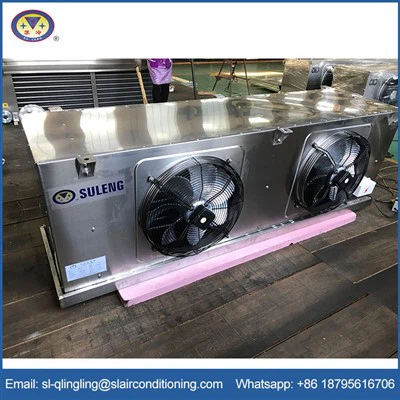
As a supplier of cold storage air coolers, I've had the privilege of working closely with various clients across different industries. Through these experiences, I've witnessed firsthand the common problems that can plague cold storage air coolers. In this blog post, I'll share some of these issues, their potential causes, and how they can be mitigated.


1. Insufficient Cooling Capacity
One of the most prevalent problems with cold storage air coolers is insufficient cooling capacity. This can lead to the temperature inside the cold storage not reaching the desired level, which is a critical issue, especially for industries like food and Seafood Cold Storage Air Cooler.
Causes:
- Incorrect Sizing: When the air cooler is not properly sized for the cold storage space, it may not be able to remove enough heat. For example, if a small air cooler is installed in a large cold storage room, it will struggle to maintain the required temperature.
- Refrigerant Issues: Low refrigerant levels or refrigerant leaks can significantly reduce the cooling capacity of the air cooler. Refrigerant is responsible for absorbing heat from the cold storage and releasing it outside. If there is not enough refrigerant, the cooling process will be less efficient.
- Dirty Condenser Coils: The condenser coils are responsible for releasing the heat absorbed by the refrigerant. Over time, these coils can accumulate dirt, dust, and debris, which can insulate the coils and prevent efficient heat transfer.
Solutions:
- Proper Sizing: Before installing an air cooler, it's essential to accurately calculate the cooling load of the cold storage. This involves considering factors such as the size of the space, the type of products stored, and the ambient temperature.
- Refrigerant Checks and Repairs: Regularly check the refrigerant levels and look for any signs of leaks. If a leak is detected, it should be repaired promptly, and the refrigerant should be replenished to the appropriate level.
- Coil Cleaning: Schedule regular maintenance to clean the condenser coils. This can be done using a soft brush or a coil cleaner to remove any dirt or debris.
2. Excessive Energy Consumption
High energy consumption is another common problem associated with cold storage air coolers. This not only increases operating costs but also has a negative impact on the environment.
Causes:
- Inefficient Equipment: Older or low - quality air coolers may have lower energy efficiency ratings. These units may consume more energy to achieve the same level of cooling as newer, more efficient models.
- Poor Insulation: If the cold storage is not properly insulated, heat can easily enter the space, causing the air cooler to work harder and consume more energy.
- Incorrect Thermostat Settings: Setting the thermostat too low or having inconsistent thermostat settings can lead to the air cooler running continuously, even when it's not necessary.
Solutions:
- Upgrade to Energy - Efficient Equipment: Consider upgrading to newer models of air coolers that have higher energy efficiency ratings. Industrial Cooler models often come with advanced features that can help reduce energy consumption.
- Improve Insulation: Inspect the cold storage for any areas where insulation may be lacking or damaged. Adding or replacing insulation can significantly reduce heat transfer and lower energy consumption.
- Optimal Thermostat Settings: Set the thermostat to the appropriate temperature for the products stored in the cold storage. Use a programmable thermostat to adjust the temperature based on the time of day or usage patterns.
3. Noise Problems
Excessive noise from the cold storage air cooler can be a nuisance, especially in environments where quiet operation is required.
Causes:
- Mechanical Issues: Loose parts, worn - out bearings, or a malfunctioning fan can all cause the air cooler to produce excessive noise.
- Vibration: If the air cooler is not properly installed or mounted, it can vibrate against the surrounding structure, creating noise.
- Airflow Restrictions: Blocked air intake or exhaust vents can cause the fan to work harder and produce more noise.
Solutions:
- Regular Maintenance: Conduct regular maintenance to check for loose parts, worn - out components, and lubricate moving parts as needed. Replace any damaged parts promptly.
- Proper Installation: Ensure that the air cooler is installed correctly and securely. Use vibration - dampening materials during installation to reduce vibration and noise.
- Clear Airflow Paths: Keep the air intake and exhaust vents clear of any obstructions. This will allow for smooth airflow and reduce the strain on the fan.
4. Frost Build - Up
Frost build - up on the evaporator coils is a common problem in cold storage air coolers. If left unchecked, it can reduce the cooling efficiency and even cause the air cooler to malfunction.
Causes:
- High Humidity: Cold storage environments with high humidity levels are more prone to frost build - up. When warm, moist air comes into contact with the cold evaporator coils, the moisture in the air condenses and freezes.
- Defrost System Malfunction: The defrost system is designed to melt the frost that accumulates on the evaporator coils. If this system fails to operate correctly, frost will continue to build up.
- Inadequate Air Circulation: Poor air circulation can cause uneven temperature distribution in the cold storage, leading to frost formation in certain areas.
Solutions:
- Humidity Control: Use dehumidifiers in the cold storage to reduce the humidity levels. This can help prevent excessive moisture from condensing on the evaporator coils.
- Defrost System Checks: Regularly inspect the defrost system to ensure it is working properly. Check the defrost timer, heating elements, and sensors for any signs of malfunction.
- Improve Air Circulation: Install fans or air circulation devices to ensure even airflow throughout the cold storage. This can help prevent temperature stratification and reduce the likelihood of frost build - up.
5. Water Leakage
Water leakage from the cold storage air cooler can cause damage to the surrounding area and the products stored in the cold storage.
Causes:
- Condensate Drain Blockage: The condensate drain is responsible for removing the water that forms on the evaporator coils. If this drain becomes blocked, water can accumulate and leak out of the air cooler.
- Damaged Drain Pan: A cracked or damaged drain pan can also cause water to leak. Over time, the drain pan may deteriorate due to corrosion or physical damage.
- Incorrect Installation: If the air cooler is not installed at the correct angle, water may not drain properly and can leak out.
Solutions:
- Drain Cleaning: Regularly clean the condensate drain to prevent blockages. This can be done using a drain cleaner or a small brush to remove any dirt or debris.
- Replace the Drain Pan: If the drain pan is damaged, it should be replaced immediately. Choose a high - quality drain pan that is resistant to corrosion and damage.
- Proper Installation: Ensure that the air cooler is installed at the correct angle to allow for proper drainage. Follow the manufacturer's installation instructions carefully.
Conclusion
In conclusion, cold storage air coolers can face several common problems, including insufficient cooling capacity, excessive energy consumption, noise issues, frost build - up, and water leakage. By understanding the causes of these problems and implementing the appropriate solutions, you can ensure the efficient and reliable operation of your cold storage air cooler.
As a supplier of cold storage air coolers, we are committed to providing high - quality products and comprehensive support to our customers. If you are experiencing any of these problems or are looking to upgrade your cold storage air cooler, we would be more than happy to assist you. Whether you need a Seafood Cold Storage Air Cooler, an Industrial Cooler, or a Water Cooled Air Conditioner, our team of experts can help you find the right solution for your needs. Contact us today to start a procurement discussion and take the first step towards a more efficient cold storage system.
References
- ASHRAE Handbook of Refrigeration. American Society of Heating, Refrigerating and Air - Conditioning Engineers.
- Cold Storage Equipment Maintenance Guide. Industry - specific publication.