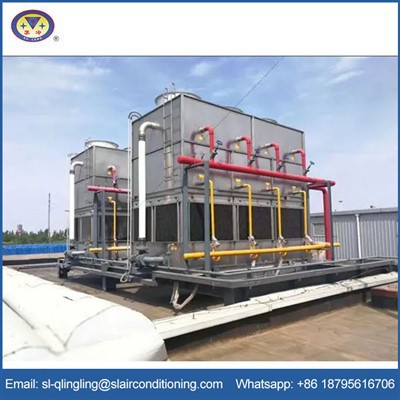
Hey there! As an industrial cooler supplier, I'm super stoked to chat with you about the safety features of these bad - boys. Industrial coolers are crucial in various settings, from large warehouses to food processing plants. They help maintain the right temperature and humidity levels, but safety is just as important. Let's dive right in!
Over - Temperature Protection
One of the most fundamental safety features of an industrial cooler is over - temperature protection. You see, industrial coolers work hard to keep things cool, but sometimes things can go wrong. If the cooler malfunctions or there's a problem with the power supply, the temperature inside the unit can start to rise. That's where over - temperature protection steps in.
This feature constantly monitors the temperature within the cooler. Once it detects that the temperature has exceeded a pre - set limit, it takes action. Usually, it'll shut down the compressor to prevent any further heat build - up. This not only protects the products stored inside the cooler but also reduces the risk of fire. For instance, in a food processing plant, if the cooler fails to maintain the proper temperature, the food can spoil. But with over - temperature protection, you can rest easy knowing that there's a safety net in place.
Leak Detection
Leakage is another major concern when it comes to industrial coolers. Coolants are used to transfer heat and keep the unit functioning properly. However, if there's a leak, it can be a huge problem. Not only can it lead to a loss of cooling efficiency, but some coolants are also harmful to the environment and human health.
That's why modern industrial coolers come equipped with leak detection systems. These systems use sensors to detect any signs of coolant leakage. If a leak is detected, an alarm will sound, alerting the operators. This gives them the chance to take immediate action, such as shutting down the unit and fixing the leak. For example, in a pharmaceutical storage facility, a coolant leak could contaminate the drugs. With a reliable leak detection system, this kind of disaster can be avoided.

Emergency Stop Button
In case of an emergency, an industrial cooler should have an easily accessible emergency stop button. This button is a lifesaver, quite literally. If there's a fire, a mechanical failure, or any other dangerous situation, the operator can quickly press the emergency stop button to shut down the cooler.
It cuts off the power supply to all the critical components of the cooler, including the compressor, fans, and pumps. This stops the operation of the cooler immediately, reducing the risk of further damage or injury. Whether you're working in a small workshop or a large industrial complex, having an emergency stop button within reach is essential for everyone's safety.
Fault Diagnostic System
A fault diagnostic system is like a doctor for your industrial cooler. It continuously monitors the performance of the cooler and can detect any potential problems before they turn into major disasters. This system uses advanced sensors and algorithms to analyze the data from different parts of the cooler.
If it detects a fault, it'll display an error code on a control panel. This error code can help the maintenance staff quickly identify the problem and take the necessary steps to fix it. For example, if the system detects that the fan motor is running at a lower speed than normal, it'll indicate a possible problem with the motor or the electrical connection. This way, you can avoid unexpected breakdowns and keep your cooler running smoothly.
Pressure Relief Valves
Pressure is a critical factor in the operation of an industrial cooler. The refrigerant system in the cooler operates under high pressure. If the pressure builds up too much, it can cause serious damage to the cooler and even lead to an explosion.
That's where pressure relief valves come in. These valves are designed to open automatically when the pressure inside the refrigerant system exceeds a safe level. When the valve opens, it releases some of the refrigerant, reducing the pressure and preventing any potential damage. This is a simple but effective safety feature that can save your cooler and your business from a lot of trouble.

Electrical Safety Features
Industrial coolers rely heavily on electricity to function. Therefore, electrical safety is of utmost importance. Most industrial coolers are equipped with features like grounding, circuit breakers, and surge protectors.

Grounding helps to prevent electrical shocks by providing a safe path for the electrical current in case of a short - circuit. Circuit breakers are designed to trip and cut off the power supply if there's an overload or a short - circuit. Surge protectors, on the other hand, protect the cooler from power surges caused by lightning strikes or other electrical disturbances. These features ensure that the electrical system of the cooler is safe and reliable.
Fire - Resistant Construction
In many industrial settings, the risk of fire is always present. That's why industrial coolers are often built with fire - resistant materials. The insulation, casing, and other components of the cooler are made from materials that can withstand high temperatures and are less likely to catch fire.
This not only protects the cooler itself but also helps to prevent the spread of fire in the event of an accident. For example, in a chemical storage facility, a fire - resistant cooler can contain a fire and prevent it from spreading to other parts of the building.
Now, if you're in the market for an industrial cooler, we've got some great options for you. Check out our Cooler Ac Unit, which is packed with all these safety features and more. If you need a cooler that can cool things down fast, our Fast Cooling Cold Storage Air Cooler is the way to go. And for cold rooms, our Cold Room Industrial Air Cooler is a top - notch choice.
We understand that safety is your top priority, and our industrial coolers are designed with that in mind. If you're interested in learning more or making a purchase, don't hesitate to reach out to us. We're here to help you find the perfect cooler for your needs.
References
- "Industrial Refrigeration Handbook". This handbook provides in - depth knowledge about industrial coolers, including safety features and best practices.
- "Safety Standards for Industrial Cooling Equipment". Published by relevant industry associations, this document outlines the safety requirements for industrial coolers.