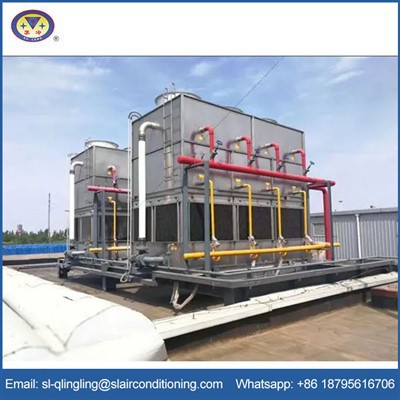
When it comes to industrial operations, the selection of an appropriate industrial water condenser is a critical decision that can significantly impact efficiency, cost, and overall performance. As an experienced industrial water condenser supplier, I understand the importance of considering various factors to ensure the right choice for your specific needs. In this blog post, I will delve into the key aspects that should be taken into account during the selection process.
1. Cooling Capacity
The cooling capacity of an industrial water condenser is perhaps the most fundamental factor to consider. It is measured in British Thermal Units (BTUs) per hour or kilowatts (kW) and represents the amount of heat the condenser can remove from the system within a given time frame. To determine the required cooling capacity, you need to assess the heat load generated by your industrial process. This involves calculating the heat produced by equipment such as engines, generators, or chemical reactors.
Overestimating the cooling capacity can lead to unnecessary energy consumption and higher upfront costs. On the other hand, underestimating it can result in inadequate cooling, leading to equipment overheating and reduced performance. As a reliable supplier, we offer a wide range of industrial water condensers with varying cooling capacities to meet different industrial requirements. Our technical team can assist you in accurately calculating your heat load and selecting a condenser with the appropriate capacity.


2. Efficiency
Energy efficiency is a crucial consideration in today's industrial landscape. An efficient industrial water condenser can significantly reduce energy consumption and operating costs over its lifespan. Look for condensers that are designed with advanced heat transfer technologies, such as enhanced tube surfaces or optimized flow patterns. These features can improve the condenser's ability to transfer heat from the refrigerant to the cooling water, resulting in higher efficiency.
Another aspect of efficiency is the condenser's water consumption. Some condensers, like Evaporative Industrial Air Cooler, use evaporation to enhance cooling, which can reduce water usage compared to traditional water-cooled condensers. However, they may require more energy for the fans and pumps. Our company offers a variety of energy-efficient condensers, including those with low water consumption, to help you achieve a balance between energy and water usage.
3. Compatibility with Refrigerants
The type of refrigerant used in your industrial system is an important factor in condenser selection. Different refrigerants have different properties, such as boiling points, heat transfer coefficients, and environmental impacts. The condenser must be designed to work effectively with the specific refrigerant you are using.
For example, some condensers are optimized for traditional refrigerants like R-22, while others are designed for more environmentally friendly alternatives such as R-410A or R-134a. Using a condenser that is not compatible with your refrigerant can lead to poor performance, increased energy consumption, and potential damage to the system. As a supplier, we have in-depth knowledge of different refrigerants and can recommend condensers that are specifically designed for your chosen refrigerant.
4. Space Requirements
Industrial facilities often have limited space, so the physical dimensions of the condenser are an important consideration. You need to ensure that the condenser can fit into the available space without causing any obstructions or interfering with other equipment. Consider the height, width, and length of the condenser, as well as any clearance requirements for installation, maintenance, and ventilation.
If space is a major constraint, we offer compact and modular industrial water condensers that can be customized to fit your specific layout. These condensers are designed to provide high cooling capacity in a smaller footprint, making them ideal for industrial facilities with limited space.
5. Maintenance and Serviceability
Regular maintenance is essential to ensure the long-term performance and reliability of an industrial water condenser. When selecting a condenser, consider factors such as accessibility for cleaning, inspection, and repairs. Look for condensers that have easy-to-remove panels, accessible heat exchange tubes, and components that can be easily replaced.
In addition, consider the availability of spare parts and the support services offered by the supplier. Our company provides comprehensive maintenance and support services, including on-site inspections, cleaning, and replacement of parts. We also maintain a large inventory of spare parts to ensure quick turnaround times in case of any breakdowns.
6. Cost
Cost is always a significant factor in any purchasing decision. When evaluating the cost of an industrial water condenser, it's important to consider not only the upfront purchase price but also the long-term operating costs. A more expensive condenser with higher efficiency may result in lower energy consumption and maintenance costs over its lifespan, making it a more cost-effective choice in the long run.
You can find more information about Air Conditioner Condenser Cost on our website. Our team can provide you with a detailed cost analysis, including the initial investment, energy consumption, and maintenance costs, to help you make an informed decision.
7. Environmental Impact
In recent years, there has been increasing focus on environmental sustainability in industrial operations. When selecting an industrial water condenser, consider its environmental impact in terms of energy consumption, water usage, and refrigerant emissions. Look for condensers that are designed to minimize their environmental footprint.
For example, Evaporative Condensing Unit use evaporation to cool the refrigerant, which can reduce water usage compared to traditional water-cooled condensers. Additionally, choose condensers that use environmentally friendly refrigerants with low global warming potential (GWP) and ozone depletion potential (ODP).
8. Noise Level
In some industrial settings, noise can be a significant issue, especially if the condenser is located near work areas or residential neighborhoods. Consider the noise level of the condenser during operation and choose a model that meets your noise requirements.
Some condensers are designed with noise-reducing features, such as low-noise fans or vibration isolation mounts. We can recommend condensers with low noise levels that are suitable for your specific application. For more information on quiet operation condensers, you can visit our Air Condenser Unit page.
9. Durability and Reliability
Industrial water condensers are often subjected to harsh operating conditions, such as high temperatures, pressure fluctuations, and exposure to corrosive substances. Therefore, it's important to choose a condenser that is built to last and can withstand these conditions.
Look for condensers made from high-quality materials, such as stainless steel or copper, which are resistant to corrosion and erosion. Our company offers Finned Energy Saving Condenser that are designed for durability and reliability, with features such as robust construction and advanced corrosion protection.
In conclusion, selecting the right industrial water condenser requires careful consideration of multiple factors, including cooling capacity, efficiency, compatibility with refrigerants, space requirements, maintenance, cost, environmental impact, noise level, and durability. As an established industrial water condenser supplier, we have the expertise and experience to help you navigate these factors and choose the best condenser for your industrial needs.
If you are interested in learning more about our industrial water condensers or would like to discuss your specific requirements, please feel free to reach out to us. Our dedicated sales team is ready to assist you with the selection process and provide you with a customized solution. Let us work together to optimize your industrial cooling system and improve your operational efficiency.