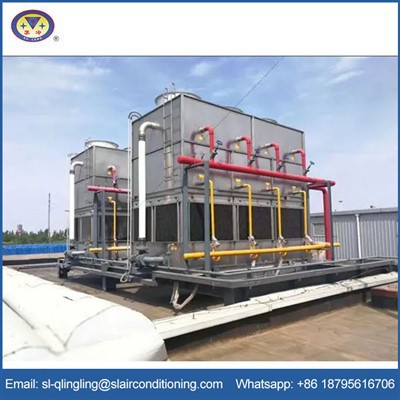
Hey there! As a supplier of evaporative condensers, I've got a lot to share about the types of refrigeration systems that can use these nifty pieces of equipment. Evaporative condensers are pretty awesome because they offer a cost - effective and energy - efficient way to condense refrigerant vapor in a refrigeration system. So, let's dive right in and explore which refrigeration systems can benefit from an evaporative condenser.
Industrial Refrigeration Systems
Industrial refrigeration systems are big players in many sectors like food processing, cold storage, and chemical manufacturing. These systems need to handle large cooling loads, and that's where evaporative condensers shine.
In food processing plants, they're used to keep things at the right temperature during various stages of production. For example, in a meat - packing plant, the refrigeration system cools down the meat to prevent spoilage. An evaporative condenser can help remove the heat generated by the refrigeration process more efficiently compared to other types of condensers. This not only saves energy but also reduces the overall operating costs.
Cold storage warehouses also rely heavily on industrial refrigeration. These places store tons of perishable goods, and maintaining a consistent low temperature is crucial. Evaporative condensers are great here because they can work well in different environmental conditions. They use the principle of evaporation to cool the refrigerant, which is a more natural and efficient way compared to air - cooled condensers.
Check out our Evaporative Condenser Refrigeration page to learn more about how these condensers work in industrial settings.
Commercial Refrigeration Systems
Commercial refrigeration systems are found in places like supermarkets, restaurants, and convenience stores. Supermarkets have large display cases and walk - in coolers that need to be kept cold. An evaporative condenser can be a great addition to these systems.
In a supermarket, the refrigeration system runs continuously to keep the food fresh. The evaporative condenser helps in reducing the heat build - up in the system, which in turn reduces the strain on the compressor. This leads to longer equipment life and lower maintenance costs.
Restaurants also use commercial refrigeration for storing ingredients. Whether it's keeping the milk cold or storing fresh produce, an efficient refrigeration system is a must. Evaporative condensers can make these systems more energy - efficient, which is great for the bottom line of the restaurant.
HVAC Systems
HVAC (Heating, Ventilation, and Air Conditioning) systems are used in both residential and commercial buildings. In large commercial buildings, like office complexes and shopping malls, HVAC systems need to cool a large volume of air. Evaporative condensers can be integrated into these systems to improve their efficiency.
In a high - rise office building, the HVAC system is responsible for keeping the entire building comfortable. An evaporative condenser can help in removing the heat from the refrigerant more effectively, which means the air - conditioning system can cool the building faster and use less energy.
For residential HVAC systems, especially in warmer climates, an evaporative condenser can be a game - changer. It can make the air - conditioning unit run more efficiently, reducing the electricity bill for the homeowners.
Chiller Systems
Chiller systems are used in various applications, including industrial processes and large - scale HVAC. In industrial processes, chillers are used to cool equipment or fluids. For example, in a pharmaceutical manufacturing plant, chillers are used to cool the reaction vessels to control the chemical reactions.
An evaporative condenser can enhance the performance of a chiller system. It helps in condensing the refrigerant vapor back to a liquid state more efficiently, which improves the overall cooling capacity of the chiller. This is especially important in industries where precise temperature control is required.


Advantages of Using Evaporative Condensers in These Systems
One of the main advantages of using evaporative condensers in these refrigeration systems is energy efficiency. Evaporative condensers use the latent heat of evaporation to cool the refrigerant, which requires less energy compared to air - cooled condensers. This means lower electricity bills and a smaller carbon footprint.
Another advantage is the space - saving aspect. Evaporative condensers are generally more compact than air - cooled condensers, which is a big plus in facilities where space is limited.
Maintenance is also relatively easier with evaporative condensers. They have fewer moving parts compared to some other types of condensers, which means less wear and tear and fewer breakdowns.
Our Product Offerings
We offer a range of evaporative condensers to suit different needs. Our Finned Energy Saving Condenser is a great option for those looking to save energy. It has a unique fin design that increases the surface area for heat transfer, making it more efficient.
We also provide a Condenser Water Treatment System to ensure the proper functioning of the evaporative condenser. This system helps in preventing scale build - up and corrosion, which can reduce the efficiency of the condenser over time.
Conclusion
So, there you have it! Industrial refrigeration systems, commercial refrigeration systems, HVAC systems, and chiller systems can all benefit from using an evaporative condenser. Whether you're running a large - scale industrial operation or a small local business, an evaporative condenser can help you save money, energy, and space.
If you're interested in learning more about our evaporative condensers or are thinking about making a purchase, don't hesitate to reach out. We're here to help you find the perfect solution for your refrigeration needs. Let's start a conversation and see how we can work together to improve your refrigeration system.
References
- ASHRAE Handbook - Refrigeration. American Society of Heating, Refrigerating and Air - Conditioning Engineers.
- Dossat, R. J. (1997). Principles of Refrigeration. Prentice Hall.